CM Dhami credits Modi's DBT for cutting welfare middlemen
Synopsis
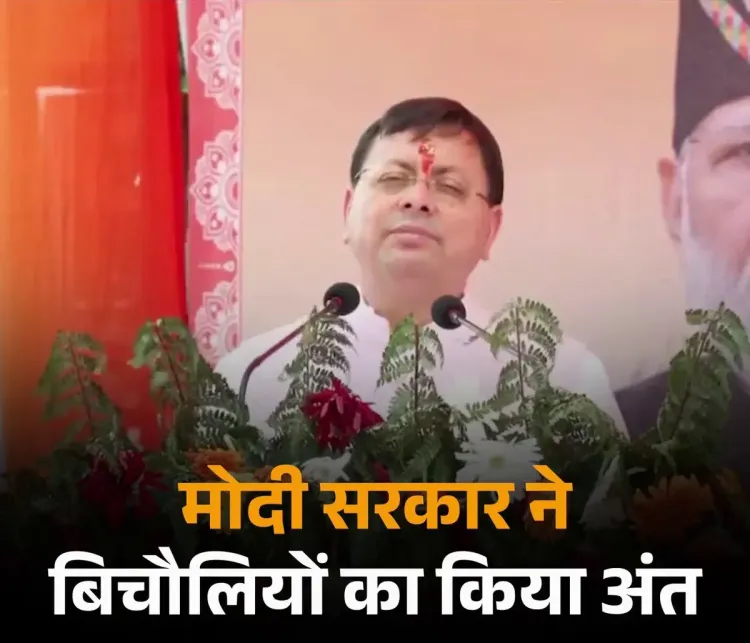
Uttarakhand CM Pushkar Singh Dhami on 14 June 2026 credited PM Narendra Modi's leadership for the DBT system's success in eliminating middlemen and routing welfare benefits directly to crores of beneficiaries across India.
Key Takeaways
CM Pushkar Singh Dhami publicly credited PM Narendra Modi 's leadership for the success of the Direct Benefit Transfer (DBT) system on 14 June 2026 .
DBT was formally launched in 2013 and scaled nationally from 2014 with mandatory Aadhaar seeding.
The system underpins major schemes including PAHAL , PM-KISAN , and MGNREGA , routing funds directly into beneficiaries' bank accounts.
The JAM trinity — Jan Dhan, Aadhaar, Mobile — is the architecture credited with saving several lakh crore rupees by reducing leakages.
For Uttarakhand , with its dispersed hill populations, last-mile digital delivery remains a key implementation challenge and focus area.
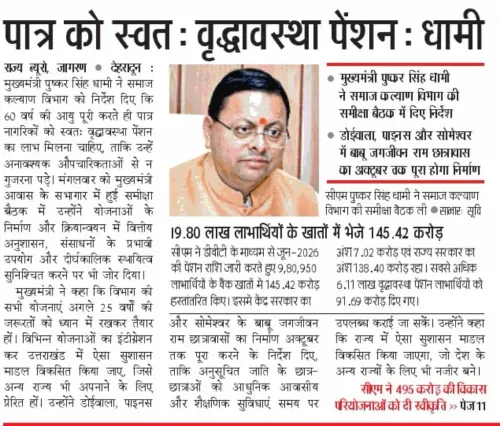
Uttarakhand Chief Minister Pushkar Singh Dhami on Sunday, 14 June 2026 praised the Direct Benefit Transfer (DBT) system, crediting Prime Minister Narendra Modi's leadership for eliminating middlemen and ensuring welfare scheme benefits reach beneficiaries directly.
Context
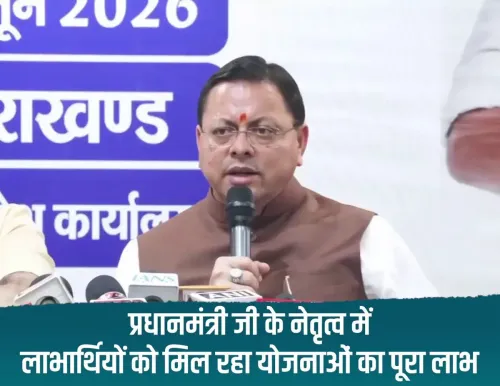
Posting in Hindi on X, CM Dhami wrote: 'आदरणीय प्रधानमंत्री श्री @narendramodi जी के कुशल नेतृत्व में डीबीटी व्यवस्था ने बिचौलियों को खत्म कर लाभार्थियों तक योजनाओं का लाभ सीधे पहुंचाने का कार्य किया है' — translated: 'Under the able leadership of the respected Prime Minister Shri Narendra Modi, the DBT system has worked to eliminate middlemen and deliver the benefits of schemes directly to beneficiaries.' The post was accompanied by a video, underscoring the state government's effort to amplify the narrative around direct welfare delivery.
Policy Backdrop
Direct Benefit Transfer was formally rolled out by the Government of India in 2013, initially across select districts and schemes, before being scaled nationally from 2014 onward with mandatory Aadhaar seeding. The flagship early reform was the PAHAL LPG subsidy scheme, which routed cooking-gas subsidies straight into bank accounts, cutting out a layer of distributors who had long been blamed for siphoning benefits.
The broader architecture underpinning DBT is the JAM trinity — Jan Dhan bank accounts, Aadhaar biometric IDs, and Mobile connectivity — which successive Union Budgets and Economic Surveys have cited as the mechanism behind cumulative savings of several lakh crore rupees across programmes such as MGNREGA, PAHAL, and PM-KISAN.
Stakeholders and Impact
The primary beneficiaries of DBT are crores of subsidy recipients across rural and semi-urban India — farmers receiving PM-KISAN instalments, LPG users under PAHAL, and daily-wage workers paid through MGNREGA. By routing transfers directly into Jan Dhan accounts, the system is designed to close the gap between government outlay and actual receipt, a gap that independent audits have historically attributed to ghost beneficiaries and intermediary leakages.
For Uttarakhand, a hill state with dispersed populations across remote districts, the digital delivery model carries particular significance. Residents in areas with limited banking infrastructure have increasingly relied on Business Correspondents and mobile banking to access DBT credits, making the last-mile connectivity challenge central to the scheme's effectiveness in the state.
What's Next
Analysts and audit bodies continue to track state-level DBT dashboards and CAG reports on Uttarakhand's implementation of centrally sponsored schemes to assess actual fund utilisation versus disbursements. Future Union Budgets may expand DBT to additional programmes, and state governments like Uttarakhand are expected to align their own welfare architecture with the centre's direct-transfer framework. CM Dhami's public endorsement signals continued political commitment in the state to the JAM-trinity model as a governance benchmark.
Point of View
DBT — to reinforce the party's anti-corruption and pro-poor messaging ahead of any electoral cycle. The emphasis on 'eliminating middlemen' echoes a decade-long BJP refrain that frames digital welfare delivery as a structural break from the leakage-ridden systems of previous governments. By tagging PM Modi directly, Dhami also signals personal alignment with central leadership, a pattern common among BJP chief ministers who seek to project ideological coherence with New Delhi. The post carries no new policy announcement, but its timing and format suggest a coordinated effort to keep DBT's political salience high in public discourse.
NationPress
14 Sept 2026
Frequently Asked Questions
What is Direct Benefit Transfer (DBT) in India?
Direct Benefit Transfer (DBT) is a government mechanism launched in 2013 that routes subsidies and welfare payments directly into beneficiaries' bank accounts using Aadhaar, bypassing intermediaries. It covers schemes such as PM-KISAN, PAHAL LPG subsidy, and MGNREGA wage payments.
What did Uttarakhand CM Dhami say about DBT?
CM Pushkar Singh Dhami said on 14 June 2026 that under PM Narendra Modi's leadership, the DBT system has successfully eliminated middlemen and ensured welfare scheme benefits reach beneficiaries directly.
How much money has DBT saved the Indian government?
Successive Union Budgets and Economic Surveys have cited cumulative savings of several lakh crore rupees attributed to DBT by reducing ghost beneficiaries and intermediary leakages across schemes.
What is the JAM trinity in Indian welfare policy?
The JAM trinity stands for Jan Dhan bank accounts, Aadhaar biometric identity, and Mobile connectivity. It forms the digital infrastructure backbone that enables Direct Benefit Transfer to function at scale across India.
How does DBT work in hill states like Uttarakhand?
In Uttarakhand, DBT credits are delivered into Jan Dhan accounts and accessed through Business Correspondents and mobile banking, addressing last-mile connectivity challenges in remote and dispersed hill communities.