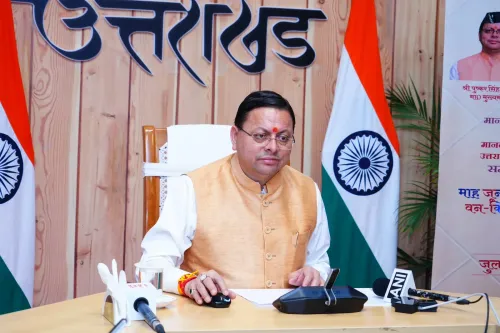
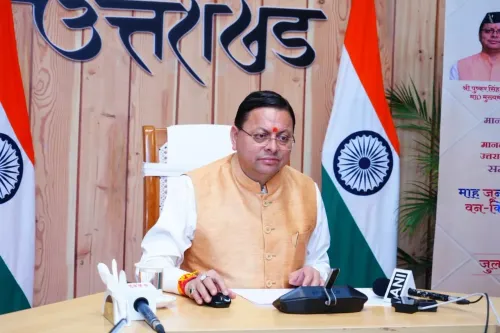
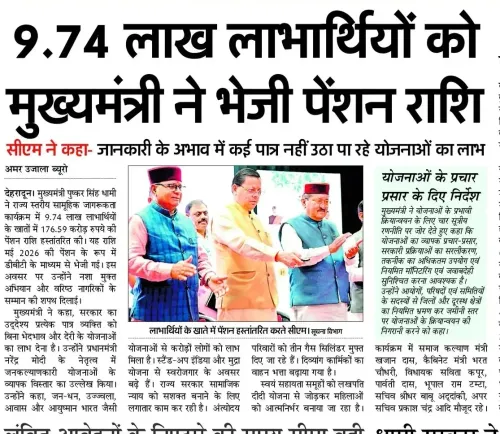
CM Dhami Transfers Rs 145 Cr Pension to 9.8 Lakh Uttarakhand Beneficiaries
Synopsis
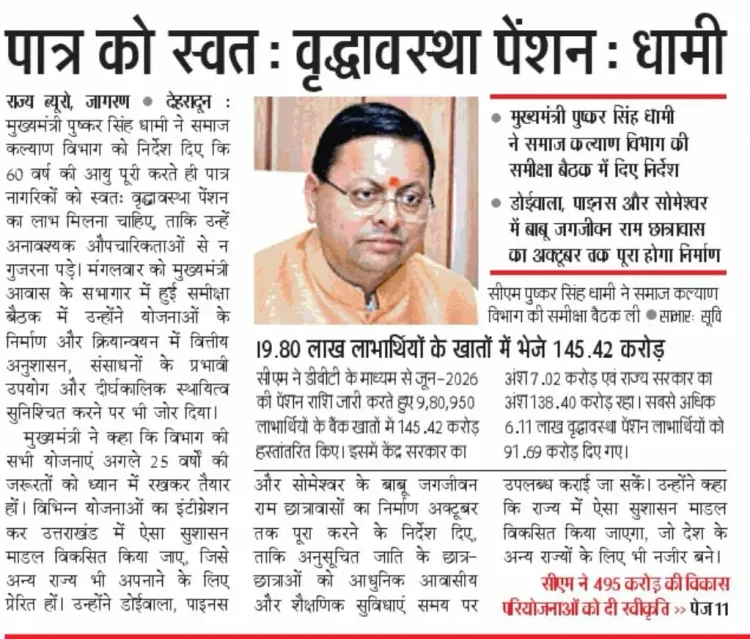
Chief Minister Pushkar Singh Dhami has transferred over Rs 145 crore in pension payments via Direct Benefit Transfer to nearly 9.81 lakh beneficiaries of Social Welfare Department schemes in Uttarakhand, reinforcing the state's commitment to digital last-mile welfare delivery.
Key Takeaways
Rs 145 crore-plus disbursed in a single DBT cycle by the Uttarakhand government on 8 July 2026 .
9,80,950 beneficiaries — nearly 10 lakh — received pension credits directly into their bank accounts.
Transfers cover multiple categories: old-age, widow, and disability pension schemes under the Social Welfare Department.
Direct Benefit Transfer framework, operational nationally since 2013, eliminates intermediaries and reduces leakage.
Uttarakhand migrated social pensions to DBT around 2015-16 after Aadhaar seeding drives.
Last-mile delivery in remote Himalayan districts is a stated priority, with Jan Dhan-Aadhaar linkage enabling access for rural beneficiaries.
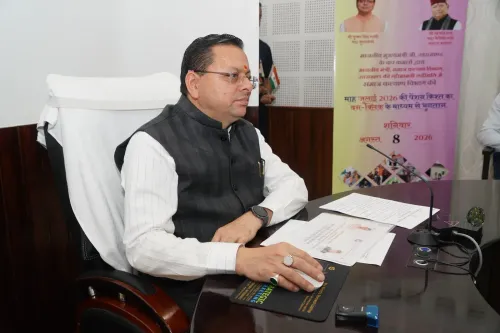
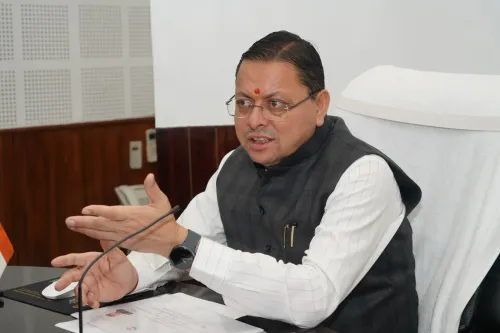
The Chief Minister's Office of Uttarakhand announced on Wednesday, 8 July 2026, that Chief Minister Pushkar Singh Dhami has transferred pension funds worth more than Rs 145 crore via Direct Benefit Transfer to 9,80,950 beneficiaries enrolled under various pension schemes administered by the state's Social Welfare Department.
Context
The Chief Minister's Office stated that the disbursement covers multiple pension categories — including old-age, widow, and disability pensions — run under the Social Welfare Department. The original post reads: 'mukhyamantri shri Pushkar Singh Dhami ne samaj kalyan vibhag ke antargat sanchalit vibhinn pension yojanaon ke 9,80,950 labhartiyon ko DBT se Rs 145 crore se zyada ki pension rashi ki hastantarit' ('Chief Minister Pushkar Singh Dhami has transferred more than Rs 145 crore in pension amounts via DBT to 9,80,950 beneficiaries of various pension schemes operated under the Social Welfare Department'). The transfer was made in a single disbursement cycle, reaching nearly 10 lakh residents across the state.
Policy Backdrop
Direct Benefit Transfer (DBT) was launched nationally in 2013 under the National e-Governance Plan to route government payments directly into Aadhaar-linked bank accounts, eliminating intermediaries and reducing leakage. Uttarakhand began migrating its social pension portfolio to the DBT framework around 2015-16, following state-wide Aadhaar seeding drives that linked beneficiary accounts to the central payment architecture. The central government has consistently reported that DBT adoption across states has helped weed out ghost beneficiaries and generate fiscal savings in the social security system.
The Social Welfare Department of Uttarakhand administers pensions under both centrally sponsored and state-funded schemes, covering elderly citizens, widows, and persons with disabilities. The integration of Jan Dhan accounts with Aadhaar has been particularly significant for last-mile delivery in Uttarakhand's remote Himalayan districts, where physical banking infrastructure has historically been limited.
Stakeholders and Impact
The nearly 9.81 lakh beneficiaries span three primary categories: elderly pensioners, widow beneficiaries, and persons with disabilities — groups that form a significant share of Uttarakhand's population given the state's demographic profile, which includes a high proportion of senior citizens in rural hill districts. Direct credit to bank accounts reduces dependence on intermediaries and ensures timely receipt, which is especially critical for beneficiaries in high-altitude villages with limited mobility. The Rs 145 crore-plus disbursement represents one of the larger single-cycle welfare transfers recorded under the current state administration.
What's Next
Attention will now turn to the next quarterly DBT cycle and whether the state government announces any revision of pension rates in the Uttarakhand budget for 2026-27. CM Dhami's administration has positioned digital welfare delivery as a governance priority, and the scale of this disbursement is likely to feature in the ruling party's outreach ahead of any upcoming electoral cycle. Sustained expansion of DBT coverage and potential increases in per-beneficiary pension amounts remain the key policy variables to watch.
Point of View
Where geography historically made cash transfers unreliable. For the Dhami administration, publicising the transfer through the Chief Minister's Office account is consistent with a broader BJP governance narrative that equates digital welfare delivery with administrative efficiency and anti-corruption credibility. The move also signals that Uttarakhand is keeping pace with the national DBT expansion push, which the Centre has used as a template to demonstrate fiscal discipline in welfare spending. Analysts will watch whether the per-beneficiary pension quantum is revised upward in the next budget, as the current amounts have faced criticism from welfare advocates for not keeping pace with inflation.
NationPress
6 Oct 2026
Frequently Asked Questions
How much pension did Uttarakhand transfer via DBT in July 2026?
The Uttarakhand government transferred more than Rs 145 crore in pension funds via Direct Benefit Transfer on 8 July 2026 , covering nearly 9.81 lakh beneficiaries under Social Welfare Department schemes.
Who are the beneficiaries of Uttarakhand's pension DBT transfer?
The beneficiaries include elderly citizens, widows, and persons with disabilities enrolled under various pension schemes administered by the Social Welfare Department of Uttarakhand .
What is Direct Benefit Transfer and how does it work in Uttarakhand?
Direct Benefit Transfer (DBT) is a central government mechanism launched in 2013 that routes welfare payments directly into Aadhaar-linked bank accounts. Uttarakhand began using DBT for social pensions around 2015-16 after seeding beneficiary accounts with Aadhaar.
How many pension beneficiaries are there in Uttarakhand?
As of the July 2026 disbursement, 9,80,950 beneficiaries received pension payments under Social Welfare Department schemes in Uttarakhand.
What pension schemes does the Uttarakhand Social Welfare Department run?
The Social Welfare Department of Uttarakhand administers old-age, widow, and disability pension schemes funded through both centrally sponsored programmes and state-funded social security measures.