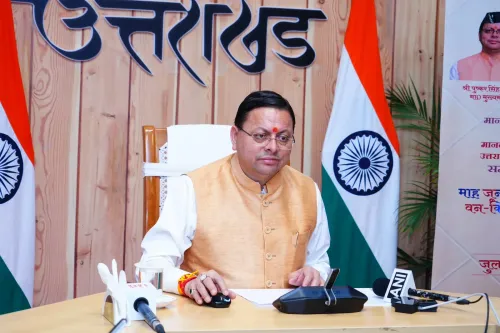
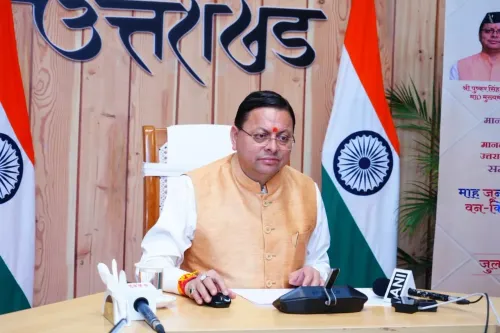
CM Dhami Transfers ₹176.59 Cr Pension to 9.74 Lakh Beneficiaries
Synopsis
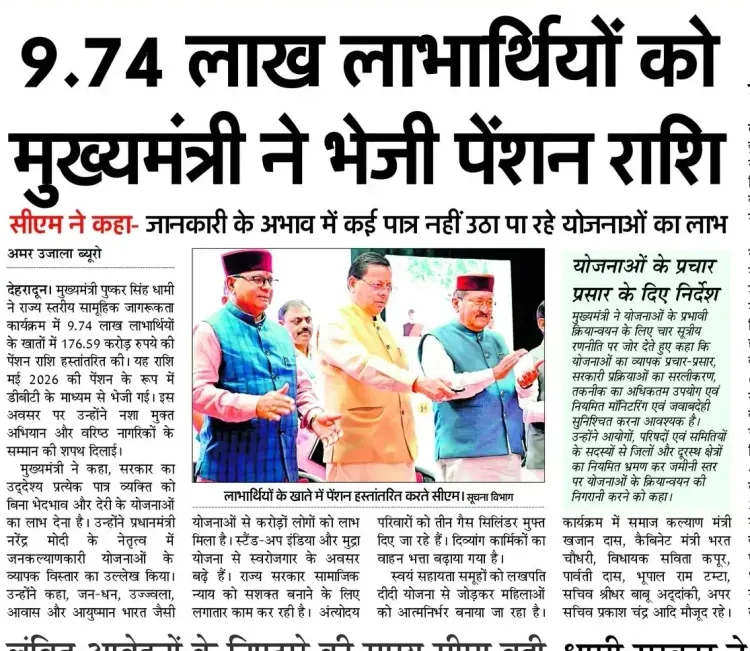
Chief Minister Pushkar Singh Dhami has transferred ₹176.59 crore in social security pension to 9.74 lakh beneficiaries in Uttarakhand, covering elderly citizens, widows, and persons with disabilities via the Direct Benefit Transfer mechanism.
Key Takeaways
₹176.59 crore in social security pension disbursed in a single transfer cycle by the Uttarakhand government.
9.74 lakh beneficiaries — elderly citizens, widows, and persons with disabilities — received the funds.
Disbursement was made via the Direct Benefit Transfer (DBT) route, crediting amounts directly to bank accounts.
CM Pushkar Singh Dhami personally oversaw the transfer, per the Chief Minister's Office announcement on 5 June 2026 .
Uttarakhand's pension programme runs alongside the central National Social Assistance Programme (NSAP) , with the state supplementing amounts from its own budget.
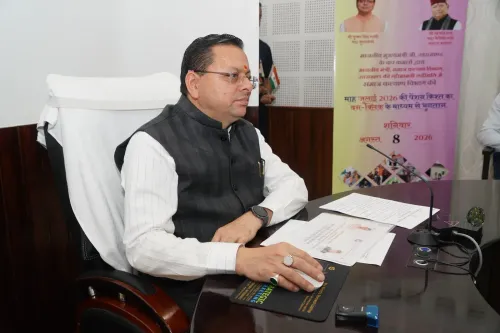
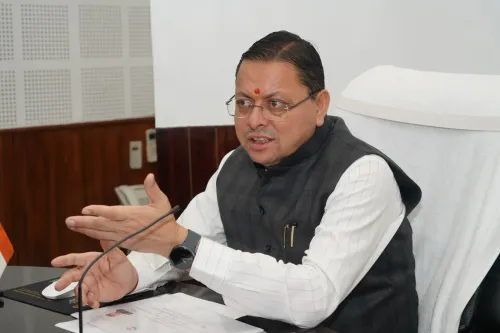
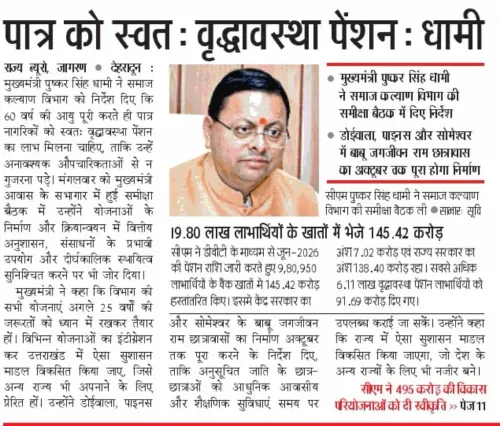
The Chief Minister's Office of Uttarakhand announced on Friday, 5 June 2026 that Chief Minister Pushkar Singh Dhami has transferred a pension amount of ₹176.59 crore to 9.74 lakh beneficiaries under the state's social security pension programme.
Context
The official post stated: 'मुख्यमंत्री श्री पुष्कर सिंह धामी ने 9.74 लाख लाभार्थियों को ₹176.59 करोड़ की पेंशन राशि की हस्तांतरित।' ['Chief Minister Pushkar Singh Dhami has transferred a pension amount of ₹176.59 crore to 9.74 lakh beneficiaries.'] The disbursement covers elderly citizens, widows, and persons with disabilities registered under Uttarakhand's Social Security Pension scheme.
The transfer was executed through the Direct Benefit Transfer (DBT) mechanism, which credits amounts directly into beneficiaries' bank accounts, eliminating intermediaries and reducing leakages.
Policy Backdrop
Uttarakhand, the Himalayan state formed in 2000, administers its social security pension programme alongside the centrally sponsored National Social Assistance Programme (NSAP), launched by the Government of India in 1995. The NSAP provides a base pension top-up for the elderly poor, widows, and disabled persons, with states supplementing the amount from their own budgets.
Since the mid-2010s, states across India have progressively shifted pension disbursements to the DBT architecture to ensure timely and transparent delivery. Uttarakhand has periodically revised its beneficiary lists and per-beneficiary pension slabs in line with central guidelines and annual state budget allocations.
Stakeholders and Impact
The 9.74 lakh beneficiaries span three primary categories: senior citizens, widows, and persons with disabilities — groups that typically depend on pension income as a primary or supplementary source of livelihood. At an aggregate transfer of ₹176.59 crore, the per-beneficiary average works out to approximately ₹1,815 for this cycle.
For households in Uttarakhand's remote hill districts — where employment opportunities are limited and seasonal migration is common — timely pension credits carry significant economic weight. The DBT route also allows beneficiaries to access funds through banking correspondents and post-office accounts in areas with limited bank branch presence.
What's Next
Attention will now turn to whether the state government announces a revision in the per-beneficiary pension amount during the upcoming budget session, as well as the schedule for the next disbursement cycle. CM Dhami's administration has positioned welfare delivery efficiency as a governance benchmark, and successive on-time transfers reinforce that narrative ahead of any electoral cycle.
Broader scrutiny will also focus on whether the beneficiary list is updated to include newly eligible individuals, and how the state balances its pension commitments against other capital expenditure priorities in the fiscal year.
Point of View
Direct, and auditable welfare transfers that can be attributed to a specific leader. Periodic high-profile pension disbursements also serve as a counter-narrative to criticism of hill-state governance gaps, particularly in remote districts. The next test will be whether per-beneficiary amounts are revised upward in the state budget, which would indicate fiscal headroom and political intent ahead of the next electoral cycle.
NationPress
21 Oct 2026
Frequently Asked Questions
How much pension did CM Dhami transfer in June 2026?
CM Pushkar Singh Dhami transferred ₹176.59 crore in social security pension to 9.74 lakh beneficiaries in Uttarakhand on 5 June 2026 .
Who are the beneficiaries of Uttarakhand's social security pension?
The scheme covers elderly citizens, widows, and persons with disabilities registered under Uttarakhand's Social Security Pension programme, which is supplemented by the central National Social Assistance Programme (NSAP) .
How is the Uttarakhand pension transferred to beneficiaries?
Pension amounts are disbursed through the Direct Benefit Transfer (DBT) mechanism, which credits funds directly into beneficiaries' bank accounts to reduce leakages and ensure timely delivery.
What is the National Social Assistance Programme?
The National Social Assistance Programme (NSAP) is a centrally sponsored scheme launched in 1995 that provides a base pension top-up for elderly, widowed, and disabled individuals below the poverty line; states like Uttarakhand supplement it with their own funds.
What is the per-beneficiary pension amount in Uttarakhand?
Based on the announced figures of ₹176.59 crore distributed among 9.74 lakh beneficiaries , the average per-beneficiary transfer for this cycle works out to approximately ₹1,815 ; the exact slab may vary by category.