CM Dhami transfers Rs 11 crore to 4,400+ construction workers via DBT
Synopsis
Chief Minister Pushkar Singh Dhami transferred Rs 11 crore via DBT to more than 4,400 construction workers in Uttarakhand on 20 June 2026, under post-marriage, maternity, death-grant and education schemes of the state's BOCW Welfare Board, while directing wider outreach camps and stricter eligibility checks.
Key Takeaways
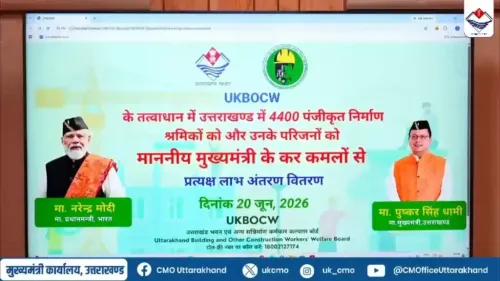
Rs 11 crore transferred in a single-click DBT event to more than 4,400 registered construction worker beneficiaries on 20 June 2026 .
Four schemes covered: post-marriage assistance, post-death grants, maternity benefits, and education support.
In the preceding one year, the Board disbursed Rs 93 crore 6 lakh to 24,323 workers across welfare schemes.
CM Dhami ordered district-level camps near worksites for enrolment, health check-ups, and material distribution.
Directions issued for full IT-based transparency and strict eligibility verification to prevent leakages.
The Board operates under the central BOCW Act, 1996 , funded by a construction cess of one to two per cent.
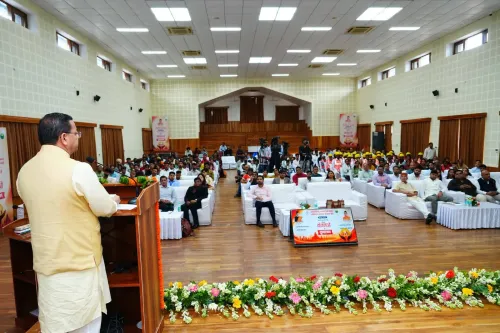
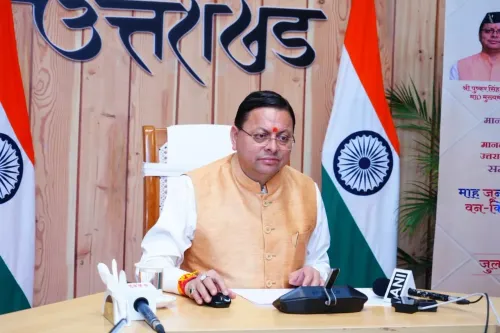
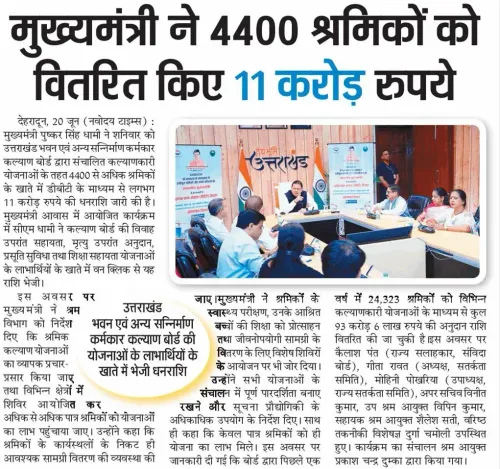
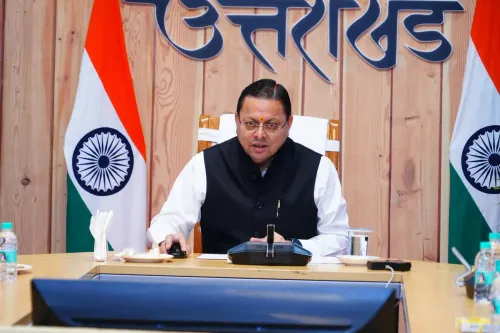
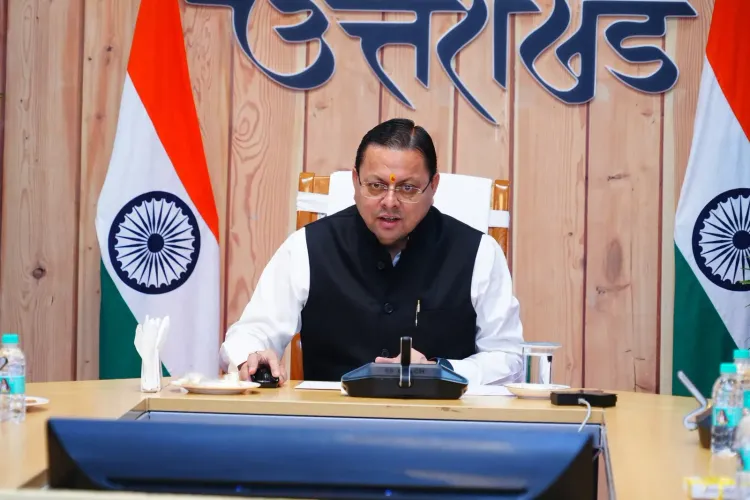
Chief Minister Pushkar Singh Dhami on Saturday, 20 June 2026, transferred approximately Rs 11 crore directly into the bank accounts of more than 4,400 construction worker beneficiaries through the Direct Benefit Transfer (DBT) mechanism, at an event held at the Chief Minister's residence in Dehradun. The funds were disbursed under multiple welfare schemes operated by the Uttarakhand Building and Other Construction Workers Welfare Board.
What was transferred and to whom
Using a single-click digital interface, CM Dhami credited funds to workers enrolled under four specific board schemes: post-marriage assistance, post-death grants, maternity benefits, and education support. The event brought together senior officials from the state's Labour Department, the Board's vigilance committee, and technical staff, with the programme conducted by Labour Commissioner Prakash Chandra Dumka.
Officials present included Kailash Pant (State Advisor, Contract Board), Geeta Rawat (Chairperson, Vigilance Committee), Mohini Pokharia (Vice-Chairperson, State Vigilance Committee), Additional Secretary Vineet Kumar, Deputy Labour Commissioner Vipin Kumar, Assistant Labour Commissioner Shailesh Sati, and Senior Technical Expert Durga Chamoli.
Context
The Uttarakhand Building and Other Construction Workers Welfare Board is constituted under the central Building and Other Construction Workers (Regulation of Employment and Conditions of Service) Act, 1996, which requires every state to form a welfare board funded by a cess of one to two per cent levied on construction project costs. The board channels these collections into cash and in-kind benefits for registered, unorganised-sector construction workers.
At the same event, it was shared that over the past one year the Board had distributed a total of Rs 93 crore 6 lakh to 24,323 workers across its various welfare schemes — figures that illustrate the scale at which the state is attempting to reach this workforce.
Policy backdrop
India's construction sector employs an estimated 50 million-plus workers, most of them in the unorganised segment with limited access to formal social security. The 1996 central legislation was designed precisely to address this gap, and states have progressively moved toward DBT-based disbursements to reduce leakages and speed up delivery.
CM Dhami directed the Labour Department to mount a wide publicity drive for the welfare schemes and to hold camps across different districts so that more eligible workers can be enrolled and served. He specifically asked that material distribution be arranged near workers' worksites to minimise inconvenience. He also called for special camps covering health check-ups, educational incentives for workers' dependent children, and distribution of household essentials.
Transparency and eligibility safeguards
The Chief Minister emphasised full transparency in running all schemes and directed maximum use of information technology to track disbursements. He underlined that benefits must reach only eligible workers — a directive aimed at tightening eligibility verification and curbing inclusion errors that have historically affected welfare boards in several states.
The push mirrors a nationwide pattern in which state governments are combining cess-funded welfare boards with digital payment rails and IT-based monitoring to widen coverage while simultaneously plugging leakages in unorganised-sector social security programmes.
What's next
The immediate watch-point is the rollout of the district-level camps that CM Dhami has now formally ordered, which will determine how many additional construction workers are brought into the Board's ambit. Any upward revision in the Board's annual welfare outlay in the forthcoming state budget will be a further indicator of the government's commitment to scaling this programme.
Frequently Asked Questions
How much money did CM Dhami transfer to construction workers on 20 June 2026?
Chief Minister Pushkar Singh Dhami transferred approximately Rs 11 crore to more than 4,400 construction worker beneficiaries via DBT on 20 June 2026.
Which schemes were covered in the Uttarakhand BOCW welfare transfer?
The transfer covered four schemes: post-marriage assistance, post-death grants, maternity benefits, and education support for registered construction workers.
What is the Uttarakhand Building and Other Construction Workers Welfare Board?
It is a state body constituted under the central BOCW Act, 1996, that collects a cess on construction projects and uses the funds to provide cash and in-kind welfare benefits to registered, unorganised construction workers.
How much has the Uttarakhand BOCW board distributed in the past year?
Officials stated at the event that the Board distributed Rs 93 crore 6 lakh to 24,323 workers through various welfare schemes over the preceding one year.
What did CM Dhami instruct the Labour Department to do for construction workers?
CM Dhami directed the Labour Department to hold outreach camps near worksites, conduct health check-ups, support children's education, distribute essentials, and use IT systems to ensure only eligible workers receive benefits.