CM Dhami Backs Single Women Self-Employment Scheme in Uttarakhand
Synopsis
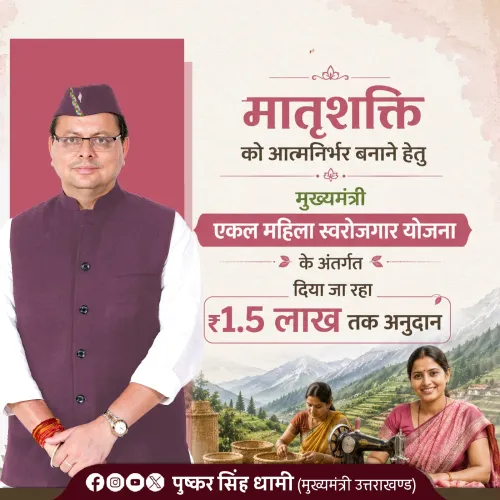
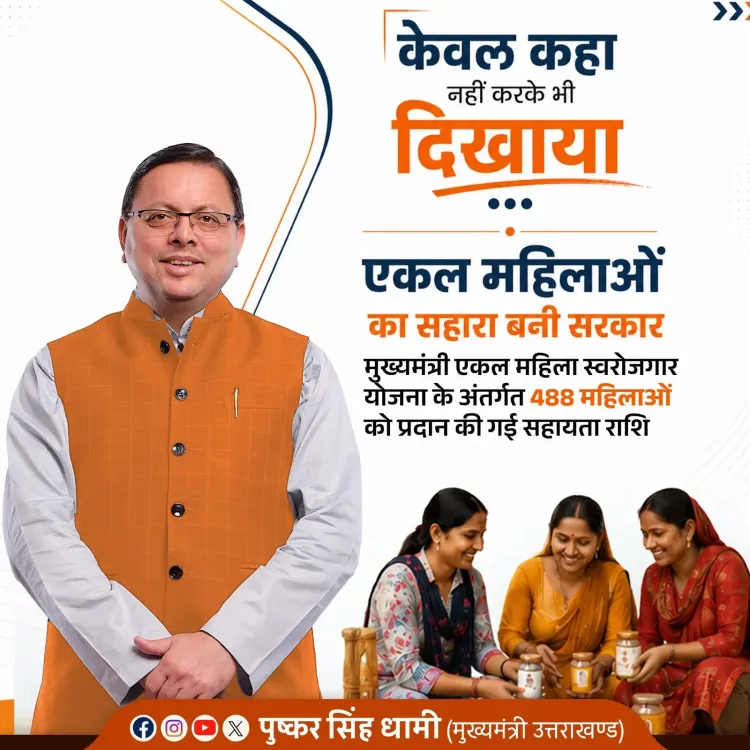
Uttarakhand Chief Minister Pushkar Singh Dhami on 24 July 2026 reaffirmed his government's commitment to single women's economic empowerment, spotlighting the Mukhyamantri Ekal Mahila Swarojgar Yojana, which provides financial assistance to help single women establish self-employment and achieve dignified, self-reliant livelihoods.
Key Takeaways
CM Pushkar Singh Dhami publicly reaffirmed the Uttarakhand government's commitment to economic empowerment of single women on 24 July 2026 .
The Mukhyamantri Ekal Mahila Swarojgar Yojana provides financial assistance to single women in Uttarakhand for setting up self-employment activities.
Dhami described the scheme as more than financial aid — a means to provide 'dignified livelihood, self-confidence, and a new identity of self-reliance' to single women.
The scheme aligns with the national Stand-Up India framework launched in 2016 , adapted at the state level for a specific vulnerable demographic.
Single women in rural and hilly parts of Uttarakhand are the primary target group, addressing compounded economic and social vulnerabilities.
Upcoming state assembly sessions and budget disclosures are expected to shed light on enrolment numbers and fund disbursement under the scheme.
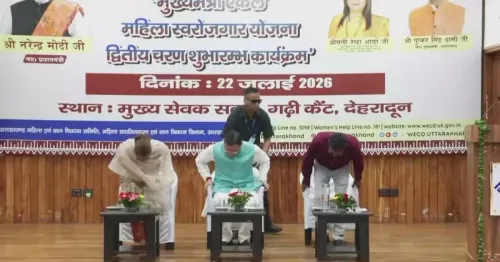
Uttarakhand Chief Minister Pushkar Singh Dhami on Friday, 24 July 2026, reaffirmed his government's commitment to the economic empowerment of single women in the state, highlighting the Mukhyamantri Ekal Mahila Swarojgar Yojana — a scheme that provides financial assistance to single women seeking to establish self-employment ventures.
Context
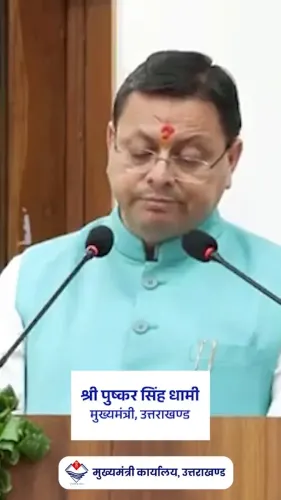
Posting on X, CM Dhami wrote in Hindi: 'हमारी सरकार एकल महिलाओं को आर्थिक रूप से सशक्त एवं आत्मनिर्भर बनाने के लिए निरंतर प्रतिबद्ध है' ('Our government is continuously committed to making single women economically empowered and self-reliant'). He described the scheme not merely as financial support but as a 'powerful medium to give single women a dignified livelihood, self-confidence, and a new identity of self-reliance.'
The post signals an active push by the Uttarakhand government to position the scheme as a holistic intervention — addressing both material need and social dignity for a category of women often left outside mainstream welfare frameworks.
Policy Backdrop
The Mukhyamantri Ekal Mahila Swarojgar Yojana is a state-level initiative under the BJP-led Uttarakhand government, designed specifically to support single women — a category that includes widows, separated, and abandoned women — in setting up self-employment activities through direct financial assistance.
The scheme draws from a broader national lineage: the Stand-Up India scheme, launched in 2016 by the central government, had similarly aimed at channelling bank loans and entrepreneurship opportunities toward women and marginalised communities. Uttarakhand's state-level programme narrows that focus to single women, who face compounded economic and social vulnerabilities, particularly in the state's hilly and rural regions.
Across BJP-governed states since 2014, gender-targeted self-employment and skill-development schemes have become a recurring policy instrument, framed under the broader 'Atmanirbhar Bharat' ('self-reliant India') philosophy championed at the national level.
Stakeholders and Impact
The primary beneficiaries are single women across Uttarakhand, particularly those in rural and semi-urban pockets of the state who lack access to formal employment or credit. By providing a financial foundation for self-employment, the scheme targets a reduction in economic dependency and social marginalisation.
Women entrepreneurs and self-help group networks in the state are also stakeholders, as the scheme's implementation often intersects with existing micro-enterprise ecosystems. For the Dhami government, the scheme serves as a visible welfare marker ahead of any future electoral cycle in the state.
What's Next
Observers will watch for the state's budget allocations toward the scheme in the upcoming assembly session, as well as official data on beneficiary enrolment and disbursement progress. A mid-term review of scheme outcomes would indicate whether the financial assistance is translating into sustainable self-employment on the ground.
With CM Dhami publicly amplifying the scheme's scope and intent, the government appears to be building a narrative of inclusive, women-first governance — one that is likely to feature prominently in future policy communications from Dehradun.
Point of View
Particularly in states with large rural and hilly populations. By framing the scheme as an instrument of dignity and self-reliance rather than mere charity, the government is aligning its welfare messaging with the national 'Atmanirbhar Bharat' narrative. The absence of specific disbursement figures or enrolment data in the announcement, however, makes it difficult to assess on-ground impact at this stage. The scheme's real test will come when verifiable beneficiary outcomes enter the public domain ahead of the next electoral cycle in Uttarakhand.
NationPress
24 Jul 2026
Frequently Asked Questions
What is the Mukhyamantri Ekal Mahila Swarojgar Yojana?
The Mukhyamantri Ekal Mahila Swarojgar Yojana is an Uttarakhand state government scheme that provides financial assistance to single women — including widows, separated, and abandoned women — to help them establish self-employment activities and achieve economic independence.
Who is eligible for the Mukhyamantri Ekal Mahila Swarojgar Yojana in Uttarakhand?
The scheme targets single women in Uttarakhand, a category that broadly includes widows, women who are separated, and those who have been abandoned, with a focus on those in rural and hilly regions of the state.
What did CM Dhami say about single women empowerment?
CM Pushkar Singh Dhami stated on 24 July 2026 that his government is 'continuously committed to making single women economically empowered and self-reliant,' and described the scheme as a medium to provide single women a dignified livelihood, self-confidence, and a new identity of self-reliance.
How does Uttarakhand's single women scheme compare to central government schemes?
The Mukhyamantri Ekal Mahila Swarojgar Yojana draws from the spirit of the central government's Stand-Up India scheme launched in 2016, which promoted entrepreneurship among women and marginalised groups, but narrows its focus specifically to single women at the state level.
What is the BJP's approach to women welfare schemes in Uttarakhand?
Under CM Dhami, the BJP-led Uttarakhand government has aligned women-focused welfare measures with the broader national 'Atmanirbhar Bharat' philosophy, using targeted self-employment and financial assistance schemes to address economic vulnerabilities among women, especially in rural and hilly areas.