CM Dhami Calls for Mass Movement to Buy Local in Uttarakhand
Synopsis
Chief Minister Pushkar Singh Dhami on August 8, 2026, called on Uttarakhand residents to make buying local products a mass movement, aligning with India's Vocal for Local push and spotlighting the state's artisans, organic farmers, and GI-tagged goods.
Key Takeaways
CM Pushkar Singh Dhami on August 8, 2026 called on Uttarakhand citizens to make purchasing local products a mass public movement .
The appeal is framed as a jan andolan (people's movement), placing civic responsibility on residents rather than limiting it to a government scheme.
The statement aligns with India's national Vocal for Local initiative under the Atmanirbhar Bharat Abhiyan launched in 2020 .
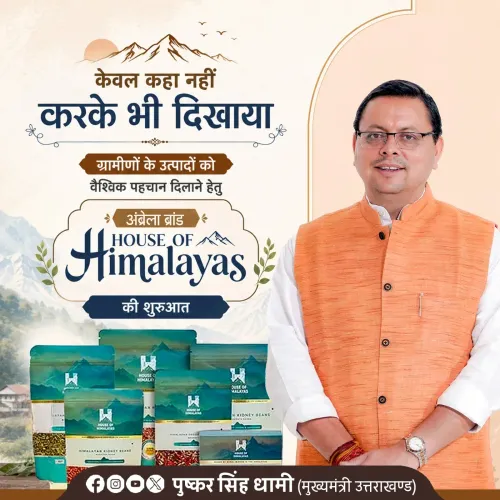
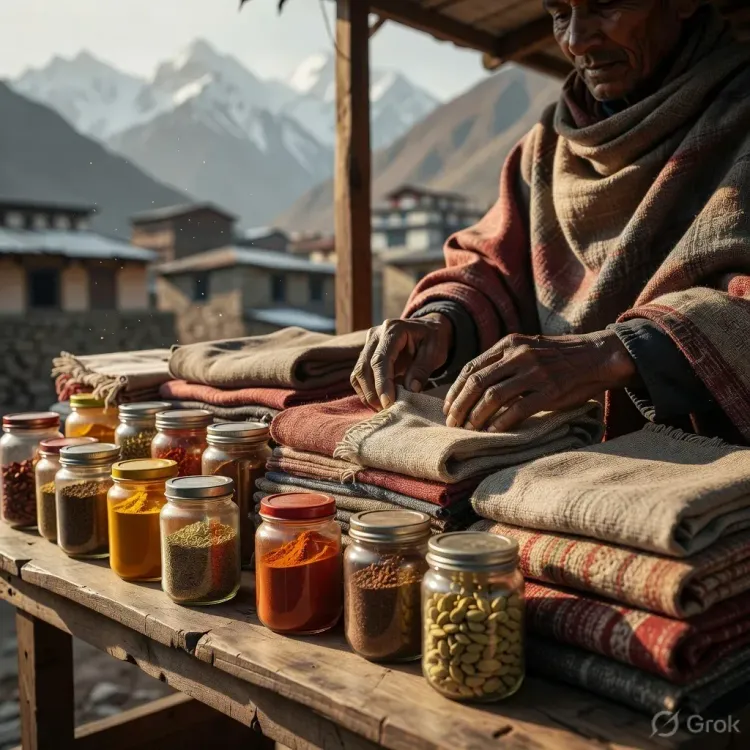
Uttarakhand's economy includes GI-tagged goods, organic produce, handloomed textiles, and handicrafts made by small producers and artisans .
The One District One Product (ODOP) scheme offers a potential policy vehicle for translating the appeal into district-level action across Uttarakhand.
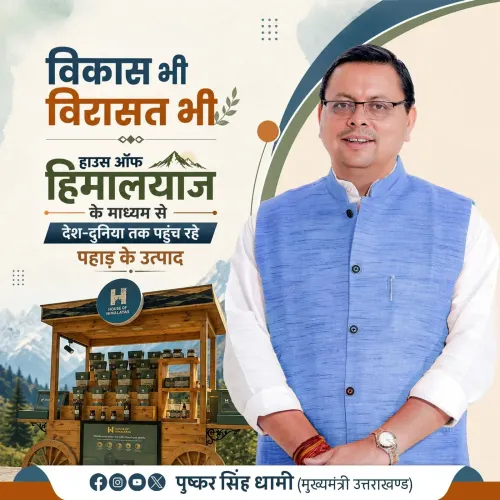
A Himalayan state's top leader is asking its people to do something deceptively simple — and potentially transformative. Chief Minister Pushkar Singh Dhami on Saturday, August 8, 2026, called on the people of Uttarakhand to turn the purchase of locally made products into a mass public movement, framing everyday shopping as an act of collective economic will.
The call: from slogan to street-level action
Dhami's appeal — 'sthaniya utpadon ki kharid ko jan andolan banaen' ('make the purchase of local products a people's movement') — is pointed in its ambition. It does not ask citizens to merely prefer local goods; it asks them to organise around that preference, to treat it as a cause rather than a convenience. The language echoes the urgency of a social reform campaign, not a commerce circular.
The statement lands squarely within the national Vocal for Local framework, itself a pillar of the Atmanirbhar Bharat Abhiyan launched by the Government of India in 2020. But where the central campaign spoke in broad strokes, Dhami's framing zeroes in on Uttarakhand's specific economic texture — a state whose identity is inseparable from its artisans, organic farmers, and mountain-crafted goods.
Why Uttarakhand's local economy is the real stakes here
Uttarakhand is not a generic market. The state's hills produce GI-tagged goods, organic produce, handloomed textiles, and traditional handicrafts that compete — often poorly — against cheaper mass-manufactured alternatives flooding local bazaars. The people who lose that competition are not corporations; they are small producers, weavers, and farmers in villages with few other income options.
The One District One Product (ODOP) scheme, which maps distinct products to individual districts for focused promotion and market linkage, offers the structural scaffolding on which a campaign like Dhami's could actually run. Whether Uttarakhand's government follows the appeal with district-level incentives, procurement mandates, or consumer awareness drives will determine whether this remains a rallying cry or becomes a measurable policy push.
The arithmetic is unforgiving for hill economies: every rupee spent on a local product stays inside the community; every rupee that leaves for a distant factory does not come back. CM Dhami is betting that Uttarakhand's people, if asked loudly enough, will choose accordingly.
Point of View
But it carries real stakes for a hill economy where informal producers have limited market reach. The 'jan andolan' framing — invoking a people's movement rather than a government scheme — is a deliberate political choice: it shifts moral ownership to citizens and insulates the government if uptake is slow. Watch whether this is backed by procurement policy or ODOP district rollouts; without structural support, the loudest campaigns in hill states have historically faded after the news cycle. The statement also signals that local economic identity will be a BJP mobilisation theme in Uttarakhand heading into the next electoral cycle.
NationPress
8 Aug 2026
Frequently Asked Questions
What did CM Pushkar Singh Dhami say about local products in Uttarakhand?
On August 8, 2026, CM Dhami called on the people of Uttarakhand to make the purchase of locally made products a mass public movement, urging citizens to treat buying local as a collective economic cause.
What is the Vocal for Local campaign in India?
Vocal for Local is a national initiative under the Atmanirbhar Bharat Abhiyan, launched in 2020, that encourages Indians to prefer and promote domestically made goods to support MSMEs, artisans, and traditional industries.
How does the ODOP scheme relate to Uttarakhand's local products push?
The One District One Product (ODOP) scheme maps a signature product to each district for focused promotion and market linkage — it provides the structural framework through which a state-level 'buy local' campaign like Dhami's could be operationalised.
Why is buying local important for Uttarakhand's economy?
Uttarakhand's economy depends heavily on small producers, organic farmers, weavers, and handicraft artisans. Local purchases keep money within communities, while preference for cheaper mass-manufactured goods can undercut these producers who have limited alternative income sources.
What local products is Uttarakhand known for?
Uttarakhand is known for GI-tagged goods, organic mountain produce, handloomed textiles, and traditional handicrafts — products that are distinctive to the Himalayan region but often face stiff competition from mass-manufactured alternatives.