CM Dhami Pushes House of Himalayas to Global Markets
Synopsis
Uttarakhand Chief Minister Pushkar Singh Dhami on 1 June 2026 reaffirmed his government's push to give rural-made products global reach through the House of Himalayas umbrella brand, positioning it as a key channel linking local artisans and farmers to national and international markets under India's Atmanirbhar Bharat framework.
Key Takeaways
CM Pushkar Singh Dhami publicly reaffirmed the Uttarakhand government's commitment to securing global recognition for rural-made products on 1 June 2026 .
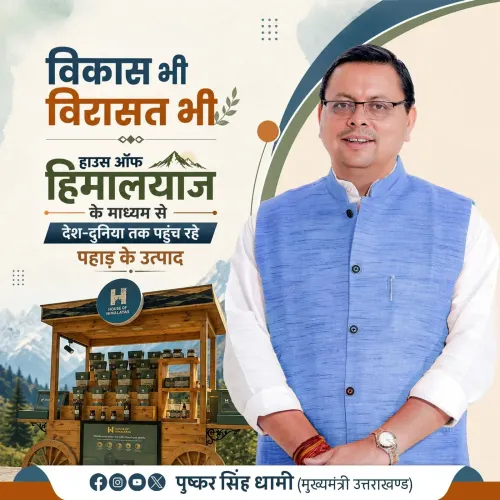
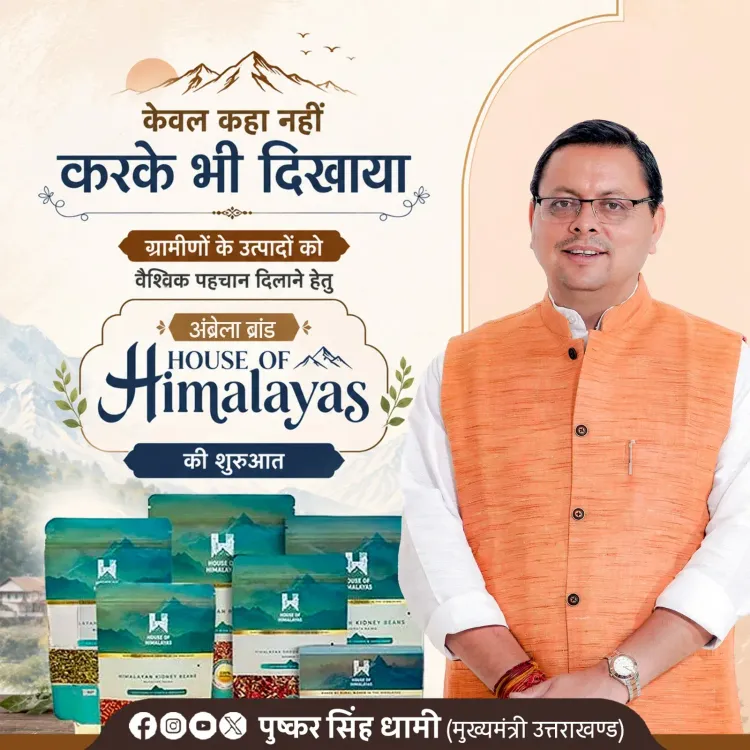
The House of Himalayas umbrella brand is the state's designated platform for marketing local artisanal and agro-products nationally and internationally.
The initiative aligns with the central government's One District One Product (ODOP) scheme launched in 2018 and the broader Atmanirbhar Bharat push since 2020 .
Uttarakhand has pursued Geographical Indication (GI) registrations for Himalayan products since the early 2000s to protect provenance and command premium pricing.
Key beneficiaries include rural artisans, small farmers, and MSME exporters across Uttarakhand 's hill districts.
Export performance of GI-tagged and organic items will be a key metric to assess the brand's real-world impact.
Uttarakhand Chief Minister Pushkar Singh Dhami on Monday, 1 June 2026, reaffirmed his government's commitment to giving rural artisans and producers a global platform, highlighting the House of Himalayas umbrella brand as the primary vehicle for taking locally made products to national and international markets.
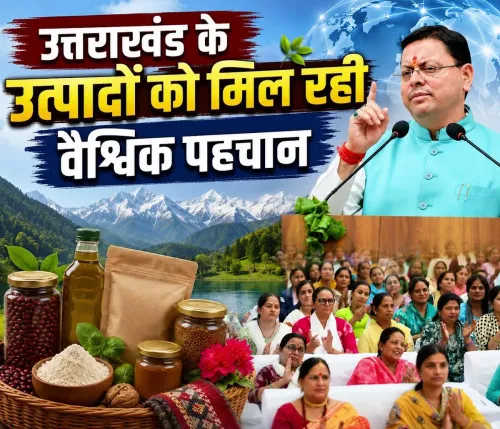
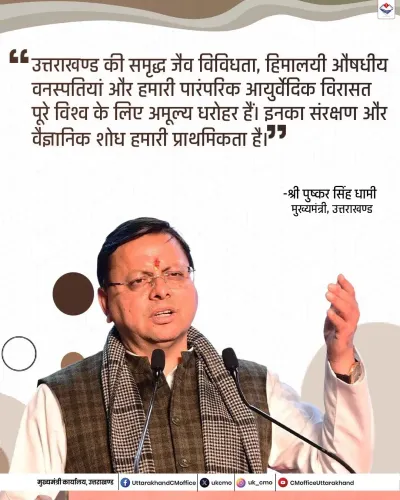
Posting in Hindi on X, CM Dhami wrote: 'हमारी सरकार प्रदेश के ग्रामीण क्षेत्रों में रहने वाले लोगो द्वारा निर्मित उत्पादों को वैश्विक पहचान दिलाने के लिए निरंतर कार्य कर रही है' ['Our government is continuously working to give global recognition to products made by people living in the rural areas of the state']. He added that the House of Himalayas brand had been launched with the resolve to connect local products to both national and international markets.
Context
The House of Himalayas is an umbrella brand created by the Uttarakhand government to consolidate and market the state's rural and artisanal output under a single, recognisable identity. Uttarakhand, a northern Himalayan state, has long sought to monetise its distinctive produce — from organic agro-products to traditional handicrafts — but fragmented branding had historically limited their reach.
The initiative positions the state as a curator of premium Himalayan goods, giving buyers — whether domestic retailers or overseas importers — a single trusted label to associate with quality and provenance.
Policy Backdrop
The House of Himalayas brand sits within a broader national framework. The Government of India launched the One District One Product (ODOP) scheme in 2018 to identify and promote distinctive district-level products across the country, including in Uttarakhand. The state has also pursued Geographical Indication (GI) registrations for several Himalayan products since the early 2000s to protect their identity and command premium pricing.
Since 2020, India's Atmanirbhar Bharat push has encouraged states to develop distinctive export-facing brands for indigenous goods. Himalayan states in particular have leveraged GI tags and state-level umbrella brands to tap premium national and overseas markets for agro-products and handicrafts — a trend the House of Himalayas brand directly reflects.
Stakeholders and Impact
The primary beneficiaries are Uttarakhand's rural artisans, small farmers, and MSME exporters who produce goods ranging from woollen textiles and wood carvings to organic honey, herbs, and spices. A credible umbrella brand reduces the marketing burden on individual producers and improves their bargaining power with bulk buyers.
Consumers — both in Indian metro markets and abroad — stand to gain more consistent access to authenticated Himalayan products. For the state exchequer, stronger export performance translates into higher rural incomes and reduced out-migration, a persistent challenge for hill states.
What's Next
The government's stated ambition is to expand the brand's footprint in national retail channels and international buyer-seller meets. Observers will watch Uttarakhand's export figures for GI-tagged and organic items as a measure of the brand's traction. Participation in trade fairs and e-commerce tie-ups will be early indicators of whether House of Himalayas can translate political intent into measurable rural income gains.
As more Himalayan states compete for premium-product shelf space globally, CM Dhami's push signals that Uttarakhand intends to be a front-runner in state-branded rural exports — a model that, if successful, could influence branding strategies across India's hill economies.
Point of View
Giving the state a sharper identity in the competitive premium-products market. By anchoring the brand in a public social-media commitment, Dhami also signals electoral intent — rural livelihoods and out-migration are perennial political pressure points in hill constituencies. The umbrella-brand model, increasingly adopted by Himalayan states, reflects a maturation in state-level export strategy: moving beyond GI tags alone toward cohesive branding that commands shelf space in metros and overseas retail. Whether the initiative delivers measurable income gains for artisans will depend on follow-through in trade facilitation, logistics, and e-commerce integration.
NationPress
21 Sept 2026
Frequently Asked Questions
What is the House of Himalayas brand?
House of Himalayas is an umbrella brand launched by the Uttarakhand government to market rural and artisanal products — including organic agro-goods and traditional handicrafts — under a single identity in national and international markets.
Who launched the House of Himalayas scheme?
The scheme was launched by the Uttarakhand state government under Chief Minister Pushkar Singh Dhami as part of the state's rural economy and export promotion strategy.
How does House of Himalayas relate to One District One Product?
House of Himalayas complements the central government's One District One Product (ODOP) scheme launched in 2018, which identifies and promotes distinctive district-level products; the umbrella brand provides a unified marketing identity for such products from Uttarakhand.
Who benefits from the House of Himalayas initiative?
The primary beneficiaries are rural artisans, small farmers, and MSME exporters in Uttarakhand, who gain a recognised brand platform to reach buyers in Indian metro markets and abroad without bearing individual marketing costs.
What is Uttarakhand's strategy for promoting GI-tagged products?
Uttarakhand has pursued Geographical Indication registrations for Himalayan products since the early 2000s to protect their provenance and command premium pricing; the House of Himalayas brand builds on this by providing a consolidated export-facing identity.