CM Dhami Hails Uttarakhand's Himalayan Biodiversity as Global Heritage
Synopsis
Chief Minister Pushkar Singh Dhami has described Uttarakhand's biodiversity, Himalayan medicinal flora, and Ayurvedic heritage as an invaluable global treasure, signalling continued state emphasis on conservation and traditional knowledge promotion.
Key Takeaways
CM Pushkar Singh Dhami publicly described Uttarakhand's Himalayan medicinal plants and Ayurvedic heritage as 'an invaluable treasure for the entire world' on 20 July 2026 .
Uttarakhand , formed in 2000 , is one of India's foremost biodiversity hotspots with thousands of endemic plant species critical to Ayurvedic medicine.
The statement aligns with India's national AYUSH policy framework, which integrates traditional medicine with biodiversity conservation and sustainable resource use.
Key stakeholders include hill communities , Ayurvedic practitioners , and the herbal and wellness industry that sources raw material from the Himalayan belt.
The emphasis on global heritage status opens potential pathways for international research partnerships, conservation collaborations, and certified herbal product exports.
Policy watchers will monitor upcoming state budget sessions for concrete schemes on medicinal plant cultivation, Ayurveda tourism circuits, and biodiversity action plans.
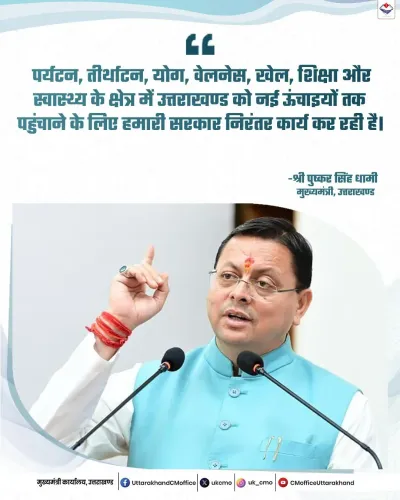
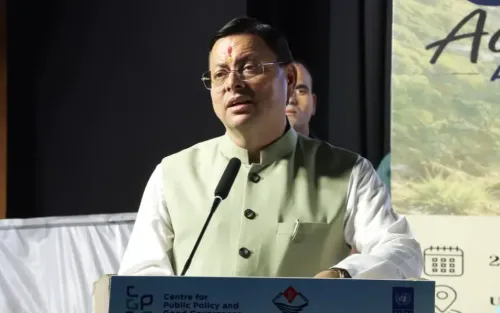
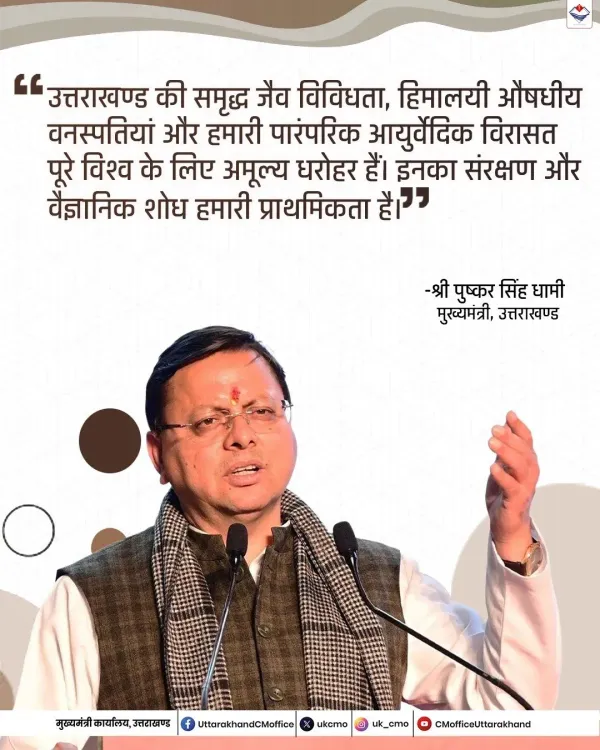
Chief Minister Pushkar Singh Dhami of Uttarakhand on Monday, 20 July 2026 reaffirmed the state's rich biodiversity, Himalayan medicinal flora, and traditional Ayurvedic heritage as an invaluable legacy for the entire world, in a statement shared by the Chief Minister's Office of Uttarakhand on X.
Quoting Chief Minister Dhami directly, the post stated: 'Uttarakhand ki samriddh jaiv vividhata, Himalayee aushadhiya vanaspatiyaan aur hamari paramparik Ayurvedic virasat poore vishwa ke liye amulya dharohar hain' — meaning, 'Uttarakhand's rich biodiversity, Himalayan medicinal plants, and our traditional Ayurvedic heritage are an invaluable treasure for the entire world.'
Context
Uttarakhand, carved out as a separate Himalayan state in November 2000, occupies a unique ecological position as one of India's most significant biodiversity hotspots. The state's forests and alpine meadows are home to thousands of endemic plant species, many of which form the backbone of classical Ayurvedic formulations. CM Dhami, who has led the state since 2021, has consistently positioned Uttarakhand's natural and cultural endowments as strategic assets for both domestic welfare and global outreach.
Policy Backdrop
Since its formation, Uttarakhand has made conservation of medicinal plants and promotion of Ayurveda central pillars of its development agenda. This aligns with India's broader national AYUSH framework, which seeks to integrate traditional medicine systems — including Ayurveda, Yoga, Unani, Siddha, and Homeopathy — with modern healthcare and biodiversity conservation strategies. Himalayan states like Uttarakhand are particularly well-placed within this framework, given the concentration of endemic flora found nowhere else on earth.
India has also pursued international recognition of its traditional knowledge systems, including efforts to document medicinal plant uses under the Traditional Knowledge Digital Library (TKDL), partly to safeguard against biopiracy. CM Dhami's framing of Uttarakhand's heritage as a 'treasure for the entire world' resonates with these broader diplomatic and conservation objectives.
Stakeholders and Impact
The communities most directly affected by policies flowing from this vision include hill communities dependent on forest resources, Ayurvedic practitioners who rely on locally sourced medicinal plants, and the growing herbal and wellness industry that sources raw material from the Himalayan belt. A stronger official emphasis on biodiversity and Ayurvedic heritage can translate into increased funding for medicinal plant cultivation schemes, better market linkages for herb growers, and the development of Ayurveda-focused tourism circuits that bring economic benefit to remote mountain villages.
On the global stage, positioning Uttarakhand as a custodian of world heritage also opens avenues for international research collaborations, conservation partnerships, and export of certified herbal products — a segment that has seen sustained growth in global demand.
What's Next
Observers will watch for concrete policy follow-through in upcoming Uttarakhand budget sessions and assembly deliberations — particularly announcements related to medicinal plant cultivation schemes, biodiversity action plans, or dedicated Ayurveda tourism corridors. CM Dhami's public articulation of this vision sets an expectation for programmatic action that hill communities, practitioners, and industry stakeholders will be keen to see translated into budgetary allocations and on-ground implementation. As global interest in traditional medicine and sustainable botanicals continues to rise, Uttarakhand's ability to institutionalise its natural and cultural heritage as a regulated, exportable asset will be closely watched.
Point of View
' the Chief Minister's Office signals intent to elevate the state's biodiversity and Ayurvedic assets from domestic policy talking points to instruments of soft power and international economic engagement. This fits a broader national arc in which India has sought to leverage traditional knowledge systems through AYUSH diplomacy, medicinal plant export promotion, and biopiracy safeguards. The real test will be whether this rhetorical framing is matched by measurable investment in cultivation infrastructure, community benefit-sharing mechanisms, and quality certification for herbal exports in the coming budget cycle.
NationPress
20 Oct 2026
Frequently Asked Questions
What did Uttarakhand CM Pushkar Singh Dhami say about the state's biodiversity?
CM Pushkar Singh Dhami stated on 20 July 2026 that Uttarakhand's rich biodiversity, Himalayan medicinal plants, and traditional Ayurvedic heritage are an invaluable treasure for the entire world.
Why is Uttarakhand important for Ayurveda and medicinal plants?
Uttarakhand is one of India's most significant biodiversity hotspots, with thousands of endemic Himalayan plant species that form the core of classical Ayurvedic formulations and are sourced by the herbal wellness industry.
What is India's AYUSH policy and how does it relate to Uttarakhand?
India's AYUSH framework promotes traditional medicine systems including Ayurveda, Yoga, and Unani alongside biodiversity conservation; Uttarakhand, with its Himalayan flora and Ayurvedic tradition, is a key state within this national policy architecture.
Who benefits from Uttarakhand's medicinal plant and Ayurveda policies?
Key beneficiaries include hill communities dependent on forest resources, Ayurvedic practitioners, herbal product manufacturers, and Ayurveda tourism operators who rely on the state's unique natural and cultural endowments.
What should we watch for next regarding Uttarakhand's biodiversity and Ayurveda plans?
Watch for announcements in upcoming Uttarakhand budget sessions and assembly deliberations on medicinal plant cultivation schemes, Ayurveda tourism corridors, and new biodiversity action plans that would give policy substance to CM Dhami's statement.