CM Dhami Pushes House of Himalayas for Global Reach
Synopsis
Uttarakhand CM Pushkar Singh Dhami has highlighted the House of Himalayas platform as the state's vehicle for giving local traditional products global reach, citing PM Modi's Vocal for Local campaign and naming farmers, self-help groups and women producers as key beneficiaries.
Key Takeaways
CM Pushkar Singh Dhami invoked PM Modi's Vocal for Local mantra to frame House of Himalayas as a global marketing platform for Uttarakhand's local goods.
The platform targets farmers, self-help groups, Matrishakti collectives and local artisans as primary beneficiaries.
House of Himalayas is designed to connect Uttarakhand's traditional and organic products to both domestic and international markets.
The initiative mirrors similar rural value-chain programmes in Himachal Pradesh and Sikkim under the ODOP framework.
The Vocal for Local campaign was launched by PM Modi as part of the Atmanirbhar Bharat package in May 2020 .
Future milestones to watch include state budget allocations for House of Himalayas expansion and new GI registrations from Uttarakhand districts.
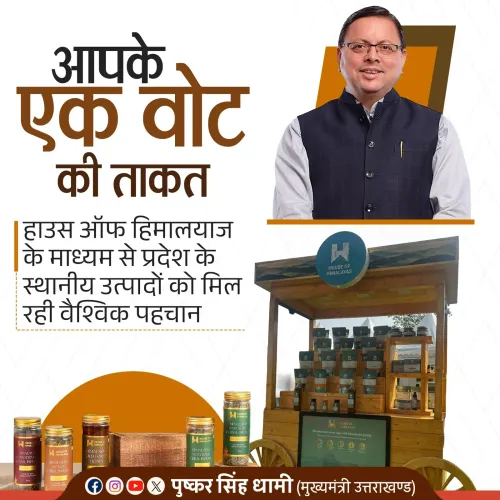
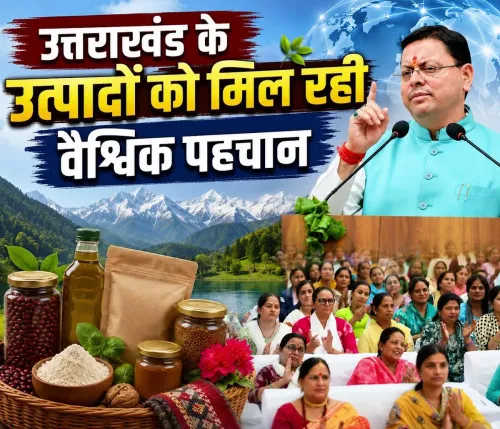
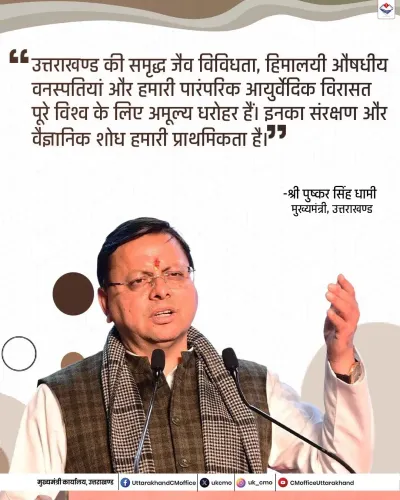
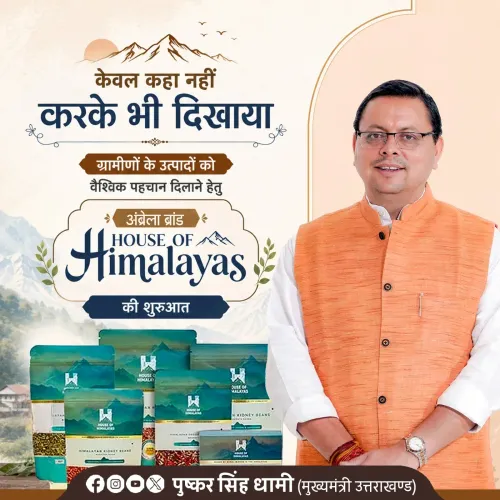
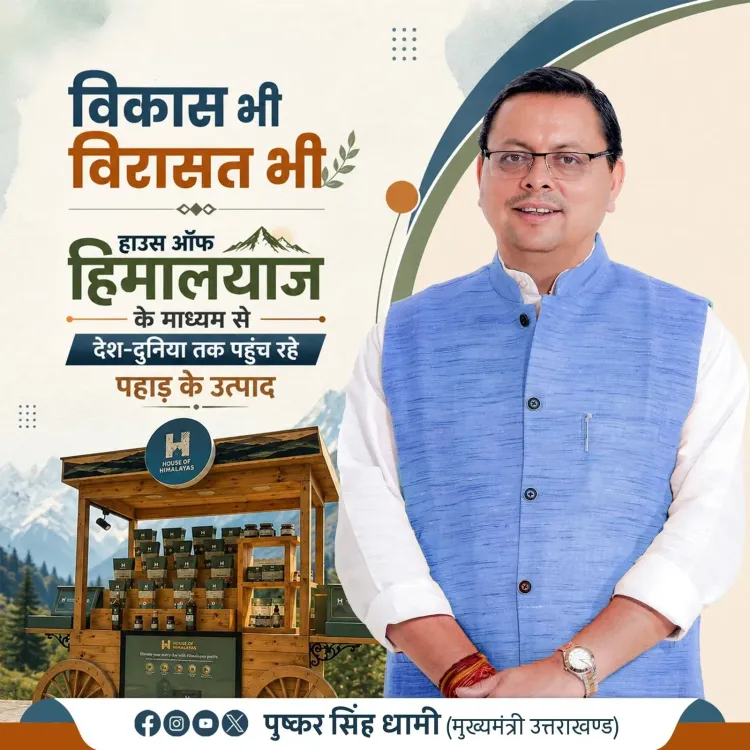
Uttarakhand Chief Minister Pushkar Singh Dhami on Monday, 7 July 2026 said his government is using the House of Himalayas platform to give Uttarakhand's local products a global identity, framing the initiative as a direct fulfilment of Prime Minister Narendra Modi's Vocal for Local campaign.
Context
In a post on X, CM Dhami wrote that the state government is 'realising the Vocal for Local mantra of respected Prime Minister Shri Narendra Modi' through House of Himalayas by taking the state's traditional products to international markets. He specifically named farmers, self-help groups, women's collectives (Matrishakti) and local producers as the primary beneficiaries of the initiative.
The post reflects a deliberate alignment between Uttarakhand's state-level branding strategy and the broader Atmanirbhar Bharat framework announced by the Centre in May 2020, which explicitly championed locally made goods as a driver of economic self-reliance.
Policy Backdrop
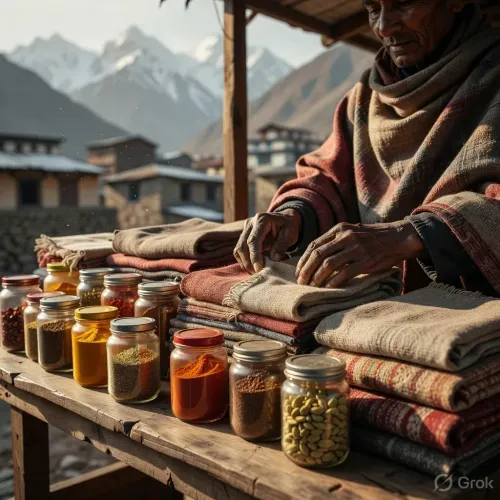
House of Himalayas is the Uttarakhand government's dedicated marketing platform for the state's handicrafts, organic produce and traditional goods, designed to connect rural producers to both domestic and export markets. The platform is part of a wider pattern across Himalayan states — including Himachal Pradesh and Sikkim — that link rural artisans and farmers to national and international value chains, often under the One District One Product (ODOP) framework.
PM Modi introduced the Vocal for Local call-to-action as part of the Rs 20-lakh-crore Atmanirbhar Bharat stimulus package in May 2020, urging citizens and governments alike to prioritise indigenous products to reduce import dependence and boost domestic manufacturing and exports.
Stakeholders and Impact
The initiative directly targets some of Uttarakhand's most economically vulnerable groups: small and marginal farmers in hill districts, women organised into self-help groups, and artisans preserving traditional crafts. By routing their products through a state-backed brand with an international marketing push, House of Himalayas aims to eliminate intermediaries and improve producer margins.
Matrishakti — a term CM Dhami uses to refer to women's productive collectives — has been a recurring focus of his government's welfare and economic empowerment messaging. Channelling their output through a recognised export-linked platform could translate into higher and more stable incomes for women producers across the state's remote districts.
What's Next
Observers will watch Uttarakhand's upcoming state budget allocations for any expansion of the House of Himalayas network, including new physical outlets, e-commerce integrations and export partnerships. Growth in Geographical Indication (GI) registrations from Uttarakhand districts — covering products such as Tejpatta, Chyura butter and hill-region textiles — would be a concrete indicator of the platform's traction in international markets.
If the model demonstrates measurable export growth, it could serve as a template for other BJP-governed hill states seeking to combine rural welfare objectives with export promotion without requiring new central legislation.
Point of View
Reinforcing BJP's ideological continuity between the Centre and state. By foregrounding Matrishakti and self-help groups, the messaging also targets a demographic — rural women — that has been central to the party's electoral arithmetic in hill constituencies. The House of Himalayas platform, if it delivers verifiable export gains and GI-linked price premiums, could become a model that other BJP-governed Himalayan states replicate ahead of assembly elections. The broader arc here is the steady institutionalisation of Vocal for Local from a campaign slogan into a network of state-backed export brands — a shift with real economic stakes for India's hill-region producers.
NationPress
5 Oct 2026
Frequently Asked Questions
What is House of Himalayas?
House of Himalayas is the Uttarakhand government's marketing platform for the state's local handicrafts, organic produce and traditional goods, aimed at connecting rural producers to domestic and international markets.
What is the Vocal for Local campaign?
Vocal for Local is a national campaign launched by Prime Minister Narendra Modi in May 2020 as part of the Atmanirbhar Bharat package, encouraging citizens and governments to prioritise locally made products to boost domestic production and reduce import dependence.
How does House of Himalayas help farmers and women in Uttarakhand?
The platform provides farmers, self-help groups and women's collectives (Matrishakti) a state-backed channel to market their products, potentially eliminating intermediaries and improving producer margins by linking them to national and export markets.
What products does House of Himalayas promote?
The platform focuses on Uttarakhand's traditional and organic goods, which can include items such as hill-region spices, textiles and handicrafts, many of which are candidates for Geographical Indication registration.
What is CM Dhami's role in Uttarakhand's economic policy?
Pushkar Singh Dhami has served as Chief Minister of Uttarakhand since 2021 and has aligned the state's economic programmes closely with the Centre's Atmanirbhar Bharat and ODOP frameworks to promote rural livelihoods and export growth.