CM Dhami Clears ₹492 Cr for Kumbh 2027 and State Projects
Synopsis
Chief Minister Pushkar Singh Dhami approved over ₹492 crore for Haridwar Kumbh Mela 2027 alongside allocations for rural roads, irrigation, temple restoration, panchayat devolution and revised Tehri Dam displacement compensation across multiple Uttarakhand districts on 25 October 2026.
Key Takeaways
₹492 crore cleared for Haridwar Kumbh Mela 2027 : ₹175 crore under state sector and ₹317 crore via Urban Development Department for centrally approved works.
178 Tehri Dam-displaced families will receive a revised compensation totalling ₹132.43 crore , up from the 1988 benchmark of ₹5 lakh per family . ₹82.21 crore released as third quarterly instalment to all district panchayats for FY 2026-27 on an ad hoc basis under Fifth State Finance Commission norms.
Road blacktopping in Almora's Salt constituency ( ₹6.13 crore ) and Upper Baigul Canal restoration in Sitarganj, Udham Singh Nagar ( ₹7.84 crore ) approved.
Irrigation projects sanctioned in Pauri Garhwal ( ₹1.43 crore , sprinkler tubewell) and Nainital ( ₹2.54 crore , lift irrigation scheme).
Heritage and religious-site works approved in Pithoragarh ( ₹45.03 lakh ) and Champawat ( ₹50 lakh ), with government orders already issued for the latter.
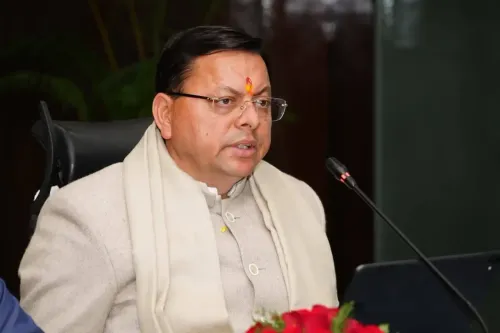
In a single-session sweep of approvals, Chief Minister Pushkar Singh Dhami of Uttarakhand on Sunday, 25 October 2026 greenlit a combined outlay of over ₹492 crore spanning the Haridwar Kumbh Mela 2027, rural roads, irrigation, panchayat devolution, temple beautification, and a long-overdue revision to dam-displacement compensation — a package that touches almost every district in the hill state.
₹492 Crore for Kumbh 2027 — State and Centre Both Writing Cheques
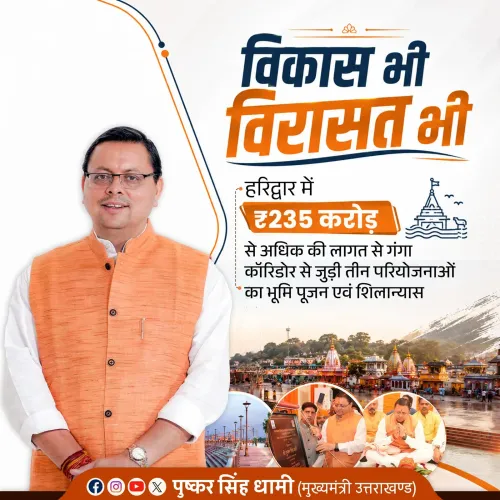
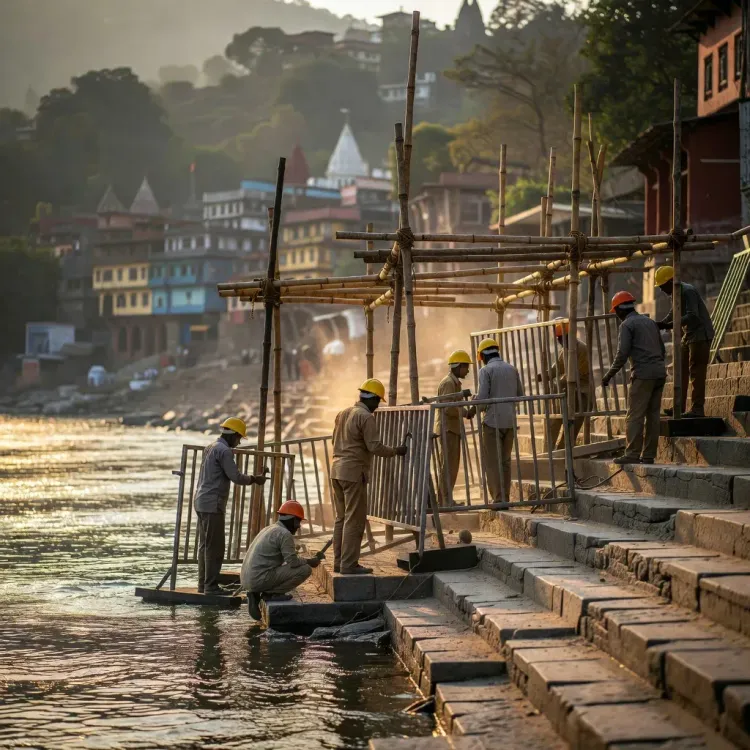
The centrepiece of the day's orders is a two-pronged funding commitment for the Haridwar Kumbh Mela 2027. ₹175 crore has been approved under the state sector for temporary infrastructure and other essential arrangements, while a further ₹317 crore — routed through the Urban Development Department — will finance works already approved by the Government of India. Together, the two tranches add up to ₹492 crore for the mega-pilgrimage that draws tens of millions of devotees to the banks of the Ganga.
Kumbh preparations in Haridwar involve constructing pontoon bridges, temporary ghats, crowd-management corridors, sanitation blocks, and lighting grids that must be operational months before the first major bathing date. The scale of the state-plus-Centre funding architecture reflects lessons from earlier editions: logistics bottlenecks typically begin with delayed financial releases, not delayed construction.
Tehri Dam Families: A 1988 Policy Gets a Long-Overdue Rewrite
Perhaps the most consequential single line in the approval package concerns 178 families displaced by the Tehri Dam project in Tehri district. Under the Rehabilitation Policy of 1988, the cash compensation payable in lieu of agricultural land had been frozen at ₹5 lakh per family — a figure set nearly four decades ago. CM Dhami has now approved raising that amount to a combined total of ₹132.43 crore for all 178 eligible families, a revision that recasts the legacy of one of the country's most-debated dam displacements.
Tehri's submergence zone displaced thousands of families across the 1980s and 1990s; pending rehabilitation cases have shadowed the project ever since. Updating the compensation quantum — even at this late stage — closes a chapter that has been a recurring source of local grievance.
Panchayat Funds, Roads, and Irrigation Across the Districts
Beyond the headline numbers, the approvals trace an arc of district-level spending. ₹82.21 crore has been sanctioned as the third quarterly instalment for financial year 2026-27 to all district panchayats on an ad hoc basis, applying the Fifth State Finance Commission's recommendations while the Sixth Commission's report is awaited.
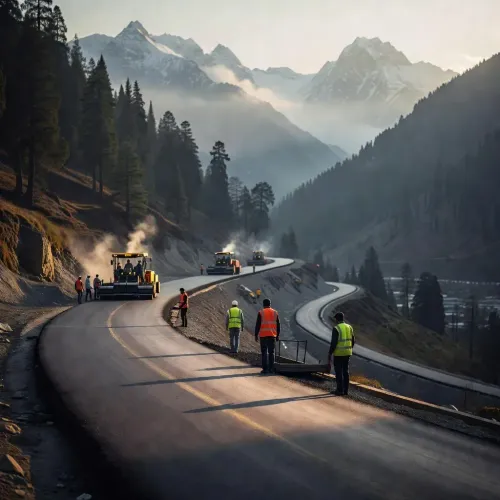
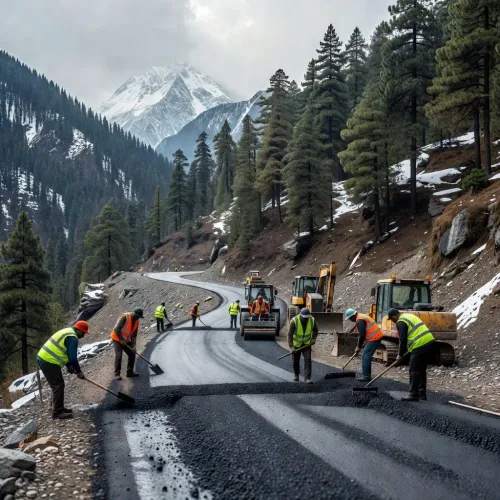
Road connectivity gets a boost in Almora district, where ₹6.13 crore has been cleared for blacktopping the Gairkheta–Balmara–Saraikhet motor road in the Salt assembly constituency. In Udham Singh Nagar, ₹7.84 crore will go toward restoring the Upper Baigul Canal from Sidcul to Pandari in the Sitarganj assembly area — a lifeline for farmland in the Terai belt.
Irrigation investments extend to Pauri Garhwal, where ₹1.43 crore has been approved for a sprinkler-based tubewell at village Dhikoliya in Rikhnikhal block, and to Nainital district, where ₹2.54 crore will fund a lift irrigation scheme at village Lweshal in Ramgarh block — addressing the perennial water-access challenge of mid-hill agriculture.
Heritage Sites and Local Works Also in the Frame
Three construction works in BHEL Ranipur assembly constituency in Haridwar district have been sanctioned for ₹2.67 crore under the state plan. In Pithoragarh district, ₹45.03 lakh has been approved for beautification of the Saktya Badbaap Temple along with a boundary wall and dharamshala at village Lamakhet in Munakot development block. And in Champawat district, ₹50 lakh (against a projected ₹87.70 lakh) has been cleared for developing the historic Brahmcharini Mela site at Gogna Tok in Punauli gram panchayat.
Government orders (shासनादेश) accompanying the Champawat approval have already been issued — signalling that at least some of these projects are past the approval stage and entering execution.
With Kumbh 2027 less than eighteen months away and panchayat funds now flowing into their third quarterly tranche, the clock on delivery has started. How fast the money moves from sanction to shovel will determine whether Uttarakhand's ambitious hill-development agenda translates from files into field.
Point of View
Panchayat devolution, irrigation, and Tehri Dam rehabilitation into a single approval round reflects a familiar BJP governance optic: demonstrate both scale and granularity simultaneously. The Tehri compensation revision is particularly significant — updating a 1988 benchmark acknowledges that legacy displacement grievances are electoral liabilities in hill constituencies. The two-track Kumbh financing (state plus Centre) signals the Uttarakhand government's intent to leverage central tourism and urban development pipelines rather than bear the full fiscal burden alone. Panchayat fund timelines will be the real test: ad hoc releases tied to a still-awaited Sixth Finance Commission report leave local bodies in a structurally uncertain position.
NationPress
25 Oct 2026
Frequently Asked Questions
How much money has been approved for Haridwar Kumbh Mela 2027?
Chief Minister Dhami approved a total of ₹492 crore for Kumbh Mela 2027: ₹175 crore from the state sector for temporary infrastructure and ₹317 crore through the Urban Development Department for works approved by the Government of India.
What has changed for Tehri Dam displaced families?
The cash compensation payable to displaced families in lieu of agricultural land has been revised from the 1988 rate of ₹5 lakh per family to a total of ₹132.43 crore shared among 178 eligible families , providing significantly higher relief under the Rehabilitation Policy 1988.
What panchayat funds did CM Dhami release on 25 October 2026?
₹82.21 crore was sanctioned as the third quarterly instalment for FY 2026-27 to all district panchayats in Uttarakhand on an ad hoc basis, pending the Sixth State Finance Commission's recommendations.
Which districts received irrigation project approvals?
Pauri Garhwal received ₹1.43 crore for a sprinkler-based tubewell at village Dhikoliya, and Nainital district received ₹2.54 crore for a lift irrigation scheme at village Lweshal in Ramgarh block.
What road project was approved in Almora district?
₹6.13 crore was sanctioned for blacktopping the Gairkheta–Balmara–Saraikhet motor road in the Salt assembly constituency of Almora district.