CM Dhami clears ₹74 crore for Uttarakhand disaster recovery
Synopsis
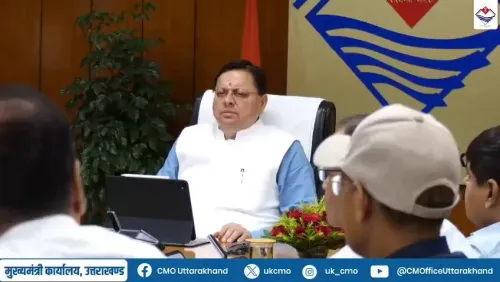
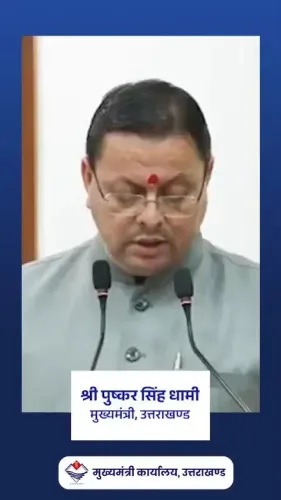
Chief Minister Pushkar Singh Dhami has approved ₹74 crore from Uttarakhand's State Disaster Response Fund for school repairs, a Bageshwar helipad, Gangotri sanitation works, border-village flood walls, road restoration across eight districts, and earthquake early-warning system maintenance.
Key Takeaways
₹74 crore total approved by CM Pushkar Singh Dhami from the State Disaster Response Fund for multi-sector disaster recovery. ₹30 crore earmarked for urgent repairs to primary and secondary schools damaged by disaster, split equally between the two levels. ₹8.91 crore sanctioned for a new helipad at Beda-Majhda (Karimpur) in Bageshwar district to improve emergency connectivity. ₹4.99 crore approved for sewer-line and sanitation works at Gangotri Dham pilgrimage site. ₹4.62 crore allocated for flood protection of border villages and an SSB camp on the India-Nepal border along the Jagbuda river .
The Chalkudiya-Masmoli-Naukhouli motor road in Chaubattakhal constituency renamed Shaheed Mandeep Singh Negi Motor Marg in honour of a local martyr.
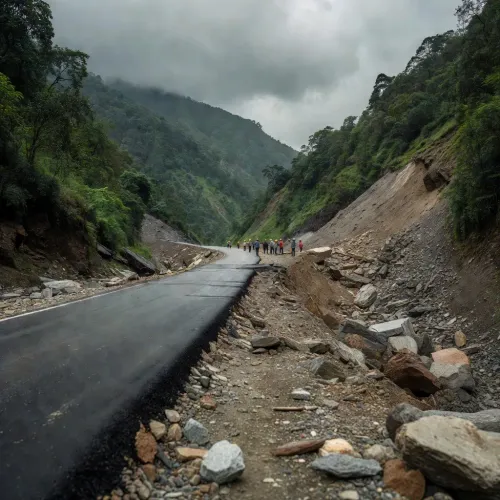
Weeks of floods and landslides have battered Uttarakhand's schools, roads and riverside villages — and Chief Minister Pushkar Singh Dhami has now unlocked ₹74 crore from the State Disaster Response Fund to begin the repair. The approvals, announced on Tuesday, 11 August 2026, span eight districts and range from crumbling classrooms to flood embankments on the India-Nepal border.
₹30 crore to get children back in school
The single largest allocation in the package targets education. ₹15 crore has been sanctioned for secondary schools and another ₹15 crore for primary schools — ₹30 crore in total — drawn from the SDRF's recovery and reconstruction head. The explicit goal is swift repair of damaged infrastructure so that students and staff are safe and teaching can continue without interruption. Uttarakhand's mountain schools are acutely vulnerable: a single cloudburst can shear off a retaining wall, render a building unsafe, and push hundreds of children into makeshift arrangements for months.
Beda-Majhda helipad and Gangotri's sanitation overhaul
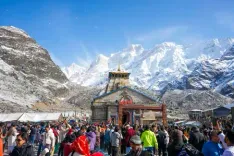
₹8.91 crore has been cleared for a new helipad at Beda-Majhda (Karimpur) in Bageshwar district — a critical connectivity node in a region where roads can vanish overnight in a landslide. At Gangotri Dham, one of Hinduism's four char dham pilgrimage sites, ₹4.99 crore will fund sewer-line extensions and public toilet connections for households previously left off the network. Pilgrimage-season sanitation failures at high-altitude shrines have long been a pressure point; this allocation directly addresses that gap.
Flood walls for border villages and Khatima's seven hamlets
On the India-Nepal border, villages of Sisaiya, Melaghat and an SSB camp office on the right bank of the Jagbuda river in Udham Singh Nagar district will receive ₹4.62 crore in flood-protection works. Seven more villages in the Khatima development block of the same district get ₹4.01 crore to shield residential buildings from river and drain flooding. Protecting border-area infrastructure carries a dual civilian-security logic that district administrations have flagged repeatedly in past monsoon reviews.
Chamoli's road clearance bills and the earthquake warning grid
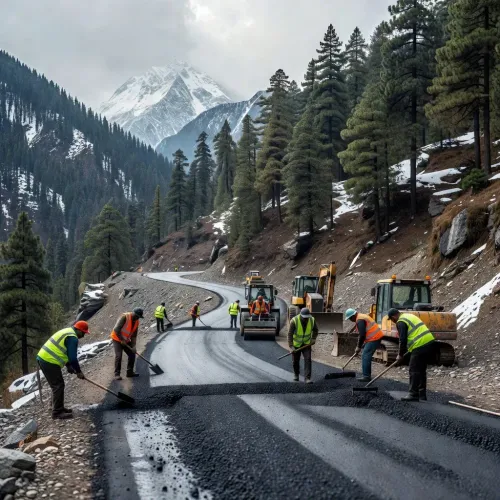
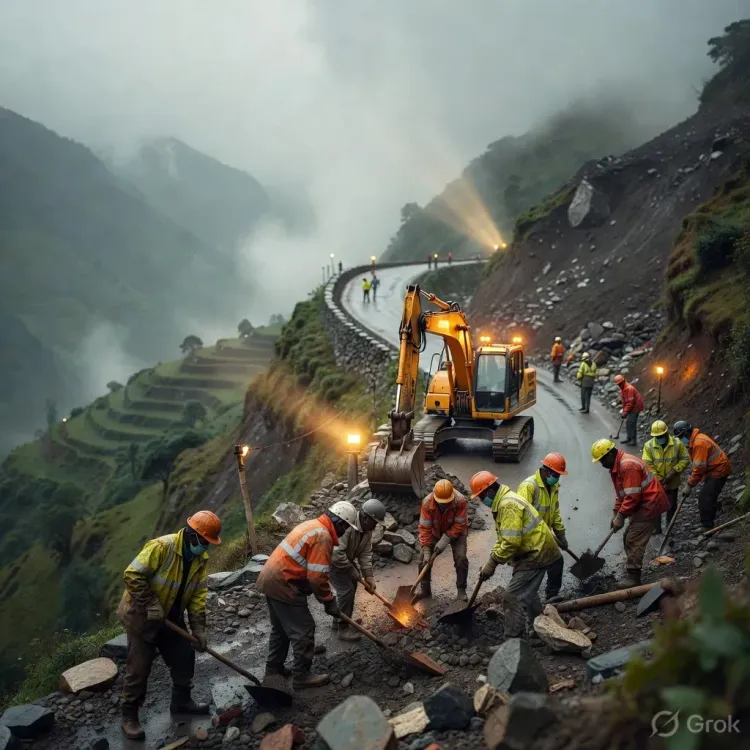
In Chamoli district, JCB and excavator operators who cleared disaster-blocked roads under open-communication protocols during financial year 2024-25 and earlier will finally be paid — ₹3.18 crore from the SDRF's relief-and-rescue head settles those pending invoices. Separately, ₹2 crore has been approved to maintain the state's earthquake early-warning system, ₹1.90 crore to recharge satellite phones, ₹60 lakh for disaster mock drills, ₹40 lakh for World Bank-assisted monitoring equipment and expert honoraria at the Joshimath landslide control room, and ₹18 lakh for EERS personnel. Eight districts — Uttarkashi, Bageshwar, Almora, Chamoli, Champawat, Rudraprayag, Pithoragarh and Dehradun — share ₹1.08 crore across relief, reconstruction and capacity-building heads.
A road renamed for a martyr
Beyond the financial approvals, CM Dhami also cleared a symbolic but significant decision: the Chalkudiya-Masmoli-Naukhouli motor road in the Chaubattakhal assembly constituency will henceforth be known as the Shaheed Mandeep Singh Negi Motor Marg — honouring a soldier from the region who made the ultimate sacrifice.
Uttarakhand's Himalayan terrain makes disaster spending not an exception but a structural budget reality. The question now is speed of execution — every week a school sits unrepaired is a week children study in unsafe conditions, and every monsoon month without a flood embankment is a gamble no border village should have to take.
Point of View
A pattern driven by the state's acute seismic and hydrological exposure. The simultaneous attention to school safety, pilgrimage-site sanitation and border-area flood walls signals a deliberate effort to frame disaster spending as both welfare and strategic infrastructure. Naming a road after a martyr alongside a fiscal approval bundle is a well-worn political gesture that ties civic memory to administrative action. Execution speed and utilisation-certificate compliance will ultimately determine whether this round of approvals translates into durable resilience or another deferred-works backlog.
NationPress
11 Aug 2026
Frequently Asked Questions
Why did Uttarakhand release ₹74 crore from the SDRF?
The funds were approved by Chief Minister Pushkar Singh Dhami to repair disaster-damaged schools, build flood embankments, restore blocked roads, construct a helipad in Bageshwar, and maintain earthquake early-warning equipment across eight districts affected by recurring floods and landslides.
Which districts will benefit from the ₹74 crore Uttarakhand disaster fund?
The approvals cover Uttarkashi, Bageshwar, Almora, Chamoli, Champawat, Rudraprayag, Pithoragarh, Dehradun and Udham Singh Nagar districts, with specific project allocations varying by district.
How much money has been approved for school repairs in Uttarakhand?
₹30 crore has been sanctioned — ₹15 crore each for primary and secondary schools — from the SDRF's recovery and reconstruction head to urgently repair disaster-damaged school infrastructure.
What is the Beda-Majhda helipad project in Bageshwar?
Chief Minister Dhami approved ₹8.91 crore for the construction of a new helipad at Beda-Majhda (Karimpur) in Bageshwar district to improve emergency air connectivity in a region where road access is frequently disrupted by landslides.
What is the Shaheed Mandeep Singh Negi Motor Marg?
It is the newly renamed Chalkudiya-Masmoli-Naukhouli motor road in the Chaubattakhal assembly constituency, renamed by CM Dhami in honour of martyr Mandeep Singh Negi from the region.