CM Dhami expands wildlife attack aid to cover plastic surgery
Synopsis
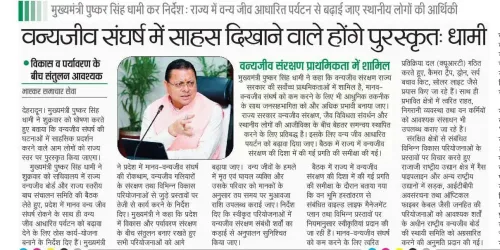
Chief Minister Pushkar Singh Dhami, speaking at Gairsain in Chamoli, announced that Uttarakhand wildlife attack victims will get state financial support for costly procedures like plastic surgery — extending beyond existing ex-gratia relief for the first time.
Key Takeaways
CM Pushkar Singh Dhami made the announcement at Gairsain, Chamoli on November 9, 2026 .
Wildlife attack victims will receive financial aid for plastic surgery and other expensive treatments over and above current compensation.
Chamoli district is among Uttarakhand's most conflict-prone areas due to extensive forest cover bordering villages.
Uttarakhand already maintains ex-gratia relief schemes for wildlife attack casualties; this expands them into specialised medical care.
Eligibility norms, cost ceilings, and implementing agency details are yet to be notified by the state forest department.
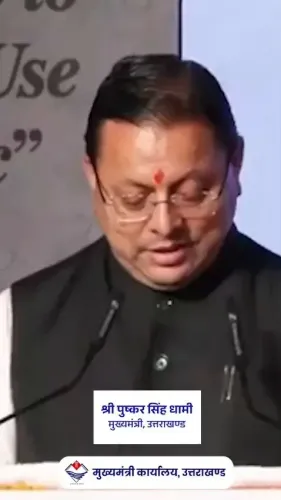
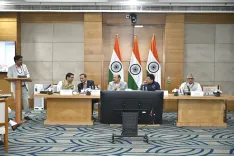
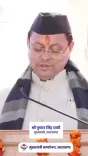
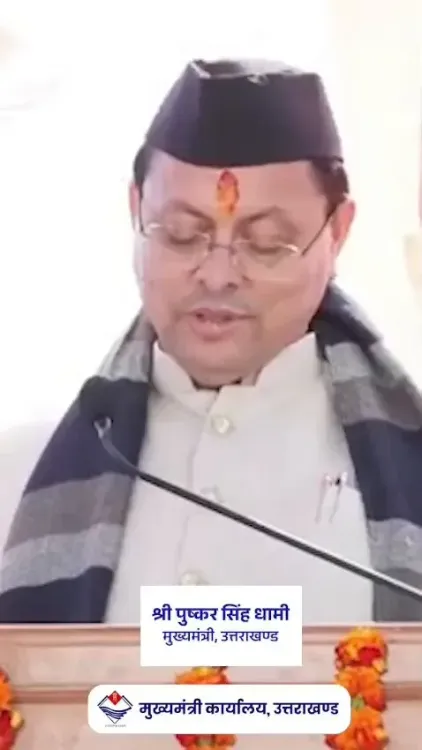
In the forests of Uttarakhand, where leopards, tigers, and elephants share borders with farming villages, a wildlife attack does not end with the animal retreating — for many survivors, the real ordeal begins at the hospital. Chief Minister Pushkar Singh Dhami, speaking at Gairsain in Chamoli district on Monday, November 9, 2026, announced that victims of wildlife attacks will now receive financial assistance for expensive reconstructive procedures such as plastic surgery — over and above the existing state relief.
What Dhami announced at Gairsain
The Chief Minister stated: 'Vanyajeevon ke hamle mein ghayalon ko vartaman sahayata ke atirikt plastic surgery jaise mahange upchar ke liye bhi aarthik sahayata di jayegi' — 'In addition to the current assistance for those injured in wildlife attacks, financial support will also be provided for expensive treatments such as plastic surgery.' The declaration was made in Gairsain, the summer legislative capital of Uttarakhand, located within Chamoli, one of the state's most conflict-prone districts given its dense forest cover.
Why plastic surgery matters in wildlife attack cases
Wildlife attacks — particularly maulings by leopards — frequently leave survivors with severe facial and limb disfigurement that requires multiple rounds of reconstructive surgery. Standard government compensation schemes have historically covered hospitalisation and basic treatment, but the high cost of plastic and reconstructive surgery has pushed many rural families into debt or forced them to forego care entirely. By explicitly naming plastic surgery in his announcement, Dhami is signalling recognition of a gap the existing system has long left open.
Uttarakhand's long history of human-wildlife conflict
Uttarakhand carries one of India's highest burdens of human-wildlife conflict. Its terrain — a patchwork of reserve forests, national parks, and agricultural villages — places large populations of leopards, tigers, and elephants in permanent proximity to rural communities. The state government has maintained ex-gratia compensation schemes for deaths and injuries caused by wild animals for several years, with periodic enhancements responding to public pressure and rising incident numbers. This latest expansion into specialised medical coverage is a continuation of that incremental policy arc.
Details still to come from the forest department
The announcement sets a direction; the specifics — eligibility norms, the ceiling on reimbursable surgery costs, funding sources, and the responsible implementing agency — are expected to follow in forthcoming forest department notifications or the state budget. Advocacy groups representing forest-fringe communities have consistently demanded that relief frameworks keep pace with the actual medical costs survivors face, and this commitment, once formalised, would mark a concrete step in that direction.
For the families living at the edge of Uttarakhand's forests, the question has never been whether the wildlife is there — it has always been whether the state will be there too, when the worst happens. Dhami's Gairsain declaration suggests the answer is shifting.
Point of View
Leaving disfigured survivors to bear catastrophic out-of-pocket costs. By naming plastic surgery explicitly, the Uttarakhand government acknowledges that survival is not the finish line; dignified recovery is. Politically, the move targets forest-fringe rural voters who experience conflict most acutely and have historically felt under-served by state machinery. The real test will be in implementation: whether the scheme is notified with meaningful cost ceilings and a simple claims process, or whether it becomes another announcement awaiting operationalisation.
NationPress
9 Nov 2026
Frequently Asked Questions
What did CM Dhami announce for wildlife attack victims in Uttarakhand?
CM Pushkar Singh Dhami announced on November 9, 2026 at Gairsain that wildlife attack victims in Uttarakhand will receive state financial assistance for expensive medical procedures including plastic surgery, in addition to the existing compensation already provided.
Where was the announcement made?
The announcement was made at Gairsain, a town in Chamoli district of Uttarakhand, which also serves as the state's summer legislative capital.
Who is eligible for wildlife attack compensation in Uttarakhand?
Currently, Uttarakhand provides ex-gratia relief to individuals killed or injured in wildlife attacks. The new announcement extends this to cover specialised treatment costs; exact eligibility norms are yet to be formally notified.
Why is human-wildlife conflict a major issue in Uttarakhand?
Uttarakhand's vast forest cover and national parks border densely populated agricultural villages, keeping communities in close and often dangerous proximity to leopards, tigers, and elephants — making human-wildlife conflict a persistent welfare challenge.
Will the plastic surgery aid come from a new scheme or the existing one?
The announcement indicates it will be an extension of existing wildlife victim assistance rather than a wholly new scheme, but detailed implementation guidelines including funding sources and procedure limits are yet to be released by the state forest department.