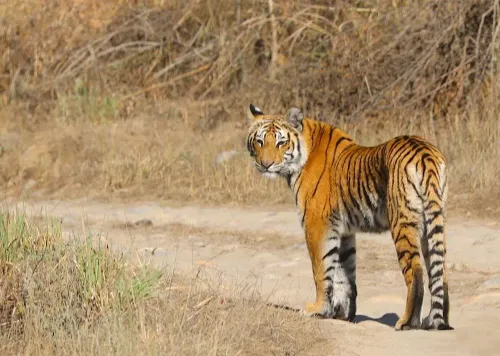
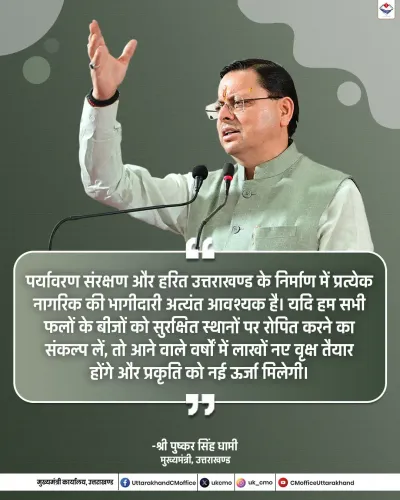
CM Dhami: Protect Forests, Secure Tigers and Ecology
Synopsis
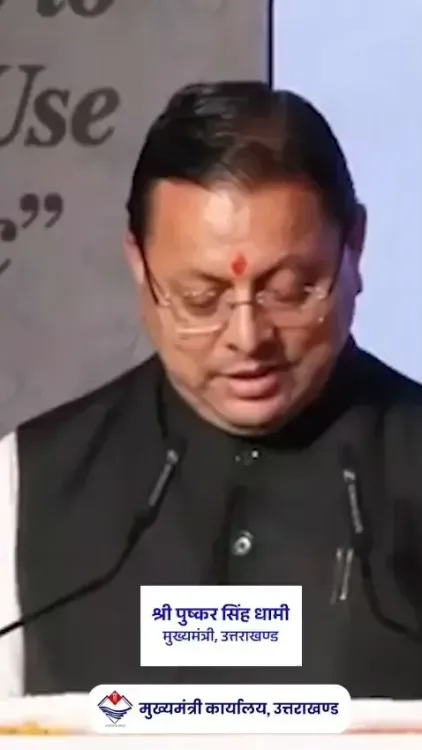
Uttarakhand CM Pushkar Singh Dhami declared that protected forests are the foundation of a flourishing ecology and, in turn, safe tigers — reaffirming the state's conservation philosophy anchored in forest-first thinking and aligned with Project Tiger's founding logic.
Key Takeaways
CM Pushkar Singh Dhami linked forest protection directly to ecological health and tiger safety in a statement on 1 August 2026 .
Uttarakhand has over 45 percent forest cover and hosts several tiger reserves, including Corbett Tiger Reserve , India's oldest national park (est.
Project Tiger , launched in 1973 , established the habitat-first approach to tiger conservation that Dhami's statement echoes.
The state's Forest Policy of 2001 emphasised community participation and biodiversity conservation as core pillars.
The next All India Tiger Estimation survey will be a critical test of whether conservation commitments translate into population gains.
A forest saved is a tiger saved — and an entire ecosystem protected. That, in essence, is the message Uttarakhand Chief Minister Pushkar Singh Dhami put forward in a statement shared by the Chief Minister's Office on Saturday, 1 August 2026, tying the fate of the state's wildlife directly to the health of its forests.
Dhami's words, in Hindi, were unambiguous: 'यदि हमारे जंगल सुरक्षित रहेंगे तो पूरी इकोलॉजी समृद्ध होगी और जब इकोलॉजी समृद्ध होगी तो बाघ भी सुरक्षित होंगे' — 'If our forests remain protected, the entire ecology will flourish, and when the ecology flourishes, tigers too will be safe.' Simple logic. Enormous stakes.
Why Uttarakhand's Forests Are the Frontline
Uttarakhand is not a peripheral player in India's conservation story. The Himalayan state, formed in 2000, carries over 45 percent forest cover and is home to some of the country's most critical protected areas — including Corbett Tiger Reserve, India's oldest national park, established in 1936 and still one of the most closely watched sites for tiger population data. What happens in these forests does not stay in these forests; the ecological corridors here feed into river systems and biodiversity chains that extend far beyond state lines.
The CM's framing — forest first, ecology second, tiger third — maps precisely onto the logic that has underpinned Project Tiger since its launch in 1973. That central government initiative recognised early that you cannot protect a predator without protecting its prey base, and you cannot protect prey without protecting the habitat. Dhami is, in effect, restating that founding principle for a new moment.
Forest Communities, Corridors, and the Next Tiger Count
The broader pattern across Indian states with high forest cover has been to link tiger protection to ecological security and, increasingly, to sustainable tourism revenue. Uttarakhand's Forest Policy of 2001 had already embedded community participation and biodiversity conservation as pillars — a recognition that forest-edge communities are both the first line of defence and the first to bear the cost of wildlife conflict.
The National Tiger Conservation Authority continues to monitor and push for expanded habitat corridors nationally. The next All India Tiger Estimation survey will be a key data point — its findings will either validate or pressure-test the conservation posture that statements like Dhami's represent.
Forests do not protect themselves. The CM's statement is a reminder that political will is as much a part of the conservation equation as any policy on paper.
Point of View
This is also sound economic positioning. Whether the rhetoric translates into budget allocations for forest protection and anti-encroachment measures will be the real test.
NationPress
15 Sept 2026
Frequently Asked Questions
What did Uttarakhand CM Pushkar Singh Dhami say about tiger conservation?
CM Dhami stated that if forests are protected, the entire ecology will flourish, and when ecology flourishes, tigers will also be safe — underlining a forest-first approach to wildlife conservation.
Which tiger reserves are located in Uttarakhand?
Uttarakhand is home to several tiger reserves, most notably Corbett Tiger Reserve, India's oldest national park established in 1936, which is a key site for tiger population monitoring.
What is Project Tiger and how does it relate to Uttarakhand?
Project Tiger is a central government conservation initiative launched in 1973 to protect tigers through dedicated reserves and habitat protection. Uttarakhand hosts multiple reserves under this programme following its formation as a state in 2000.
How much forest cover does Uttarakhand have?
Uttarakhand has over 45 percent forest cover, making it one of India's most forested states and a critical zone for biodiversity and wildlife corridor management.
What is the All India Tiger Estimation survey?
The All India Tiger Estimation is a periodic national survey conducted to count tiger populations across India's reserves and assess the health of their habitats, used to guide conservation policy.