CM Dhami Calls for Conservation Pledge on World Nature Day
Synopsis
On World Nature Conservation Day, 28 July 2026, Uttarakhand Chief Minister Pushkar Singh Dhami called on citizens to pledge tree plantation, water conservation, and protection of natural resources, linking nature to the heritage of future generations.
Key Takeaways
Uttarakhand Chief Minister Pushkar Singh Dhami marked World Nature Conservation Day on 28 July 2026 with a public message on X.
He called for pledges on tree plantation , water conservation , and maintaining ecological balance .
Uttarakhand has over 60 percent forest cover and hosts protected areas including Jim Corbett and Rajaji National Parks .
The state has a historic conservation legacy through the Chipko Movement of the 1970s and its network of Van Panchayats .
India's National Forest Policy 1988 and Uttarakhand's State Action Plan on Climate Change 2014 form the policy backbone for such conservation messaging.
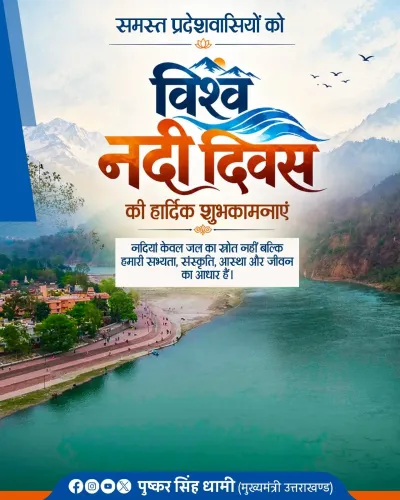
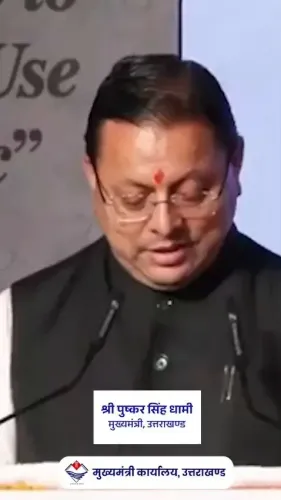
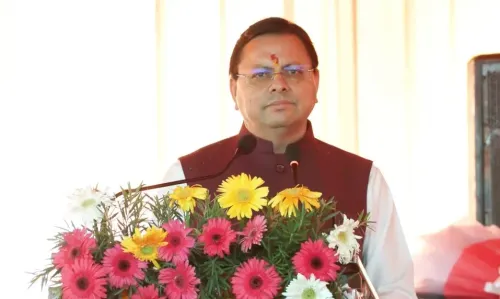
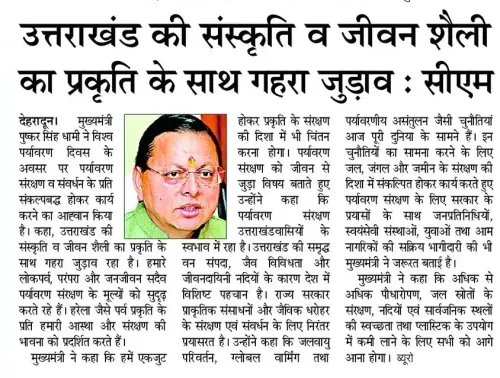
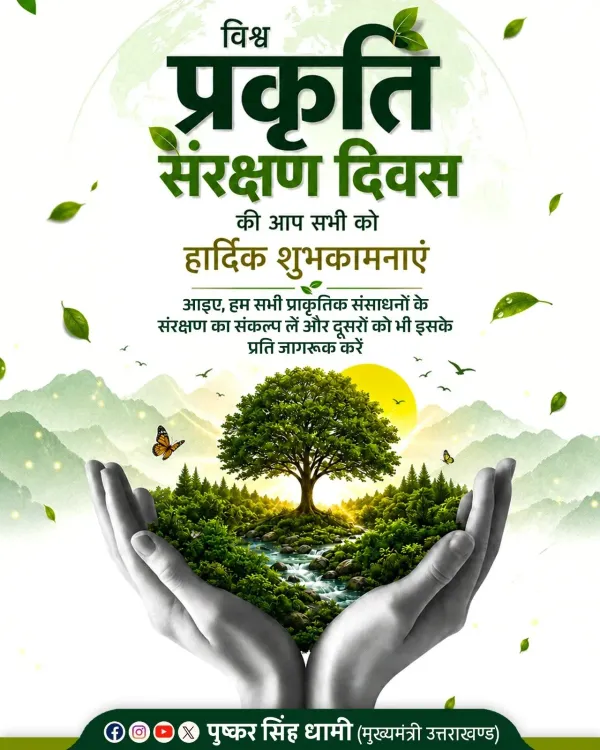
Uttarakhand Chief Minister Pushkar Singh Dhami on Tuesday, 28 July 2026 extended greetings to citizens on World Nature Conservation Day, calling on all to commit to protecting natural resources, planting more trees, conserving water, and maintaining environmental balance.
In his post on X, CM Dhami wrote: 'Vishwa Prakriti Sanrakshan Divas ki aap sabhi ko hardik badhai evam shubhkamnayein' ['Heartfelt congratulations and best wishes to all on World Nature Conservation Day']. He added that nature is not merely the foundation of human life, but also 'the greatest heritage for the safe and prosperous future of generations to come.' He urged citizens to take a pledge on this day for conservation of natural resources, maximum tree plantation, water conservation, and maintaining ecological balance.
Context
World Nature Conservation Day is observed every year on 28 July to raise awareness about protecting natural resources and maintaining a healthy environment. The day encourages governments, communities, and individuals to take concrete steps against biodiversity loss, deforestation, and water scarcity. For a state like Uttarakhand, which holds over 60 percent forest cover and hosts globally significant biodiversity, the observance carries particular weight.
Uttarakhand is home to protected areas including Jim Corbett National Park and Rajaji National Park, and its Himalayan river systems feed water to a vast stretch of the Indo-Gangetic Plain. The state has historically been at the forefront of grassroots conservation, most notably through the Chipko Movement of the 1970s, when villagers in Uttarakhand embraced trees to prevent commercial logging — a campaign that influenced India's national forest policy for decades.
Policy Backdrop
India's National Forest Policy 1988 established conservation and sustainable use of forests as twin national priorities, with Himalayan states like Uttarakhand identified as ecologically sensitive zones. The Forest Rights Act 2006 further recognised community rights over forest lands, giving legal standing to local stewardship traditions. Uttarakhand's State Action Plan on Climate Change, adopted in 2014, outlined targeted strategies for afforestation and water security across the Himalayan region.
The state also maintains a network of Van Panchayats — community-managed forest councils with roots in the early 20th century — that continue to govern local forest resources. These institutions represent one of India's oldest models of participatory environmental governance and remain central to conservation efforts in the hills.
Stakeholders and Impact
The Chief Minister's call to action speaks directly to Uttarakhand's forest communities, Himalayan residents, and the millions of water users downstream who depend on the state's rivers and glaciers. Tourism operators, whose livelihoods are tied to the state's natural landscapes, are also key stakeholders in any conservation push. Climate variability and increasing pressure from infrastructure development and tourism have placed Himalayan ecosystems under growing stress in recent years.
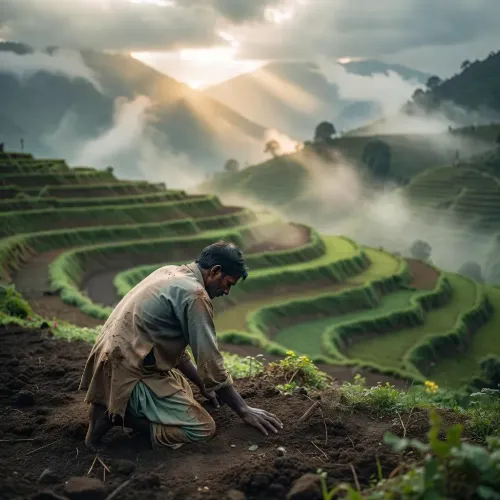
Calls for tree plantation and water conservation align with broader national programmes such as the Green India Mission and the government's stated target of bringing 33 percent of India's geographical area under forest and tree cover. At the state level, monsoon season typically marks the most active period for plantation drives, making July a strategically significant moment for such messaging.
What's Next
Observers will watch for follow-up announcements from the Uttarakhand government around concrete afforestation targets or budget allocations linked to the monsoon plantation season. Any updates to Van Panchayat rules or new state-level conservation schemes would signal a policy intent beyond ceremonial observance. The broader pattern across Indian states with sensitive ecosystems suggests that social media pledges on global environment days are increasingly paired with ground-level programmes to demonstrate measurable impact.
Point of View
Conservation messaging carries deeper resonance given the state's ecological sensitivity, its Chipko legacy, and the downstream dependence of millions on Himalayan water systems. The pledge-oriented framing — tree plantation, water conservation, ecological balance — mirrors the language of national green missions, suggesting alignment with central government targets. Whether the messaging translates into fresh state-level policy action or budget allocation will determine its substantive impact beyond the symbolic.
NationPress
26 Oct 2026
Frequently Asked Questions
What is World Nature Conservation Day and when is it observed?
World Nature Conservation Day is observed every year on 28 July to promote awareness about protecting natural resources, biodiversity, and the environment.
What did Uttarakhand CM Dhami say on World Nature Conservation Day 2026?
CM Pushkar Singh Dhami called on citizens to pledge conservation of natural resources, maximum tree plantation, water conservation, and maintaining ecological balance, describing nature as the greatest heritage for future generations.
Why is nature conservation especially significant for Uttarakhand?
Uttarakhand has over 60 percent forest cover, hosts major protected areas like Jim Corbett and Rajaji National Parks, and its Himalayan rivers supply water to a large part of northern India, making conservation critical for the state and the region.
What is the Chipko Movement and how does it connect to Uttarakhand?
The Chipko Movement was a grassroots campaign in the 1970s where villagers in Uttarakhand embraced trees to prevent commercial logging; it became one of India's most influential environmental movements and shaped national forest policy.
What are Van Panchayats in Uttarakhand?
Van Panchayats are community-managed forest councils in Uttarakhand with origins in the early 20th century; they govern local forest resources and represent one of India's oldest models of participatory environmental governance.