CM Dhami Calls for Biodiversity Action on May 22
Synopsis
On International Day for Biological Diversity, Uttarakhand Chief Minister Pushkar Singh Dhami called for protecting trees, water sources, wildlife, and natural resources, urging citizens to adopt a nature-sensitive lifestyle. The appeal reinforces India's CBD commitments and Uttarakhand's role as a key Himalayan biodiversity zone.
Key Takeaways
CM Pushkar Singh Dhami posted a biodiversity pledge on 22 May 2026 , marking International Day for Biological Diversity .
He described biodiversity as 'the cornerstone of the Earth's balance, human life, and the secure future of coming generations.' India ratified the Convention on Biological Diversity in 1994 and enacted the Biological Diversity Act, 2002 to implement it domestically.
Uttarakhand hosts high-value protected areas including Corbett National Park and the Valley of Flowers in the Western Himalayas.
The state's Biodiversity Board is responsible for documenting resources and regulating access to biological material.
Observers will track whether the message is followed by concrete budget or policy action aligned with the Kunming-Montreal Global Biodiversity Framework .
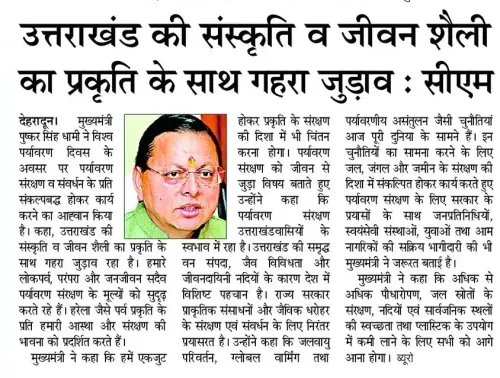
Uttarakhand Chief Minister Pushkar Singh Dhami on Friday, 22 May 2026, marked International Day for Biological Diversity by calling on citizens to pledge the protection of trees, water sources, wildlife, and natural resources, and to adopt a lifestyle sensitive to nature.
Context
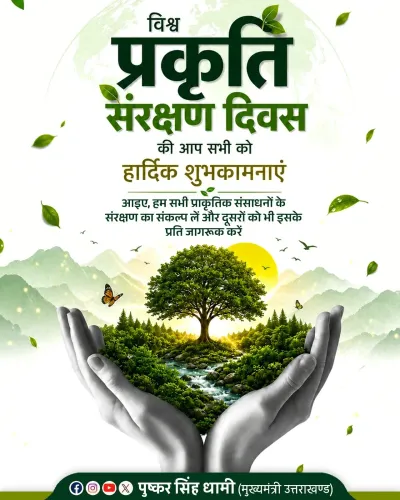
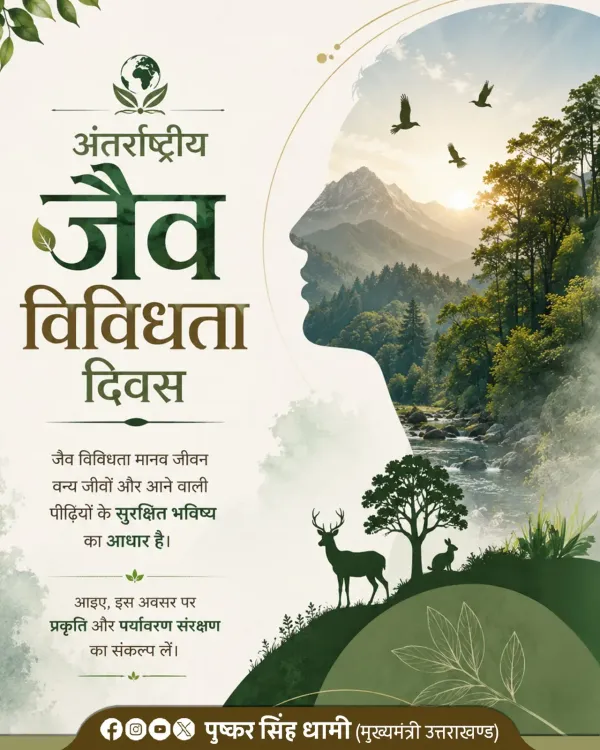
In his post, CM Dhami wrote that the day 'हमें प्रकृति, पर्यावरण और समस्त जीव-जंतुओं के संरक्षण के प्रति अपनी जिम्मेदारियों का स्मरण कराता है' ('reminds us of our responsibilities towards the conservation of nature, the environment, and all living beings'). He described biodiversity as 'the cornerstone of the Earth's balance, human life, and the secure future of coming generations.' The message was accompanied by an image and posted from his official X account.
International Day for Biological Diversity is observed globally every 22 May under the auspices of the United Nations Convention on Biological Diversity. India ratified the Convention on Biological Diversity (CBD) in 1994, committing to conserve biodiversity and ensure its sustainable use.
Policy Backdrop
India enacted the Biological Diversity Act, 2002 to translate its CBD commitments into domestic law and to establish national and state-level biodiversity boards. Uttarakhand subsequently constituted its own State Biodiversity Board, tasked with documenting biological resources, promoting conservation, and regulating access to biological material.
The state occupies a critical position in the Western Himalayas, home to protected areas including Corbett National Park and the Valley of Flowers, both of which carry high biodiversity value. Successive state governments have used the 22 May observance to reinforce commitments under the CBD and, more recently, the Kunming-Montreal Global Biodiversity Framework. Uttarakhand's conservation record is also shaped by the legacy of the Chipko movement of the 1970s, in which hill communities embraced trees to resist commercial felling, directly influencing later state forest policy.
Stakeholders and Impact
The appeal carries direct relevance for Uttarakhand's hill communities and forest-dependent groups, whose livelihoods are closely tied to intact ecosystems. The state's forest department, conservation non-governmental organisations, and eco-tourism operators all operate within the regulatory and ecological framework that biodiversity observances seek to reinforce.
The broader tension between infrastructure development and conservation has periodically surfaced in Uttarakhand, making public messaging around biodiversity politically as well as ecologically significant. CM Dhami's call for a 'nature-sensitive lifestyle' aligns with national-level awareness campaigns targeting urban and rural citizens alike.
What's Next
Observers will watch for any follow-up notifications from the Uttarakhand government on biodiversity action plans, fresh budget allocations for the state forest department, or state participation in forthcoming CBD-related international meetings. The observance also comes as Indian states are expected to align their biodiversity strategies with the targets set under the Kunming-Montreal Global Biodiversity Framework, which calls for protecting 30 per cent of land and ocean areas by 2030. Whether today's pledge translates into concrete policy steps will be the measure of its impact.
Point of View
Suggesting alignment with global biodiversity diplomacy. The real test will be whether the state's budget and regulatory decisions in the months ahead reflect the stated commitment.
NationPress
6 Oct 2026
Frequently Asked Questions
What is International Day for Biological Diversity?
International Day for Biological Diversity is a United Nations observance held every 22 May to promote awareness and action for conserving the world's biological diversity, established under the Convention on Biological Diversity.
What did Uttarakhand CM Dhami say on Biodiversity Day 2026?
CM Pushkar Singh Dhami called on citizens to pledge protection of trees, water sources, wildlife, and natural resources, and to adopt a lifestyle that is sensitive to nature, describing biodiversity as the cornerstone of Earth's balance and future generations' security.
What is the Biological Diversity Act 2002?
The Biological Diversity Act, 2002 is India's domestic law implementing the Convention on Biological Diversity, ratified in 1994. It established the National Biodiversity Authority and mandated state biodiversity boards, including Uttarakhand's.
Why is Uttarakhand important for biodiversity in India?
Uttarakhand lies in the Western Himalayas and hosts protected areas such as Corbett National Park and the Valley of Flowers, making it one of India's most ecologically significant states for wildlife and plant diversity.
What is the Kunming-Montreal Global Biodiversity Framework?
The Kunming-Montreal Global Biodiversity Framework is an international agreement adopted in 2022 that sets targets including protecting 30 per cent of the planet's land and oceans by 2030, and India is among the signatory nations committed to its goals.