CM Dhami Marks World Environment Day with Mass Public Gathering
Synopsis
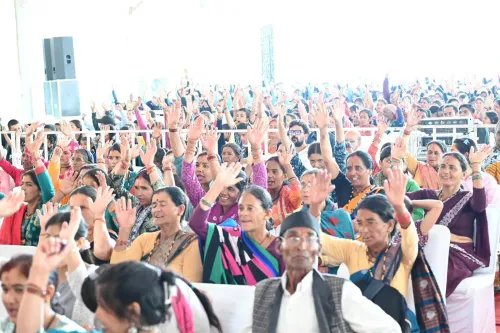
Chief Minister Pushkar Singh Dhami on June 5, 2026 welcomed a mass gathering of women, youth and elders in Uttarakhand for World Environment Day, framing the turnout as evidence of collective public commitment to environmental protection in the Himalayan state.
Key Takeaways
CM Pushkar Singh Dhami addressed a large public gathering in Uttarakhand on World Environment Day, June 5, 2026 .
The event drew women (maatrishakti), youth and senior citizens , reflecting broad demographic participation.
Dhami described the turnout as a demonstration of collective commitment and public participation in environmental protection.
Uttarakhand 's Himalayan geography makes it a frontline state for India's climate and ecosystem conservation agenda.
The state's environmental messaging draws on the legacy of the Chipko movement of the 1970s, rooted in community-led forest protection.
Formal announcements on afforestation targets or river conservation schemes are expected in the weeks following the event.
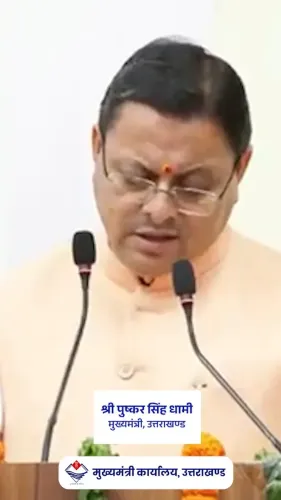
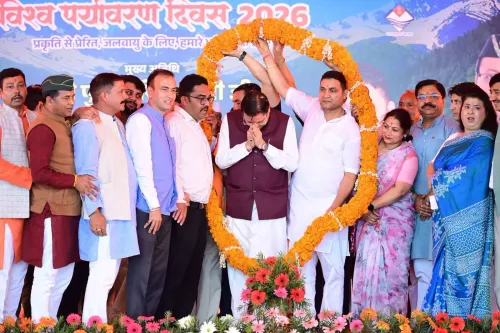
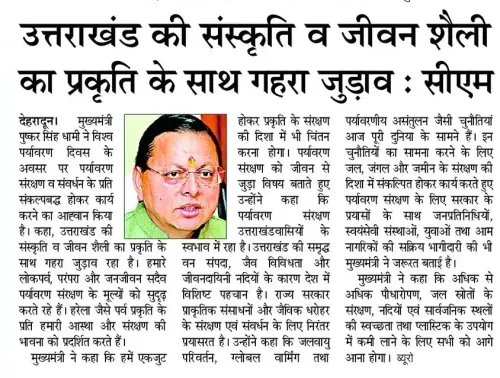
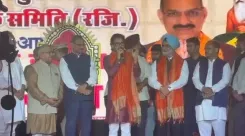
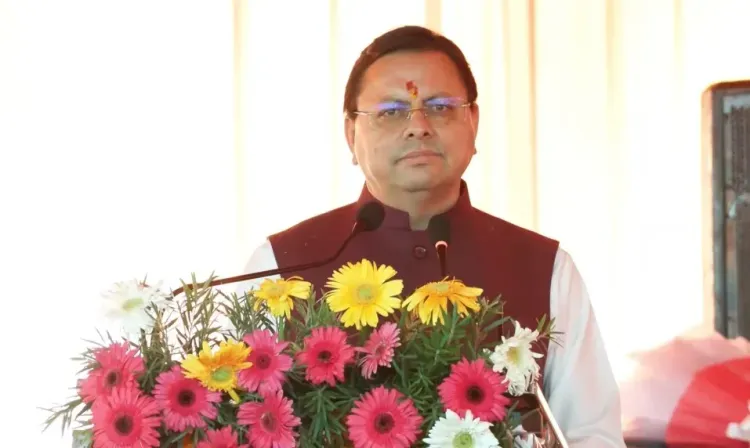
Chief Minister Pushkar Singh Dhami of Uttarakhand on Friday, June 5, 2026 — World Environment Day — welcomed a large gathering of women, youth, and senior citizens at a state-level event, calling their participation a reflection of collective commitment to environmental protection.
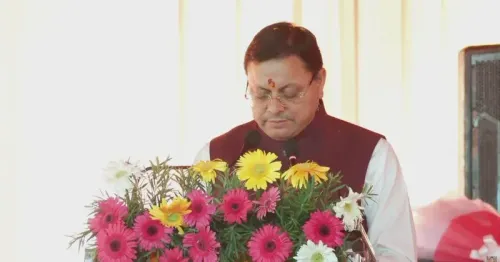
Addressing the crowd, CM Dhami said: 'Vishwa Paryavaran Divas ke avsar par vishaal sankhya mein upasthit maatrishakti, yuvaon, buzurgon evam sabhi sammanit janon ka hriday se swaagat evam abhinandan karta hoon' ['On the occasion of World Environment Day, I wholeheartedly welcome and felicitate the mothers, youth, elders and all respected citizens present in large numbers']. He added that the large turnout 'reflects our collective commitment and public participation in environmental protection.'
Context
World Environment Day, observed every June 5 under the auspices of the United Nations, is the principal global platform for raising awareness and driving action on pressing environmental concerns. Uttarakhand, a Himalayan state that serves as the headwater of major Indian rivers and shelters extensive forest biodiversity, has long positioned itself as a frontline state in India's environmental narrative. The state government's decision to convene a mass public gathering on this occasion underscores the political salience of conservation messaging in the region.
Policy Backdrop
Uttarakhand's emphasis on community participation in conservation carries deep historical roots. The Chipko movement of the 1970s, which originated in the hills of this region, established one of India's earliest and most influential models of grassroots forest protection. That legacy continues to shape how successive state governments frame environmental policy — as a people's movement rather than a top-down regulatory exercise.
At the national level, India's National Action Plan on Climate Change (2008) includes a dedicated National Mission for Sustaining the Himalayan Ecosystem, which directly implicates Uttarakhand's forests, glaciers and river systems. State-level events such as this one serve as visible demonstrations of alignment between local governance and national climate commitments. The participation of maatrishakti — women's collectives — is particularly significant given women's historically central role in forest and water resource management across Himalayan communities.
Stakeholders and Impact
The gathering brought together three distinct demographic groups: women, youth, and senior citizens — a composition that signals a deliberate effort to project intergenerational and cross-sectional ownership of the environmental agenda. Women-led community forest protection groups have been active across Uttarakhand's districts for decades, and their visible presence at state events lends credibility to conservation pledges. Youth engagement, meanwhile, aligns with global frameworks that increasingly position younger generations as primary stakeholders in climate action.
For local communities, such events also serve as platforms where state-level afforestation drives, river conservation schemes, and community forest programmes are typically signalled, even if formal announcements follow in subsequent weeks.
What's Next
Observers will watch for concrete follow-through from the Uttarakhand government in the weeks ahead — including any announced targets for afforestation, updates to river conservation initiatives, or new community forest management guidelines. CM Dhami's framing of the gathering as a symbol of 'jan bhaagidaari' ['public participation'] suggests the administration intends to anchor upcoming environmental policy rollouts in this demonstrated grassroots momentum. The state's Himalayan vulnerability to climate change means that the political commitment signalled on World Environment Day 2026 will face scrutiny against measurable conservation outcomes.
Point of View
Youth and elders, the administration projects a broad-based social coalition behind its conservation agenda. In a state where ecological health is inseparable from livelihoods, framing policy through 'jan bhaagidaari' (public participation) is a well-tested governing strategy that traces back to the Chipko movement. The event fits a wider national pattern in which state governments use UN observances to demonstrate alignment with India's climate commitments without yet tabling specific measurable targets. The real test will be whether the momentum translates into announced programmes — on afforestation, glacial protection or river conservation — in the near term.
NationPress
20 Oct 2026
Frequently Asked Questions
Why did CM Dhami hold a public event on World Environment Day 2026?
CM Pushkar Singh Dhami convened the event to mark World Environment Day on June 5, 2026, using the occasion to highlight public participation in environmental protection and to signal the Uttarakhand government's commitment to conservation.
What is World Environment Day and when is it observed?
World Environment Day is a United Nations-designated annual observance held every June 5 to raise global awareness and promote action on environmental issues.
Why is Uttarakhand particularly important for environmental conservation in India?
Uttarakhand is a Himalayan state that is the source of major Indian rivers, shelters extensive forests and biodiversity, and is directly covered by India's National Mission for Sustaining the Himalayan Ecosystem under the National Action Plan on Climate Change.
What is the significance of maatrishakti in Uttarakhand's environmental events?
Women's collectives, referred to as 'maatrishakti', have historically played a central role in community forest and water resource management in Uttarakhand, a tradition rooted in the Chipko movement of the 1970s.
What policy announcements can be expected after Uttarakhand's World Environment Day event?
Following such events, the Uttarakhand government typically signals or formally announces afforestation targets, river conservation schemes, or community forest management programmes in the subsequent weeks.