CM Dhami Announces Special Grants for Ex-Soldiers in Homestay Scheme
Synopsis
Chief Minister Pushkar Singh Dhami has announced special grants for ex-servicemen and Agniveers to set up homestays under Uttarakhand's Tourism Department scheme, with additional support for infrastructure development in border villages to promote self-employment.
Key Takeaways
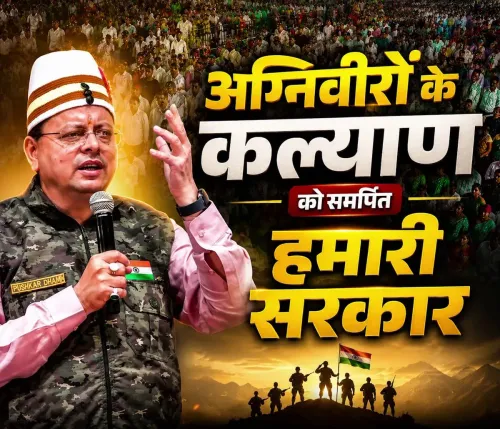
Chief Minister Pushkar Singh Dhami announced on 19 July 2026 that special grants will be extended to ex-servicemen and Agniveers under the Tourism Department's Homestay Scheme.
Residents of border villages — including local inhabitants, ex-servicemen, and Agniveers — will receive grants to develop self-employment-linked infrastructure .
The move builds on Uttarakhand's homestay registration framework that has been expanded progressively since 2015 .
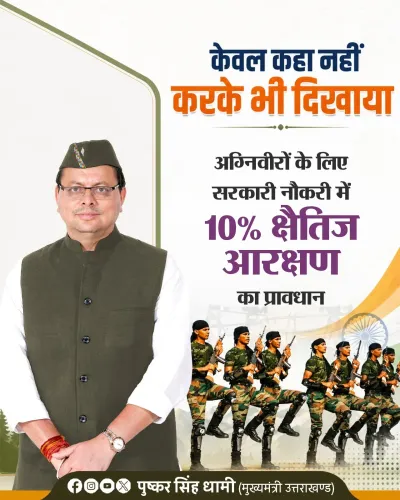
The scheme is partly a state-level response to the Agnipath Scheme (2022) , which created a new category of short-tenure defence recruits requiring post-service rehabilitation support.
Specific grant amounts, eligibility cut-offs, and rollout timelines are yet to be notified by the Tourism Department .
Uttarakhand shares borders with China and Nepal , making border-village population retention a dual economic and strategic priority.
The Chief Minister's Office of Uttarakhand announced on Sunday, 19 July 2026 that the state's Tourism Department Homestay Scheme will be extended with special grants for ex-servicemen and Agniveers to establish homestays, with additional infrastructure support earmarked for residents of border villages.
Context
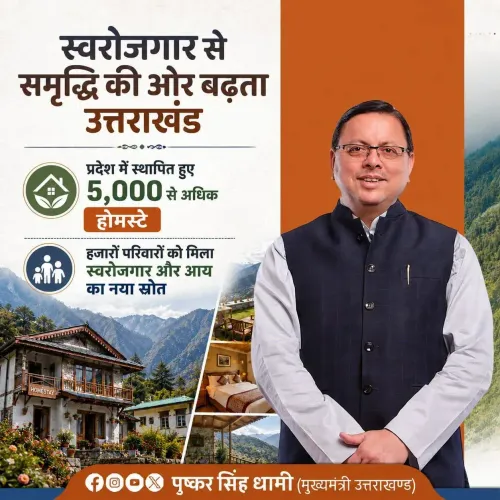
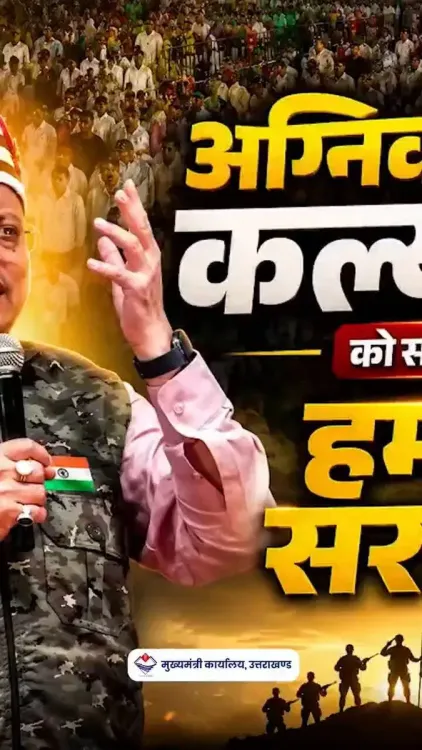
Chief Minister Pushkar Singh Dhami stated: 'पर्यटन विभाग की होमस्टे योजना के अंतर्गत पूर्व सैनिकों व अग्निवीरों को होमस्टे स्थापित करने के लिए विशेष अनुदान दिया जाएगा' ('Under the Tourism Department's Homestay Scheme, special grants will be given to ex-servicemen and Agniveers to establish homestays'). He further noted that residents of border villages — including local inhabitants, ex-servicemen, and Agniveers — will receive special grants to develop self-employment-linked infrastructure facilities.
The announcement was made via the official Chief Minister's Office account on X, tagged under #HomestayScheme and #Uttarakhand. The post was accompanied by a video, suggesting a formal policy communication rather than an off-the-cuff remark.
Policy Backdrop
Uttarakhand, a Himalayan state sharing borders with China and Nepal, has progressively expanded its homestay registration framework since 2015 through successive Tourism Policy iterations aimed at boosting rural incomes in remote areas. The current move builds directly on that lineage by channelling tourism-linked grants toward a security-sensitive demographic.
The Agnipath Scheme, introduced by the Government of India in 2022, created a new category of four-year defence recruits called Agniveers, whose post-service rehabilitation became an immediate policy challenge for states. Uttarakhand was among the states that moved early to announce targeted welfare and employment packages for Agniveers and ex-servicemen in response.
Stakeholders and Impact
The primary beneficiaries are ex-servicemen, Agniveers, and permanent residents of border villages — communities that have historically faced economic migration pressures due to limited local livelihood options. By linking self-employment grants to tourism infrastructure, the scheme aims to simultaneously retain population in strategically sensitive areas and diversify income sources beyond agriculture.
Broader stakeholders include the Uttarakhand Tourism Department, which administers the homestay registration framework, and potential tourists seeking authentic village experiences near the high-altitude border zones. A denser network of registered homestays in these areas could also support government objectives around border-area development and area familiarisation.
What's Next
The announcement does not specify grant amounts, eligibility cut-offs, or disbursement timelines — details that the Tourism Department is expected to notify separately. Observers will watch for possible convergence with central border-area development programmes and the state's 2026-27 budget allocations.
If operationalised with clear application windows and adequate outreach in remote districts, the scheme could set a template for other Himalayan border states grappling with the twin challenges of post-Agnipath rehabilitation and rural tourism promotion.
Point of View
The Dhami government is addressing economic migration and strategic area-retention in a single move — a dual-purpose approach that carries visible electoral resonance in a state with one of India's highest per-capita military enlistment rates. The absence of specific grant figures in the public statement leaves room for implementation gaps, but the directional signal is consistent with Uttarakhand's pattern of linking tourism capital to national-security geography. How quickly the Tourism Department issues operational guidelines will determine whether this remains a headline or becomes a measurable intervention.
NationPress
18 Oct 2026
Frequently Asked Questions
What is the Uttarakhand Homestay Scheme for ex-servicemen?
Under the Uttarakhand Tourism Department's Homestay Scheme, Chief Minister Pushkar Singh Dhami has announced that special grants will be provided to ex-servicemen and Agniveers to help them establish homestays, with additional infrastructure support for residents of border villages.
Who are Agniveers and why are they included in this scheme?
Agniveers are four-year short-service defence recruits inducted under the central government's Agnipath Scheme launched in 2022. After completing their tenure, their rehabilitation becomes a state responsibility, and Uttarakhand is channelling tourism-linked grants to support their self-employment.
Which villages benefit from the Uttarakhand border village homestay grant?
The scheme targets residents of border villages in Uttarakhand, a Himalayan state sharing borders with China and Nepal, where economic migration has been a persistent challenge. Specific village lists are yet to be notified by the Tourism Department.
How much grant will ex-servicemen get under the Uttarakhand Homestay Scheme?
The exact grant amount has not been specified in the announcement made by Chief Minister Dhami. The Tourism Department is expected to release detailed notifications covering grant quantum, eligibility criteria, and application timelines.
What is the Uttarakhand Tourism Department Homestay Scheme?
The Uttarakhand Tourism Department's Homestay Scheme is a programme that promotes village-based tourism by registering and supporting homestays in rural and remote areas, with the goal of boosting local incomes. The framework has been progressively expanded since 2015 to cover increasingly remote regions including border villages.