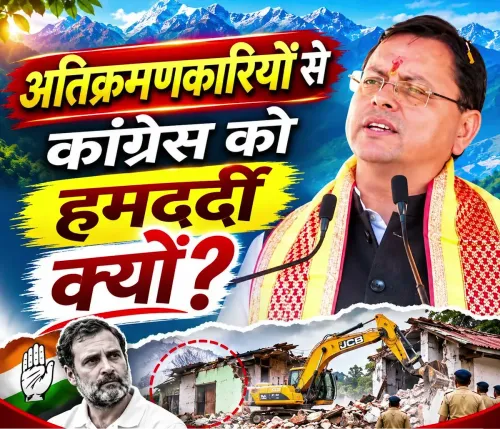
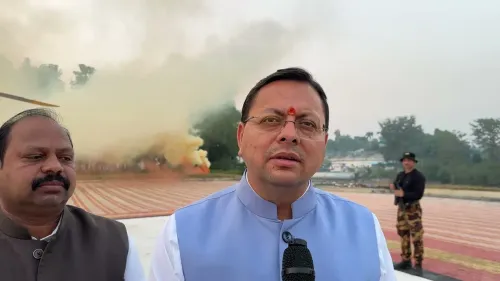
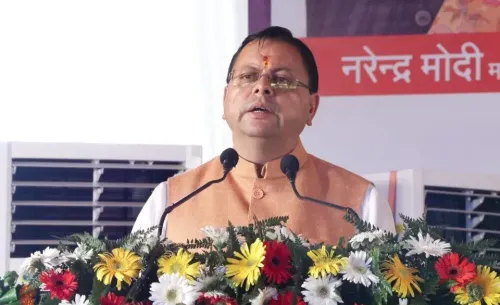
CM Dhami fires back at those who called Uttarakhand residents infiltrators
Synopsis
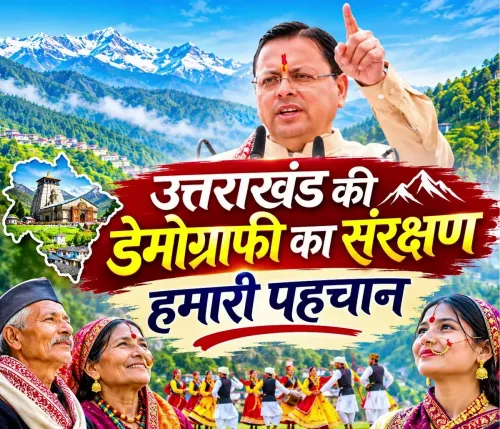
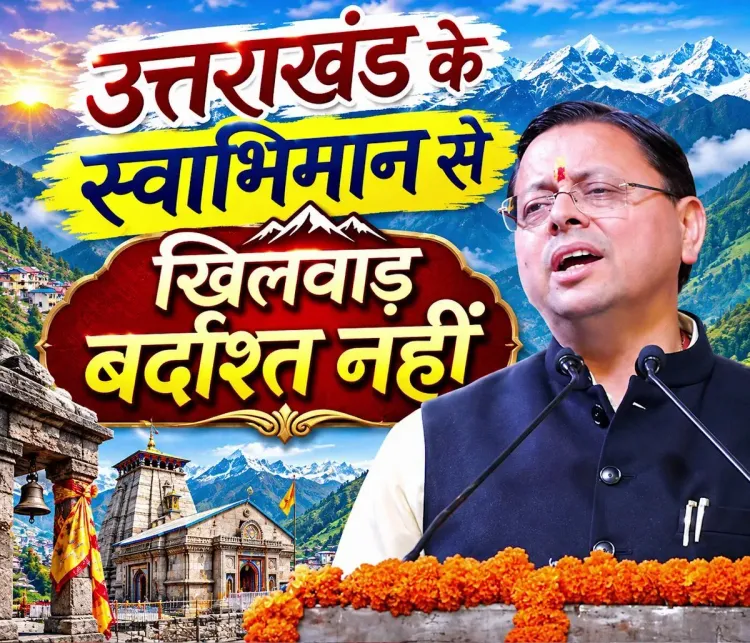
Uttarakhand CM Pushkar Singh Dhami issued a sharp warning on 14 November 2026 to those who allegedly called the state's residents infiltrators, invoking Devbhoomi's identity and asserting that its people know how to answer an insult.
Key Takeaways
CM Pushkar Singh Dhami posted a strongly worded statement on 14 November 2026 defending Uttarakhand's residents against being labelled as infiltrators.
He invoked the state's identity as Devbhoomi (Land of the Gods), saying self-respect is embedded in its very soil.
The term used in the attack — ghuspaithiya (infiltrator) — carries significant political weight in India's hill and border-state discourse.
Dhami's post carries a veiled escalatory warning: 'the people here know how to respond to an insult.' The specific individual or party behind the original remark was not identified in the post or verified in available research.
The statement fits a broader pattern of BJP leaders in hill states mobilising asmita (identity) rhetoric around residency and migration debates.
Some battles are fought on borders — others, on the floor of public discourse. Uttarakhand Chief Minister Pushkar Singh Dhami drew a sharp line on Saturday, 14 November 2026, firing a pointed warning at those who, he said, had insulted the people of the state by labelling them as infiltrators, declaring that the soil of Devbhoomi (the Land of the Gods) is soaked in self-respect — and its people know how to answer an insult.
In a post on X, Dhami wrote: 'Those who dare to challenge the pride of Uttarakhand have perhaps forgotten that the people of Devbhoomi never compromise on their honour and identity. Those who have insulted the people of Uttarakhand by calling them infiltrators must understand that self-respect lives in this soil, and the people here know very well how to respond to an insult.'
The 'infiltrator' charge that lit the fuse
The specific trigger behind Dhami's statement could not be independently verified, but the vocabulary is unmistakable. The word ghuspaithiya — 'infiltrator' — carries heavy political charge in India's hill and border states, where debates over residency rights, demographic change, and land ownership have simmered for years. Calling the residents of a state infiltrators is not an obscure slight; it strikes at the foundational question of who belongs.
Uttarakhand, officially recognised in political and cultural idiom as Devbhoomi, has a history of sensitivity around migration — both the outward migration of youth seeking employment elsewhere, and the inward movement of people from the plains. That dual pressure makes identity politics in the state unusually charged, and 'asmita' — identity or selfhood — a recurring rallying cry across party lines, though particularly prominent in BJP messaging.
Dhami's signature 'asmita' pitch
Dhami's language follows a template familiar from his tenure: frame any perceived slight to the state as an affront to its spiritual and cultural heritage, then position the government — and by extension the ruling party — as the shield against that affront. The phrase 'yahan ki mitti mein swabhimaan basta hai' ('self-respect lives in this soil') is the kind of line that lands as a cultural assertion as much as a political rebuttal.
Across several BJP-governed hill and border states, senior leaders have periodically deployed exactly this register — dignity, soil, identity — to consolidate local sentiment around residency and demographic debates. The pattern is consistent enough that political observers treat it as a deliberate strategic posture, not merely a spontaneous reaction.
What follows the warning
Dhami's post carries a subtle escalatory note — 'the people here know how to respond to an insult' — that stops just short of specifying a consequence, leaving the follow-through deliberately open. Whether this translates into a legislative push around residency or domicile policy, a formal complaint, or remains a rhetorical salvo aimed at the next assembly session, is the story to watch. Opposition parties in the Uttarakhand Legislative Assembly are likely to respond, potentially forcing a sharper debate on exactly who made the original remark and in what context.
In a state where the politics of belonging are never far from the surface, Dhami has just made sure the question stays front and centre.
Point of View
He shifts the terrain from political debate to collective honour, making any counter-argument feel like a defence of the original insult. The unresolved question of who actually used the word 'infiltrator' is strategically useful: it keeps the wound open and the outrage transferable. With assembly sessions on the horizon, this could be the opening move in a longer legislative or electoral sequence.
NationPress
14 Nov 2026
Frequently Asked Questions
What did CM Pushkar Singh Dhami say about Uttarakhand residents being called infiltrators?
On 14 November 2026, CM Dhami posted on X stating that those who insulted Uttarakhand's people by calling them infiltrators must understand that self-respect is part of the state's identity, and that the people know how to respond to such an insult.
Who called Uttarakhand residents infiltrators?
CM Dhami did not name the individual or party in his post, and the specific source of the remark could not be independently verified from available information.
What does 'Devbhoomi' mean and why is it important to Uttarakhand's identity?
'Devbhoomi' means 'Land of the Gods' and is the cultural and official identity of Uttarakhand, referencing its dense concentration of Hindu pilgrimage sites and Himalayan heritage — making any perceived slight to its residents politically and emotionally significant.
What is 'asmita politics' in Indian state-level BJP campaigns?
Asmita politics refers to the strategy of mobilising regional or cultural identity — framing governance as protection of the community's honour and belonging — commonly used by BJP leaders in hill and border states to consolidate local sentiment.
Could Dhami's statement lead to new residency or domicile policies in Uttarakhand?
It is possible. His post hints at a formal response ('the people know how to answer'), which political observers say could translate into legislative moves around domicile or residency rights, though no specific policy has been announced.