CM Dhami Hails Uttarakhand's Welfare Policies as National Model
Synopsis
Uttarakhand Chief Minister Pushkar Singh Dhami on 27 June 2026 said his government's firm decisions and welfare policies are setting a national example, tagging PM Modi and Amit Shah in a post that reinforces the BJP's 'double engine governance' narrative.
Key Takeaways
CM Pushkar Singh Dhami posted on 27 June 2026 that Uttarakhand's welfare-focused policies are setting an example across India.
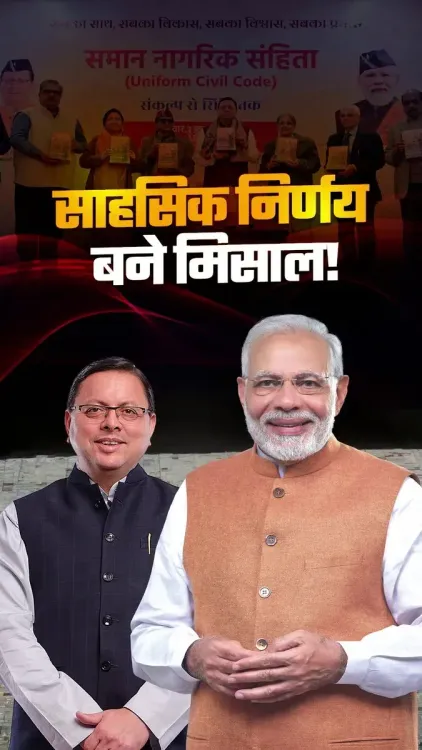
Uttarakhand became the first state in India to enact a Uniform Civil Code in 2024 .
The state also passed a stringent anti-conversion law in 2022 , framed as a public-order measure.
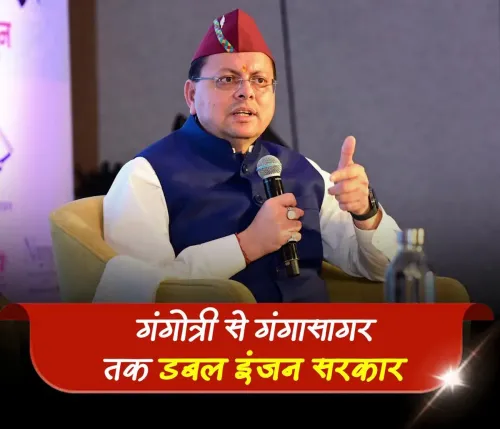
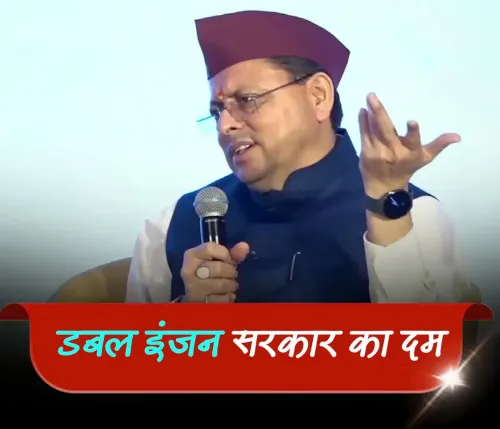
Dhami tagged PM Narendra Modi and Amit Shah , reinforcing the BJP's 'double engine governance' messaging.
Similar state-as-national-model positioning has been used by Gujarat , Madhya Pradesh , and Assam under the BJP.
Whether other BJP-ruled states adopt Uttarakhand-style measures such as the UCC in future legislative sessions remains the key watch point.
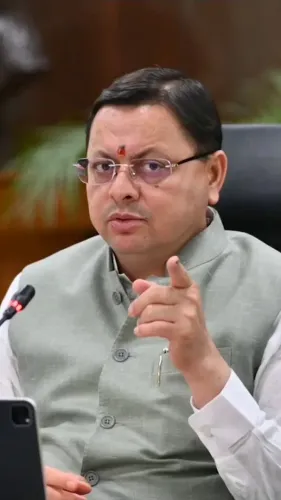
Uttarakhand Chief Minister Pushkar Singh Dhami on Saturday, 27 June 2026, declared that his government's firm decisions and public-welfare policies — centred on development and people's well-being — are setting an example across the country, tagging Prime Minister Narendra Modi and Union Home Minister Amit Shah in the post.
Context
In a post on X, Chief Minister Dhami wrote, 'जनकल्याण और विकास को केंद्र में रखकर हमारी सरकार द्वारा लिए गए सख्त निर्णय और लोकहितकारी नीतियाँ आज पूरे देश में मिसाल कायम कर रही हैं' — meaning: 'The firm decisions and public-interest policies taken by our government, keeping people's welfare and development at the centre, are today setting an example across the entire country.' The message was directed at the BJP's central leadership and the party's national and state handles, signalling alignment between the state administration and the central government's development narrative.
Policy Backdrop
Uttarakhand has been governed by the Bharatiya Janata Party since 2017, and under CM Dhami's tenure the state has pursued a combination of welfare delivery and assertive regulatory measures. In 2022, the state enacted a stringent anti-conversion law, presented by the government as a measure for social harmony and public order. Most significantly, in 2024, Uttarakhand became the first state in India to enact a Uniform Civil Code (UCC), fulfilling a long-standing BJP manifesto commitment and drawing national attention.
These moves have been consistently framed by the state government as bold, people-centric decisions that prioritise public welfare alongside administrative strictness — precisely the tone reflected in CM Dhami's latest post. The tagging of Prime Minister Modi, the PMO India handle, and senior BJP leadership underscores the 'double engine governance' messaging that links BJP-ruled states' outcomes with the central leadership's policy vision.
Stakeholders and Impact
The primary beneficiaries of this political framing are Uttarakhand's residents, who have experienced both welfare scheme rollouts and regulatory changes over the past several years. The messaging also serves the broader BJP ecosystem: by positioning Uttarakhand as a replicable model, the party signals to other state units that a blend of welfare delivery and firm administrative decisions can be presented as a national benchmark. Similar positioning has previously been deployed by Gujarat, Madhya Pradesh, and Assam to connect local outcomes with the central leadership's development narrative.
For the party's state units and cadre, such public affirmations by a sitting Chief Minister — amplified through direct mentions of central leaders — serve as organisational messaging ahead of political events and legislative cycles.
What's Next
The key question going forward is whether other BJP-ruled states will move to adopt Uttarakhand-style measures — particularly the Uniform Civil Code — in upcoming legislative sessions, having watched the state's experience closely. CM Dhami's post reinforces Uttarakhand's positioning as a laboratory for policies the party may seek to scale nationally, and the amplification through central leadership handles suggests the messaging is intended for an audience well beyond the state's borders.
Point of View
Dhami is not merely reporting on governance; he is performing political alignment for a party audience. The specific policy milestones underpinning this claim — the UCC and the anti-conversion law — are among the BJP's most ideologically charged legislative achievements, suggesting the post is as much about party consolidation as it is about administrative messaging. The pattern mirrors moves by other BJP-governed states and is likely to intensify as the party looks to project a unified, outcome-oriented image at the national level.
NationPress
27 Jun 2026
Frequently Asked Questions
What did Uttarakhand CM Dhami say about his government's policies?
CM Pushkar Singh Dhami said that his government's firm decisions and public-welfare policies, centred on development, are today setting an example across the entire country.
What is the Uniform Civil Code in Uttarakhand?
Uttarakhand became the first state in India to enact a Uniform Civil Code in 2024, replacing personal laws across communities with a common legal framework — a long-standing BJP manifesto commitment.
What is 'double engine governance' in BJP politics?
'Double engine governance' is a BJP phrase describing the alignment between a BJP-ruled state government and the BJP-led central government, implying that both engines pull in the same policy direction for faster development.
Why did CM Dhami tag PM Modi and Amit Shah in his post?
Tagging central leaders such as PM Modi and Amit Shah is a standard BJP communication practice that signals political alignment and amplifies state-level messaging to a national audience.
Which other BJP states have positioned themselves as national governance models?
Gujarat, Madhya Pradesh, and Assam have previously used similar messaging to link local policy outcomes with the central BJP leadership's development narrative since 2014.