CM Dhami: Healthy Uttarakhand is Base of Self-Reliant State
Synopsis
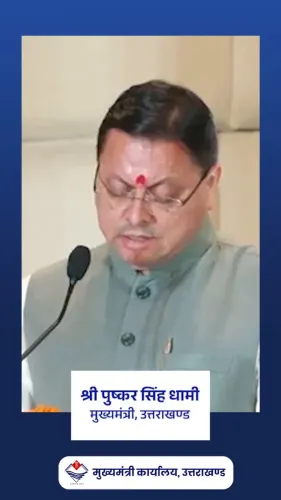
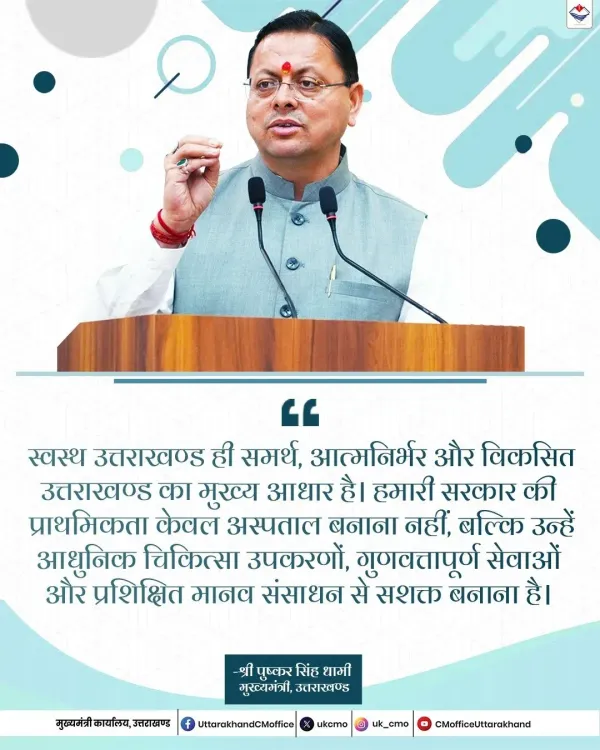
Chief Minister Pushkar Singh Dhami has declared that a healthy Uttarakhand is the primary foundation of a capable, self-reliant, and developed state, framing public health as central to the hill state's overall growth agenda.
Key Takeaways
CM Pushkar Singh Dhami stated that a healthy Uttarakhand is the foundational pillar of a self-reliant and developed state.
The statement aligns with the national Atmanirbhar Bharat framework, linking citizen wellness to economic self-sufficiency.
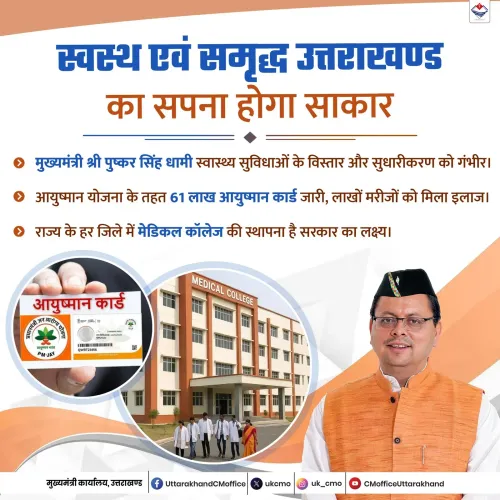
The National Health Mission (expanded 2013 ) and Ayushman Bharat PMJAY (launched 2018 ) form the structural backbone of healthcare delivery in the state.
Uttarakhand's mountainous terrain has historically created last-mile access gaps, driving adoption of telemedicine and mobile health units.
Frontline workers including ASHA workers and ANMs across 13 districts are central to translating health policy into ground-level outcomes.
Upcoming state budget allocations for wellness centres and primary health infrastructure will be a key indicator of policy follow-through.
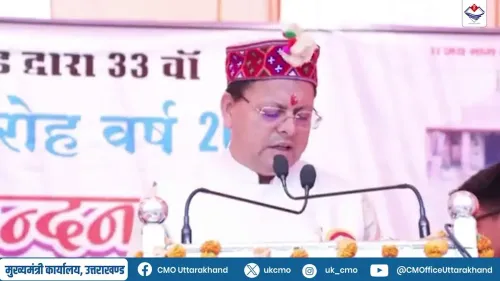
Dehradun, July 15, 2026 — The Chief Minister's Office of Uttarakhand on Wednesday shared a statement by Chief Minister Pushkar Singh Dhami framing public health as the foundational pillar of a capable, self-reliant, and developed Uttarakhand.
Posting in Hindi, the CMO quoted CM Dhami as saying: 'Swasth Uttarakhand hi samarth, atmanirbhar aur viksit Uttarakhand ka mukhya aadhar hai' — ('A healthy Uttarakhand is the primary foundation of a capable, self-reliant, and developed Uttarakhand.')
Context
The statement places health at the centre of Uttarakhand's development agenda, drawing a direct line between citizen wellness and the state's broader economic and social aspirations. CM Dhami, who has led the state since March 2021, has consistently positioned healthcare access as inseparable from the goal of building a self-sufficient hill state.
The phrase atmanirbhar (self-reliant) echoes the national Atmanirbhar Bharat framework, signalling that the state government sees its health priorities as aligned with the Union government's post-2020 development vision.
Policy Backdrop
Uttarakhand's mountainous terrain has historically made healthcare delivery a logistical challenge, with remote villages often cut off from district hospitals. The National Health Mission, expanded in 2013, specifically targeted rural health infrastructure in hill states, providing a structural backbone for primary care in districts such as Chamoli, Pithoragarh, and Uttarkashi.
The Ayushman Bharat Pradhan Mantri Jan Arogya Yojana, launched nationally in 2018, extended financial health coverage to low-income families across Uttarakhand, reducing out-of-pocket medical expenditure for vulnerable households. State governments in the Himalayan belt have supplemented these central schemes with telemedicine pilots aimed at bridging the last-mile access gap created by geography.
Stakeholders and Impact
The roughly 11 million residents of Uttarakhand — a significant share of whom live in rural and semi-urban hill areas — stand as the primary stakeholders in any health-first policy push. Frontline healthcare workers, including ASHA workers and ANMs deployed across the state's 13 districts, are critical to translating such policy intent into ground-level outcomes.
The state's growing dependence on pilgrimage and adventure tourism also means that a robust public health system carries economic weight: a healthier population and better medical infrastructure directly support the tourism sector's workforce and visitor confidence.
What's Next
Observers will watch Uttarakhand's upcoming state budget allocations for signals on how the government intends to operationalise this health-first vision — particularly regarding the expansion of wellness centres, telemedicine networks, and specialist care in remote blocks. The rollout of new primary health infrastructure in the next fiscal cycle will be the clearest indicator of whether the statement translates into budgetary commitment.
If the government backs the rhetoric with measurable investment, Uttarakhand could emerge as a model for other Himalayan states seeking to reconcile geographic constraints with universal health access goals.
Point of View
Lending it ideological coherence with the Union government's priorities. For a hill state where geography has long been the biggest barrier to equitable service delivery, anchoring development in public health also serves a practical political purpose — it focuses attention on an area where the state has both genuine need and visible gaps. The statement's value will ultimately be measured against budget lines and scheme rollouts rather than the declaration itself. If matched by concrete investment, it could position Uttarakhand as a benchmark for health-led development among India's smaller Himalayan states.
NationPress
15 Jul 2026
Frequently Asked Questions
What did CM Pushkar Singh Dhami say about health in Uttarakhand?
CM Dhami stated that a healthy Uttarakhand is the primary foundation of a capable, self-reliant, and developed state, emphasising public health as central to the state's overall development vision.
What health schemes are active in Uttarakhand?
Uttarakhand benefits from the National Health Mission (expanded 2013) and Ayushman Bharat Pradhan Mantri Jan Arogya Yojana (launched 2018), which together support rural health infrastructure and financial coverage for low-income families.
Why is healthcare a challenge in Uttarakhand?
Uttarakhand's mountainous terrain makes it difficult to deliver healthcare to remote villages, leading the state to invest in telemedicine and mobile health units to bridge last-mile access gaps.
What does Atmanirbhar Bharat mean for Uttarakhand's health policy?
Atmanirbhar Bharat, meaning self-reliant India, is a national development framework. CM Dhami's use of the term signals that Uttarakhand's health agenda is aligned with this Union government vision, linking citizen wellness to economic self-sufficiency.
Who are the key healthcare workers in Uttarakhand's rural areas?
ASHA workers and Auxiliary Nurse Midwives (ANMs) deployed across Uttarakhand's 13 districts are the frontline health workforce responsible for delivering primary care and government health programmes at the village level.