CM Dhami Hits Out at Opposition Over 'Politics of Chaos'
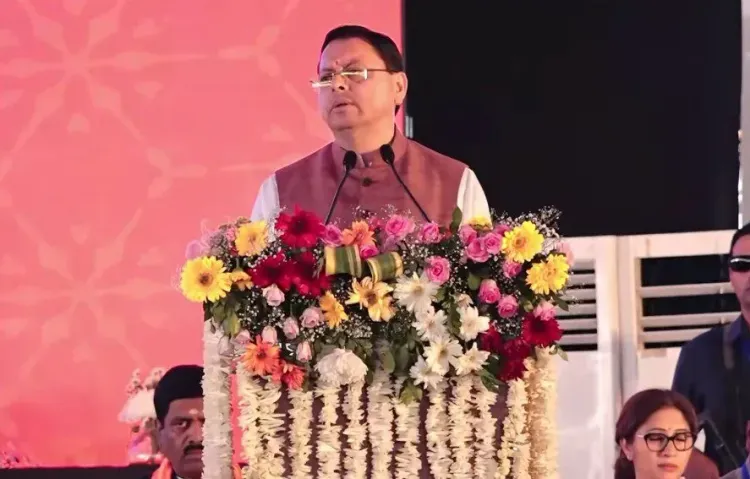
Synopsis
Uttarakhand CM Pushkar Singh Dhami accused unspecified opposition parties of inciting youth, spreading rumours, and encouraging violence, while crediting PM Modi's 'double engine government' for the state's development pace.
Key Takeaways
CM Pushkar Singh Dhami accused unnamed opposition parties of inflaming youth, spreading rumours, and encouraging violence for political self-interest.
The statement was issued on 6 November 2026 via the official Uttarakhand Chief Minister's Office X account.
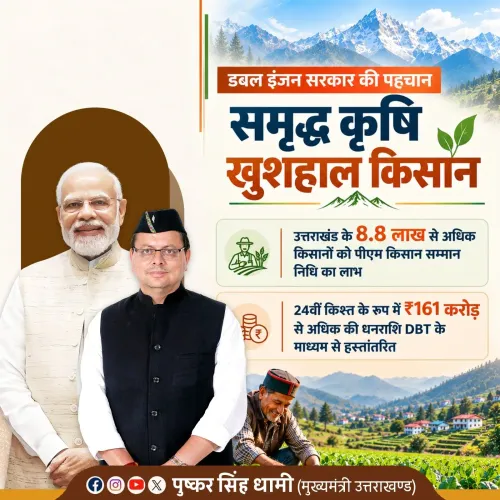
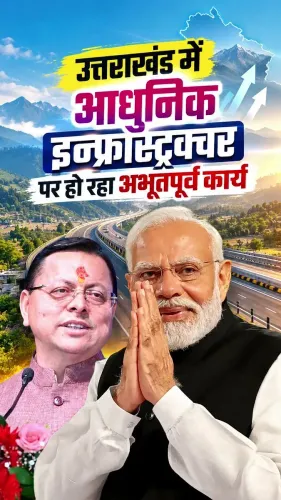
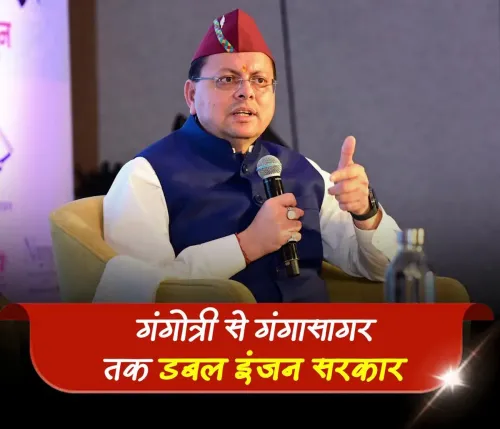
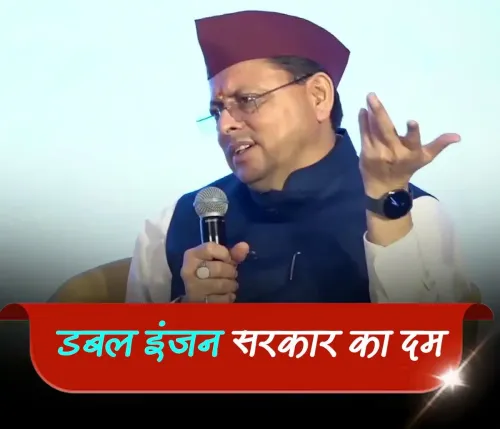
Dhami credited Prime Minister Narendra Modi's leadership and the 'double engine government' model for Uttarakhand's development trajectory.
The 'double engine government' framing — central and state governments aligned under BJP — has been a core BJP electoral narrative since 2014 .
No specific opposition party, incident, or location was named in the statement.
Uttarakhand youth employment and out-migration remain politically sensitive pressure points that both sides actively contest.
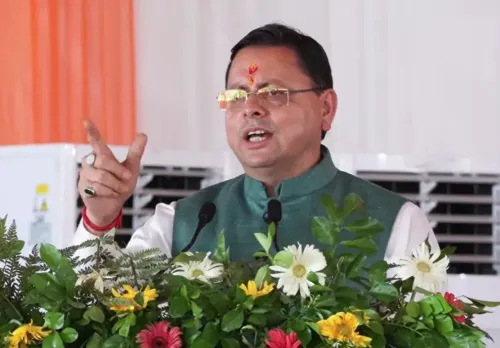
Uttarakhand's ruling government went on the offensive on Friday, 6 November 2026, with Chief Minister Pushkar Singh Dhami accusing unnamed opposition parties of inciting youth unrest, spreading rumours, and encouraging violence — even as he credited Prime Minister Narendra Modi's leadership for the state's development momentum. The statement, shared by the Chief Minister's Office of Uttarakhand on X, draws a sharp political contrast between the BJP's governance narrative and what it describes as the opposition's disruptive agenda.
What Dhami Said — and What He Meant
The CM's quoted words, translated from Hindi, were direct: 'Kuch vipakshi dal arajkata aur bhram ki rajneeti karte hue' — 'Some opposition parties, practising politics of anarchy and confusion, are working to inflame youth, spread rumours, and encourage violence for their own political self-interest.' Dhami framed this against what the BJP calls the 'double engine government' model — the party's shorthand for the alignment between a BJP-led Centre under Modi and BJP-ruled states like Uttarakhand, an arrangement it has promoted since the 2014 general elections.
The statement does not name any specific opposition party, incident, or location within the state. It is a broadside aimed at a pattern rather than a pinpointed event — a rhetorical device common to ruling-party messaging in BJP-governed states, where development credentials are routinely held up against accusations that rivals foment instability.
The 'Double Engine' Frame in Uttarakhand
Dhami first became Chief Minister in 2021 following an internal party reshuffle, then led the BJP to victory in the 2022 Uttarakhand assembly elections — the party's argument being that seamless Centre-state coordination accelerates roads, hydro projects, and connectivity in the ecologically sensitive Himalayan state. That pitch has particular resonance in Uttarakhand, where chronic out-migration, limited industrial employment, and terrain-linked infrastructure gaps have long been live political issues.
Youth employment sits at the centre of that tension. When the CM speaks of the opposition 'inflaming' young people, he is implicitly invoking a constituency — Uttarakhand's educated, often under-employed hill youth — that both the ruling party and its rivals actively court. The charge that rivals exploit this demographic's frustrations for political gain is a recurring feature of the state's political discourse.
Opposition Yet to Respond
As of the time of publication, no formal response had emerged from Uttarakhand's principal opposition formations. The specificity of any counter-claim will matter: if opposition parties identify a concrete trigger — a recruitment controversy, a law-and-order episode, a protest — the exchange will sharpen considerably. For now, the statement reads as pre-emptive political positioning, staking out the ruling party's narrative frame ahead of whatever flashpoint the CM's office has in mind.
Uttarakhand's next assembly session and any upcoming announcements on youth-facing employment or skilling schemes will be the spaces to watch — because that is where the BJP's development argument meets its hardest test.
Point of View
Then inoculate against opposition mobilisation by labelling it as manufactured chaos rather than legitimate grievance. For Dhami, the 'double engine' narrative is not just electoral vocabulary — it is a governance legitimacy claim, tying Uttarakhand's infrastructure progress directly to BJP alignment at both levels of power. The danger in such a broad, unspecific accusation is that it invites the opposition to identify a concrete incident and shift the debate from narrative to fact. Watching whether opposition parties name a specific grievance — a recruitment scam, a protest, a law-and-order episode — will reveal whether this is a rhetorical pre-emption or a reaction to something already in motion.
NationPress
6 Nov 2026
Frequently Asked Questions
What did Uttarakhand CM Pushkar Dhami say about the opposition?
CM Dhami accused unnamed opposition parties of inciting youth, spreading rumours, and encouraging violence to serve their political self-interest, contrasting this with the BJP government's development work under PM Modi's leadership.
What is the 'double engine government' model Dhami referred to?
The 'double engine government' is a BJP phrase describing the coordination between the BJP-led central government under PM Narendra Modi and BJP-ruled state governments. It has been used as a campaign and governance narrative since 2014.
Which opposition party did CM Dhami name in his statement?
CM Dhami did not name any specific opposition party in the statement. He referred broadly to 'some opposition parties' engaged in what he called the politics of anarchy and confusion.
Why is Uttarakhand youth a politically sensitive issue?
Uttarakhand faces chronic out-migration and limited industrial employment, particularly among educated hill youth. Both the ruling party and opposition actively court this demographic, making employment and unrest flashpoints in state politics.
When did Pushkar Singh Dhami become Chief Minister of Uttarakhand?
Pushkar Singh Dhami first became Chief Minister of Uttarakhand in 2021 following a party reshuffle, and subsequently led the BJP to victory in the 2022 state assembly elections.