CM Dhami meets CBFC chief Prasoon Joshi on Uttarakhand film push
Synopsis
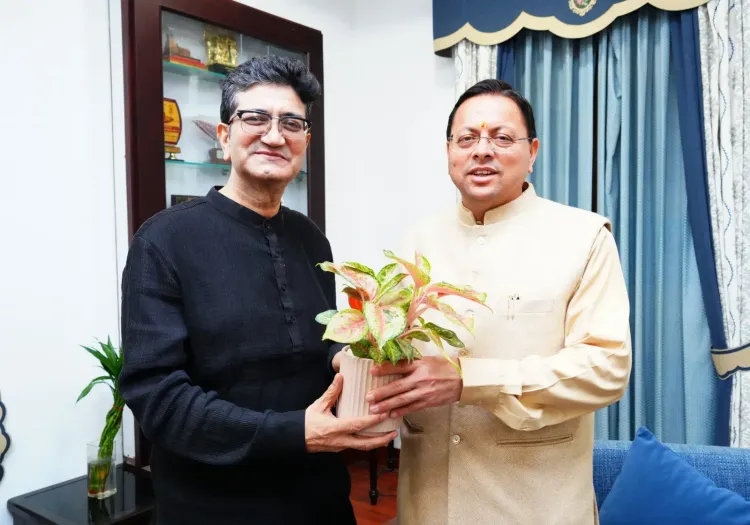
Uttarakhand CM Pushkar Singh Dhami met CBFC Chairman and Padma Shri awardee Prasoon Joshi in Dehradun on 12 November 2026, discussing preservation of the state's folk culture and strengthening its film-shooting ecosystem.
Key Takeaways
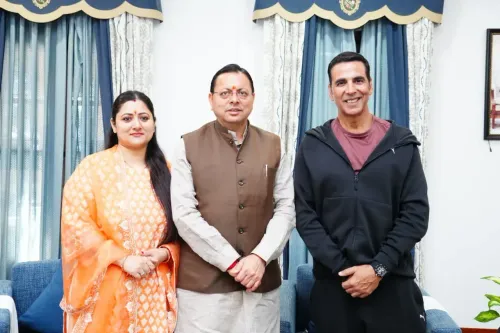
Prasoon Joshi , CBFC Chairman since 2017 and Padma Shri awardee, met CM Pushkar Singh Dhami at the official Dehradun residence on 12 November 2026 .
Discussions covered preservation and promotion of Uttarakhand's folk culture and arts , including Kumaoni and Garhwali traditions.
Both sides discussed strengthening the state's already-growing film-shooting environment and creating new opportunities for the industry.
The CBFC is a statutory body under the Ministry of Information and Broadcasting; Joshi's creative and policy background makes him a key interlocutor for state cultural strategy.
No specific policy commitment was publicly announced; potential follow-ups include film incentive schemes or cultural documentation projects.
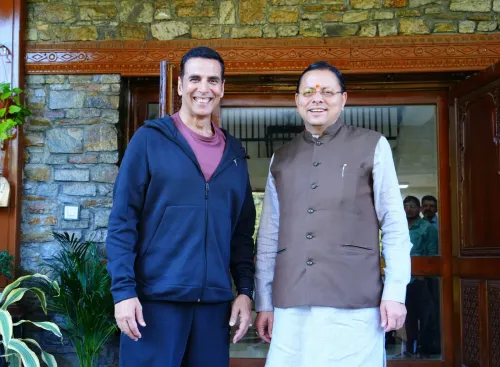
Uttarakhand's Himalayan landscapes and living folk traditions took centre stage on Thursday, 12 November 2026, when Uttarakhand Chief Minister Pushkar Singh Dhami hosted Prasoon Joshi — Chairman of the Central Board of Film Certification (CBFC), celebrated lyricist, poet, and Padma Shri awardee — at the Chief Minister's official residence in Dehradun.
The meeting, shared by CM Dhami on X, centred on two interlocking ambitions: preserving and promoting Uttarakhand's rich folk culture and arts, and accelerating the state's growing reputation as a film-shooting destination. As Dhami's post put it, the conversation covered 'sanrakshan-samvardhan' (conservation and promotion) of regional culture alongside 'creating new opportunities' in an environment that is already rapidly becoming film-friendly.
Prasoon Joshi's role and the CBFC connection
Prasoon Joshi has led the Central Board of Film Certification since his appointment in 2017. The CBFC is a statutory body under the Ministry of Information and Broadcasting responsible for certifying films for public exhibition across India. Beyond his regulatory role, Joshi carries significant cultural weight — his credentials as a lyricist, ad-man, and poet make him a natural bridge between cinema's creative and policy worlds, and his Padma Shri recognition underlines that standing.
That combination makes the visit more than a courtesy call. A CBFC chairman meeting a state chief minister opens the conversation toward how content regulation, regional language film promotion, and state-level cultural documentation can reinforce each other.
Uttarakhand's film-destination push
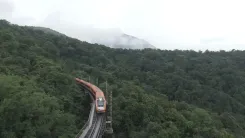
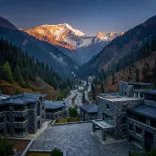
Indian states have been competing intensely to attract film crews, knowing that a single high-profile production can unlock sustained tourism and global visibility. Uttarakhand already holds a natural advantage — snow peaks, dense forests, ancient temples, and terraced villages that double as ready-made sets. The state has been building on that edge through location facilitation and cultural branding, and Thursday's discussion signals a fresh push to make the ecosystem 'more empowered and effective,' in the CM's own framing.
Underlying the film agenda is the quieter, equally important question of cultural preservation. Uttarakhand's Kumaoni and Garhwali folk traditions — music, dance, craft — face the same erosion pressures as indigenous cultures everywhere. Channelling cinema's reach to document and amplify those traditions is an increasingly popular policy lever, and a figure like Joshi, rooted in the craft of words and storytelling, is well-placed to help shape that direction.
What the state-centre conversation signals
Meetings like this one reflect a broader pattern of state governments working the centre's cultural and media institutions to carve out competitive advantage. No specific policy commitment emerged from Thursday's exchange — at least none announced publicly — but the alignment of a BJP chief minister with a CBFC chairman appointed during the BJP-led central government points to a coordinated cultural-economy strategy rather than a one-off courtesy.
Watch for follow-up announcements: a state film incentive policy, a folk-culture documentation project with CBFC guidance, or a dedicated Uttarakhand pavilion at an upcoming film market could all be downstream of exactly this kind of groundwork.
Uttarakhand has the scenery. It has the stories. The question now is whether Thursday's conversation translates into the institutional architecture to turn both into lasting screen presence — and lasting cultural memory.
Point of View
Uttarakhand positions itself as a values-led destination — a narrative with strong political resonance ahead of any state election cycle. Prasoon Joshi's dual identity as a CBFC regulator and celebrated creative professional gives the conversation unusual depth; he can influence both policy facilitation and the artistic credibility of Uttarakhand-set productions. The absence of announced commitments is itself a signal — this is relationship-building and agenda-setting, the quiet infrastructure of a larger cultural-economy push to come.
NationPress
12 Nov 2026
Frequently Asked Questions
Who is Prasoon Joshi and why did he meet CM Dhami?
Prasoon Joshi is the Chairman of the Central Board of Film Certification, a renowned lyricist, poet, and Padma Shri awardee. He met Uttarakhand CM Pushkar Singh Dhami on 12 November 2026 to discuss preservation of the state's folk culture and expanding its film-shooting ecosystem.
What is the Central Board of Film Certification (CBFC)?
The CBFC is a statutory body under India's Ministry of Information and Broadcasting that certifies films for public exhibition. Prasoon Joshi has been its Chairman since 2017.
Is Uttarakhand promoting itself as a film shooting destination?
Yes. Uttarakhand has been actively building its profile as a film-shooting location, leveraging its Himalayan landscapes, forests, temples, and villages. CM Dhami's meeting with the CBFC chief signals a continued push to strengthen this ecosystem and create new industry opportunities.
What folk cultures of Uttarakhand were discussed in the context of the meeting?
The meeting touched on the broader preservation of Uttarakhand's rich folk culture and arts — which include Kumaoni and Garhwali music, dance, and craft traditions — alongside using cinema as a medium for their promotion.
What could be the next steps after this Dhami-Joshi meeting?
Possible outcomes include a state film incentive policy, a folk-culture documentation project with CBFC guidance, or enhanced coordination between Uttarakhand's film facilitation bodies and the central certification authority, though no specific commitment has been publicly announced yet.