CM Dhami: House of Himalayas crosses ₹6 crore in sales
Synopsis
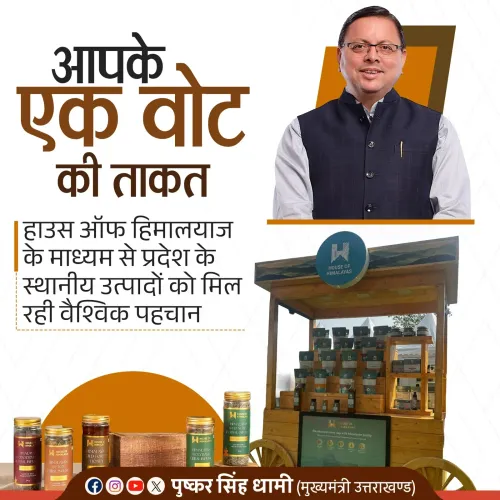
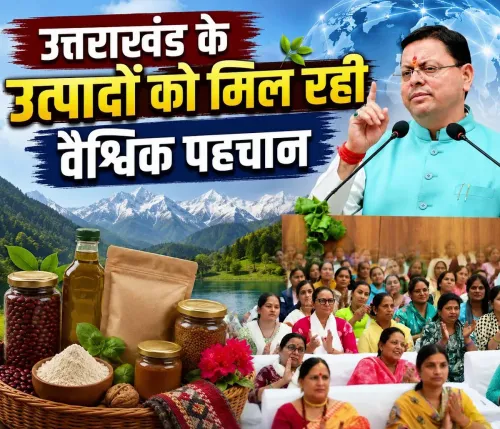
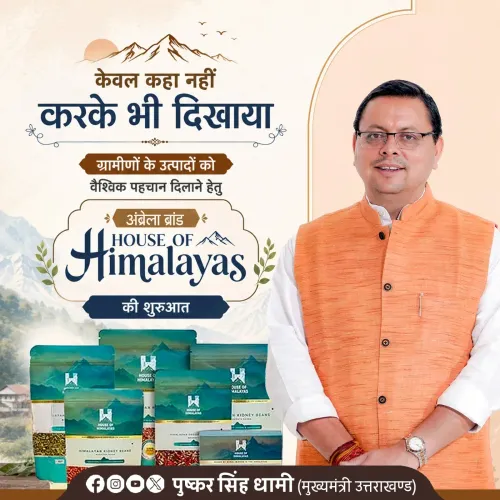
Uttarakhand CM Pushkar Singh Dhami announced that House of Himalayas, the state brand for women-produced local goods, has crossed ₹6 crore in business — highlighting women's self-reliance and market access in the Himalayan state.
Key Takeaways
House of Himalayas is an Uttarakhand government brand marketing locally made products by women's self-help groups and artisans.
Cumulative business through the brand has crossed ₹6 crore , according to CM Dhami's announcement on 14 November 2026 .
The brand aims to give Uttarakhand's women producers better market access and a recognisable identity for their goods.
The initiative aligns with India's national Atmanirbhar Bharat framework launched in 2020 , which promotes local production and women-led enterprises.
Scaling the brand's retail and digital reach remains the next critical challenge for sustaining and growing producer incomes.
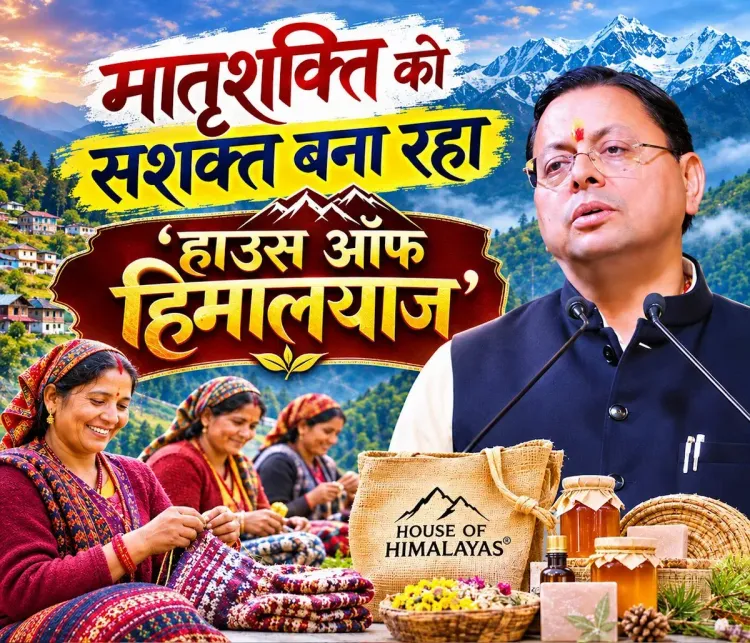
A brand built on the hands of Uttarakhand's women has quietly crossed a milestone — Uttarakhand Chief Minister Pushkar Singh Dhami announced on Saturday, 14 November 2026, that House of Himalayas, the state government's dedicated marketing brand for locally made women's products, has now recorded over ₹6 crore in cumulative business.
Posting on X, CM Dhami said the brand is giving 'maatrashakti' (women's strength) — women producers of Uttarakhand — better market access and a fresh identity for their goods. 'Through this brand, business of more than ₹6 crore has been done so far,' he wrote, calling the figure proof of women's 'hard work, skill, and steady march toward self-reliance.'
What House of Himalayas actually does
House of Himalayas is a state-backed umbrella brand created by the Uttarakhand government to bring together locally produced goods — think handwoven textiles, herbal products, artisan food items, and hill-region crafts — under a single, marketable identity. The challenge for women's self-help groups (SHGs) and artisan clusters in Himalayan states has always been the same: the product exists, the skill exists, but the buyer is two mountain ranges away. This brand is designed to close that gap.
Initiatives of this kind typically combine retail tie-ups, e-commerce listings, and exhibition platforms to bring rural output to urban and even export markets. For Uttarakhand, where geography limits conventional supply chains, a dedicated state brand also signals a quality promise to buyers.
Atmanirbhar roots, hill-state ambition
The push sits squarely within the national Atmanirbhar Bharat framework launched in 2020, which explicitly champions local production, women-led micro-enterprises, and domestic market linkages. Several Himalayan and northeastern states have since built state-level brand architectures on that foundation — Uttarakhand's House of Himalayas is among the more focused of them, targeting a specific geography and a specific producer demographic.
CM Dhami, who has anchored much of his governance pitch on women-led development since taking office in 2021, has regularly highlighted SHG-linked schemes. The ₹6 crore figure — whatever its current trajectory — gives his administration a concrete number to point to as state assembly attention turns toward rural economic delivery.
The next test is scale: whether the brand can grow its retail and digital footprint fast enough to absorb the output of a larger network of producers — and whether the state budget carries provisions to fund that expansion.
Point of View
Which remain the harder ask. For CM Dhami, amplifying this number ahead of any budget cycle also frames rural women's enterprise as a deliverable, not just an aspiration. The real test of the model's depth will come when independent assessments examine producer income gains, not just aggregate turnover.
NationPress
14 Nov 2026
Frequently Asked Questions
What is House of Himalayas?
House of Himalayas is a brand launched by the Uttarakhand government to market locally produced goods — including textiles, herbal products, and artisan crafts — made by women's self-help groups and local artisans, giving them better market access and a unified identity.
How much business has House of Himalayas done so far?
According to CM Pushkar Singh Dhami's announcement on 14 November 2026, the House of Himalayas brand has recorded over ₹6 crore in cumulative business since its launch.
Who benefits from the House of Himalayas brand?
Women's self-help groups and local artisans in Uttarakhand are the primary beneficiaries, gaining a formal brand platform to sell their products to wider urban and potentially export markets.
How does House of Himalayas relate to Atmanirbhar Bharat?
The initiative aligns with India's Atmanirbhar Bharat framework launched in 2020, which promotes self-reliance through local production, women-led micro-enterprises, and domestic market linkages.
What products does House of Himalayas sell?
The brand covers a range of locally made goods from Uttarakhand, including handwoven textiles, herbal and natural products, artisan food items, and hill-region handicrafts produced by women.