CM Dhami joins traditional hill crafts at Peepalkoti, Chamoli
Synopsis
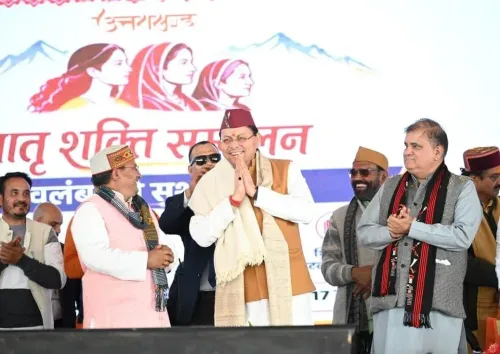
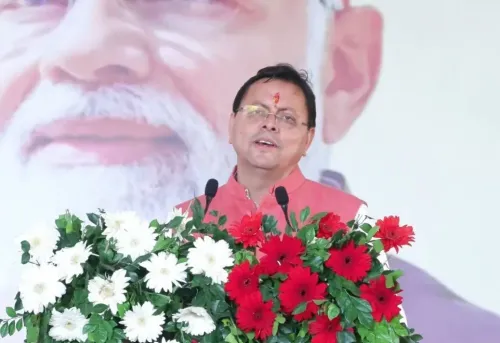
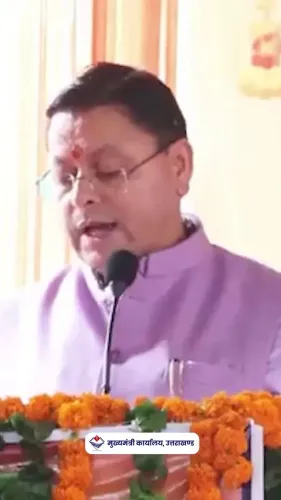
Uttarakhand CM Pushkar Singh Dhami joined rural women at Peepalkoti in Chamoli on 17 November 2026, participating in traditional hill practices and reaffirming his government's commitment to linking women's labour to economic empowerment and local-product market access.
Key Takeaways
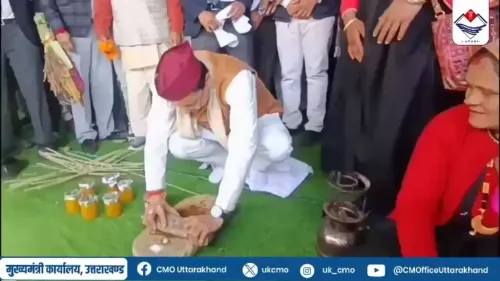
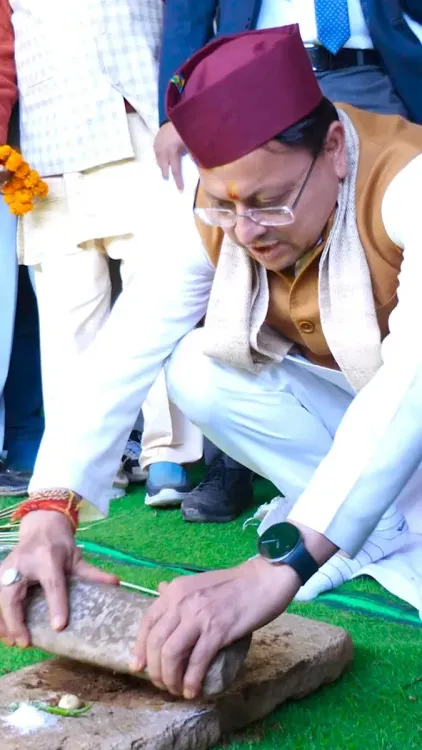
CM Pushkar Singh Dhami visited Peepalkoti, Chamoli and took part in traditional practices including grinding salt on a silbatta , running a hand-mill jandara , and churning curd with a mathani .
He described the labour of Uttarakhand's hill women as the living identity of the state's culture and traditions.
The Uttarakhand government has stated it is working to provide local mountain products with new market access and branding.
The visit frames traditional women's labour as a foundation for self-employment and economic empowerment in hill districts.
Chamoli district in the Garhwal Himalayas is among Uttarakhand's most economically marginalised regions, where women manage households and farms amid high male out-migration.
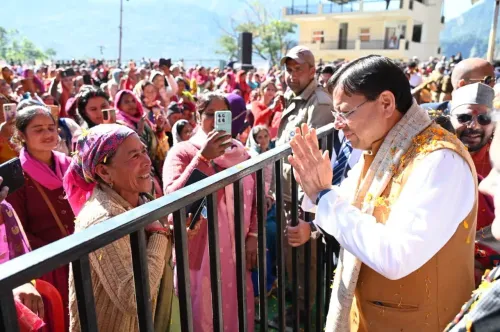
In the high-altitude town of Peepalkoti in Chamoli district, Uttarakhand Chief Minister Pushkar Singh Dhami stepped into the rhythm of mountain life — grinding hill salt on a stone silbatta, turning a hand-mill jandara to powder grain, and churning curd with a wooden mathani. These are the daily acts of labour that Himalayan women have performed for generations, and on Tuesday, 17 November 2026, the Chief Minister performed them alongside them.
Sharing the moment on X, CM Dhami wrote that the hard work of the 'matrashakti of the mountains' — the women who sustain hill households — is the living identity of Uttarakhand's rich culture and traditions. He added that his government is continuously working to give local products a new identity and market access, while linking this labour of women to economic empowerment and self-employment.
What a silbatta, jandara and mathani represent
The three tools Dhami engaged with are not museum artefacts — they are still part of daily life in remote Garhwal villages. The silbatta (stone grinder) is used to crush spices and the prized pink rock salt sourced from Himalayan trade routes. The jandara is a hand-operated rotary stone mill for grinding wheat and millets. The mathani is a hand-churned wooden dasher used to make butter from curd — a practice central to both nutrition and dairy-based livelihoods in hill communities.
Together, they represent an economy of effort that has largely gone unmonetised — skilled, time-intensive, and almost entirely performed by women in Uttarakhand's hill districts.
Chamoli's women and the market-linkage push
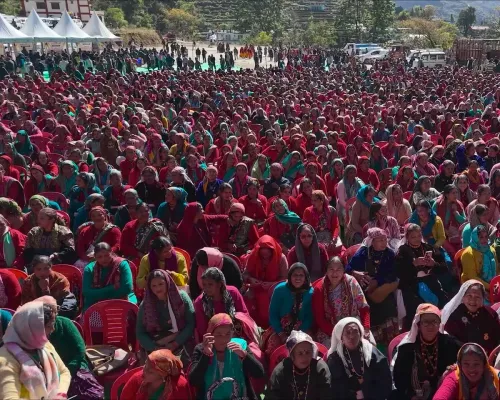
Chamoli, nestled deep in the Garhwal Himalayas, is home to some of Uttarakhand's most economically marginalised rural communities. Out-migration of men for work has historically left women as the primary managers of households, farms, and livestock — making them both the backbone of the local economy and the least connected to formal markets.
Successive Uttarakhand administrations have attempted to bridge this gap through schemes that brand and sell local mountain produce — from organic millets and herbs to dairy products — through self-help groups and state-backed platforms. CM Dhami's government has pursued this thread, framing women's traditional labour not as cultural heritage alone, but as a foundation for self-employment and economic empowerment.
Culture as economic argument
The optics of a sitting Chief Minister working a hand-mill and churning curd carry a deliberate message: that the state sees value — commercial and cultural — in what hill women do every day. By physically participating, Dhami underlined a policy pitch that connects Uttarakhand's identity tourism and local-product branding push to the grassroots labour that makes those products possible.
Whether that pitch translates into concrete budget allocations for market linkages in districts like Chamoli — the kind of commitment rural women's groups have long sought — will be the real measure of the moment.
Point of View
Rather than merely a heritage cause, reflects a wider shift in Uttarakhand's development discourse toward self-employment and local branding. The real test will be whether the visit is followed by measurable budget commitments in hill districts like Chamoli, where market-linkage schemes have historically been underfunded. For now, the moment lands as a culturally resonant promise, but sceptics in rural women's advocacy circles will be watching the state budget closely.
NationPress
17 Nov 2026
Frequently Asked Questions
What did CM Dhami do at Peepalkoti in Chamoli?
CM Pushkar Singh Dhami participated in traditional Himalayan practices at Peepalkoti, including grinding hill salt on a stone silbatta, operating a hand-mill jandara to grind grain, and churning curd with a wooden mathani alongside local women.
What is a jandara in Uttarakhand?
A jandara is a traditional hand-operated rotary stone mill used in Uttarakhand's hill communities to grind wheat and millets into flour. It has been a staple of rural Garhwali and Kumaoni households for generations.
What is matrashakti in the context of Uttarakhand?
Matrashakti literally means 'the power of mothers' and is used in Uttarakhand to refer to the rural women who sustain hill households, manage farms and livestock, and perform daily labour — particularly in districts where male out-migration is high.
What government schemes support women's self-employment in Uttarakhand's hill districts?
Uttarakhand has run various programmes connecting rural women to self-employment through self-help groups, local product branding, and market-linkage platforms for hill produce such as organic millets, herbs, and dairy products. Specific new scheme details from this visit have not been officially announced.
Where is Peepalkoti and why is it significant?
Peepalkoti is a town in Chamoli district in Uttarakhand's Garhwal Himalayan region. It lies on the route to Badrinath and serves as a base for surrounding rural villages known for traditional agricultural and dairy practices.