CM Dhami Hails Uttarakhand Women's Role in State Development
Synopsis
Chief Minister Pushkar Singh Dhami saluted Uttarakhand's women on November 15, 2026, calling them central to state development and affirming the government's ongoing drive to make them self-reliant and empowered.
Key Takeaways
CM Pushkar Singh Dhami on November 15, 2026 publicly acknowledged the role of Uttarakhand's women in driving the state's development.
The statement invokes matrishakti — women's collective strength — framing it as central to Uttarakhand's progress.
The government reiterated its commitment to making women self-reliant and empowered , echoing national atmanirbharta vocabulary.
No new scheme or budget allocation was announced; the statement is a governance communication reinforcing existing policy direction.
Uttarakhand's high male out-migration in hill districts makes women's economic participation a structural priority, not just a political one.
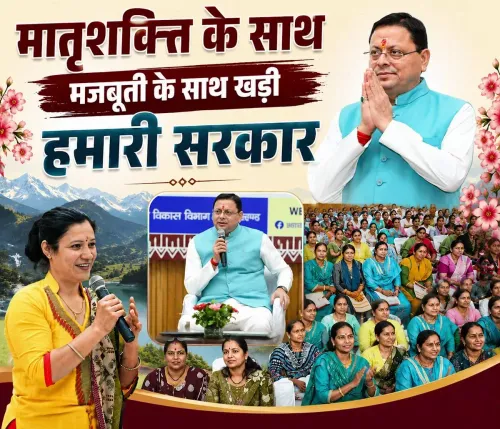
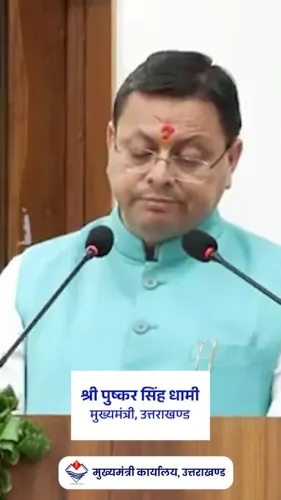
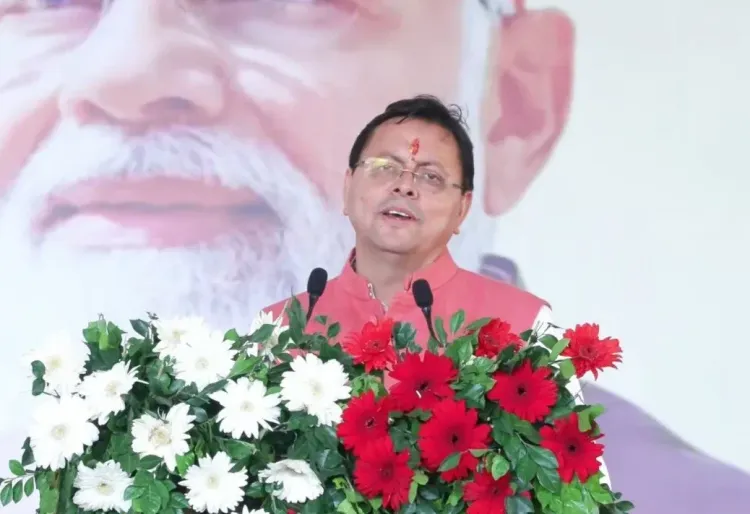
Uttarakhand's women have carved out a distinct identity through hard work, dedication, and capability — and the state's Chief Minister wants that recognised. On Sunday, November 15, 2026, the Chief Minister's Office of Uttarakhand shared a statement from Chief Minister Pushkar Singh Dhami affirming the indispensable role of matrishakti (women's collective strength) in driving the state's development, while reiterating the government's commitment to making women self-reliant and empowered.
Quoting CM Dhami directly, the post read: 'Today, the matrishakti of the state has established a distinct identity through their hard work, dedication, and capability. Women play an important role in the state's development and our government is continuously working to make women self-reliant and empowered.'
Matrishakti at the Centre of Uttarakhand's Development Narrative
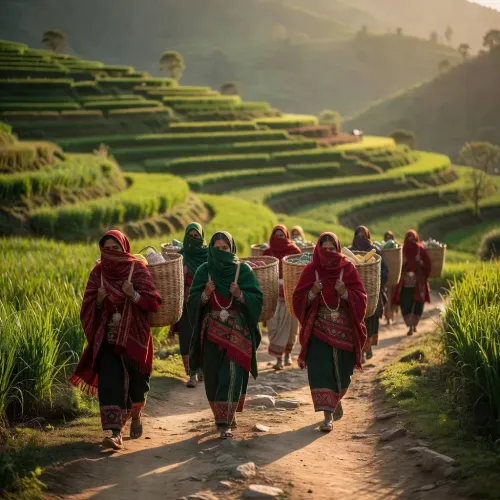
Pushkar Singh Dhami, who has served as Uttarakhand's Chief Minister since 2021, has consistently placed women's welfare and economic participation among his administration's stated priorities. The Himalayan state, with a large rural population and significant male out-migration to urban centres, sees women shouldering a disproportionate share of agricultural and household labour — making their economic empowerment both a social and an economic imperative.
The acknowledgment of women's contributions fits into a wider pattern across Indian states, where public messaging around gender-focused welfare has intensified. What makes Uttarakhand's context distinct is geography: women in hill districts often run farms single-handedly while also participating in self-help group networks that link rural production to wider markets.
Self-Reliance as a Governing Commitment
The language of atmanirbharta (self-reliance) in the CM's statement mirrors the national vocabulary championed at the Centre, signalling alignment between state and central policy direction. Uttarakhand has in recent years expanded self-help group frameworks and livelihood schemes targeting women, particularly in rural and semi-urban pockets of the state.
While the statement does not announce a specific new scheme or allocate fresh funds, it reflects the government's intent to keep women's economic participation as a live political and policy commitment — not a footnote. Any forthcoming state budget or scheme expansion in this space will be watched as the real measure of that intent.
Point of View
But it carries strategic weight in a state where female-headed rural households are both an economic reality and an electoral constituency. By invoking 'matrishakti' alongside 'self-reliance', the Uttarakhand government consciously echoes the Centre's gender-welfare vocabulary, reinforcing ideological alignment with the national narrative. The real test of this messaging will come when state budget allocations and scheme expansions — or the absence of them — are made public. Until then, the declaration functions as a political signal more than a policy commitment.
NationPress
15 Nov 2026
Frequently Asked Questions
What did CM Pushkar Dhami say about women in Uttarakhand?
CM Dhami said that Uttarakhand's women have built a distinct identity through hard work, dedication, and capability, and that his government is continuously working to make them self-reliant and empowered.
What is 'matrishakti' as referenced by the Uttarakhand CM?
'Matrishakti' is a Hindi term meaning women's collective strength or feminine power, frequently used in Indian political discourse to honour and acknowledge women's social and economic contributions.
What schemes does the Uttarakhand government run for women's empowerment?
Uttarakhand has expanded self-help group frameworks and livelihood programmes targeting rural and semi-urban women, though no specific new scheme was announced in this November 15 statement.
Why is women's empowerment especially important in Uttarakhand?
Uttarakhand's hill districts see high male out-migration, leaving women to manage agriculture and households largely alone, making their economic empowerment a pressing social and developmental priority.
Is CM Dhami's statement about women a new policy announcement?
No. The November 15, 2026 statement is a public affirmation of an existing commitment rather than the launch of a new scheme or budget allocation; it aligns with routine governance communication on gender welfare.