Rajnath Singh pays tribute to Jaishankar Prasad on death anniversary
Synopsis
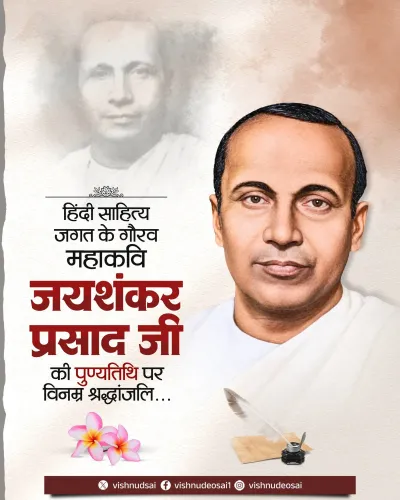
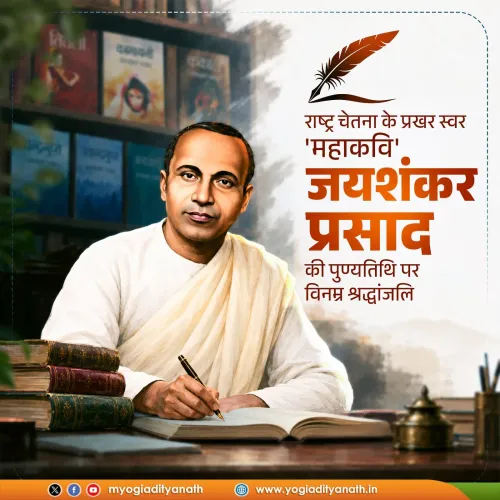
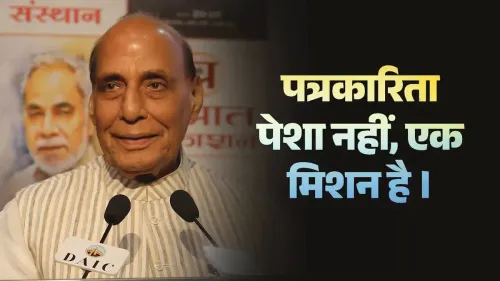
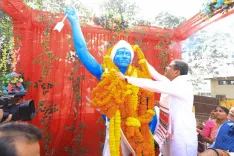
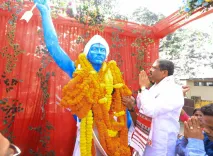
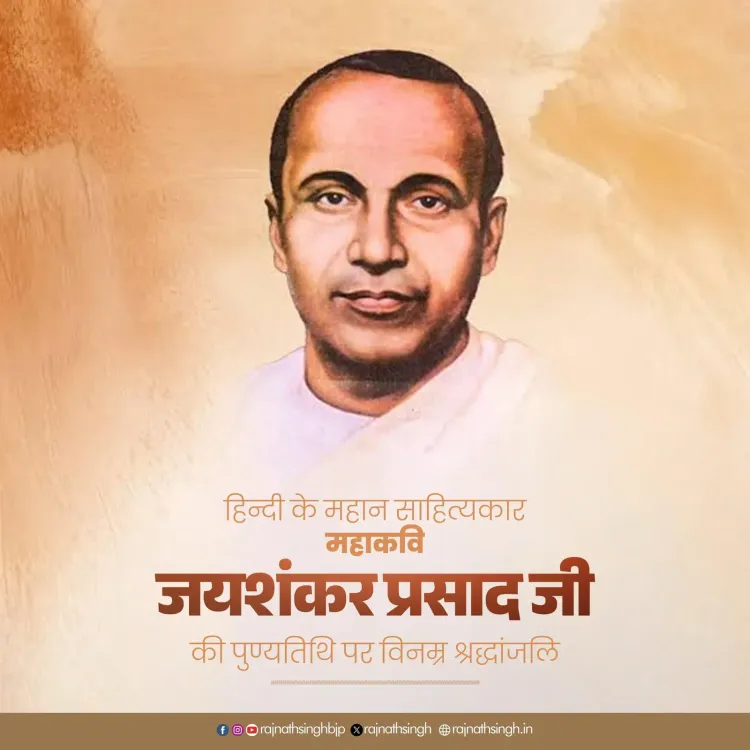
Union Defence Minister Rajnath Singh on November 15, 2026, paid tribute to Hindi literary giant Jaishankar Prasad on his death anniversary, honouring the poet and playwright's enduring contribution to Indian culture, philosophy, and Hindi letters.
Key Takeaways
Union Defence Minister Rajnath Singh paid tribute to Jaishankar Prasad on his death anniversary on November 15, 2026 .
Singh praised Prasad for elevating Hindi literature to 'new heights' and reflecting Indian culture and human sensibilities in his works.
Jaishankar Prasad (1889–1937) was a Hindi poet, playwright, and novelist, best known for the epic poem Kamayani and historical plays such as Chandragupta .
Prasad is a central figure of the Chhayavad (Romantic) movement in Hindi literature, born in Varanasi .
The tribute is part of a broader pattern of Union ministers publicly acknowledging India's Hindi literary heritage on key anniversaries.
A quiet Sunday morning in November, and Union Defence Minister Rajnath Singh paused to remember one of Hindi literature's most towering figures — Jaishankar Prasad, on his death anniversary, November 15, 2026.
In a post on X, Singh offered his homage, writing: 'हिंदी साहित्य को अपनी विलक्षण प्रतिभा और कालजयी रचनाओं से समृद्ध करने वाले महान साहित्यकार जयशंकर प्रसाद जी की पुण्यतिथि पर उन्हें विनम्र श्रद्धांजलि।' ('Humble tribute to the great literary figure Jaishankar Prasad, who enriched Hindi literature with his extraordinary talent and timeless works, on his death anniversary.')
Singh credited Prasad with elevating Hindi literature to 'new heights,' and noted that his writings carry a 'deep reflection of Indian culture, human sensibilities, and the philosophy of life' — a contribution, he said, that 'shall always be remembered.'
Who was Jaishankar Prasad — and why does his legacy endure
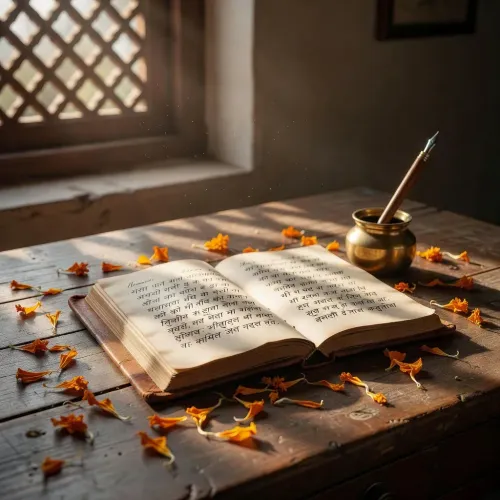
Jaishankar Prasad (1889–1937) stands as one of the foundational pillars of modern Hindi literature. Born in Varanasi, he was a poet, playwright, and novelist whose creative output spanned barely five decades of life yet shaped the language's trajectory for generations. His epic poem Kamayani — widely regarded as a masterpiece of the Chhayavad (Romantic) movement — wrestles with the nature of consciousness, desire, and liberation, drawing deeply from Indian philosophical and mythological tradition.
His plays, including Chandragupta and Skanda Gupta, brought India's ancient history alive on the stage, fusing nationalist sentiment with lyrical precision at a time when the freedom movement was finding its voice. The range is remarkable: Prasad wrote short stories, novels, and verse that together constitute a portrait of Indian civilisation at a moment of profound self-questioning.
A Union minister's tribute and the official acknowledgement of literary heritage
Rajnath Singh's tribute follows a well-established pattern among senior Union ministers, who periodically mark the birth and death anniversaries of Hindi literary and cultural figures through public statements. For Singh — a former Chief Minister of Uttar Pradesh, the heartland of Hindi letters — such acknowledgements carry a particular resonance. Varanasi, Prasad's birthplace, sits within the cultural and political geography that has defined Singh's own career.
The tribute carries no direct policy or legislative signal, but it reflects the continuing official emphasis on Hindi literary heritage as a living thread in India's public life — not an archived footnote, but a source of ongoing national identity.
Point of View
Whose career is rooted in Uttar Pradesh, honouring Varanasi's most celebrated literary son reinforces that cultural alignment. The tribute carries no direct policy weight, but it is part of an official cultural discourse that positions India's pre-independence literary giants as pillars of living national identity rather than museum figures. It also reflects how social media has become the primary vehicle for such official remembrances, widening their reach well beyond ministerial press notes.
NationPress
15 Nov 2026
Frequently Asked Questions
Who was Jaishankar Prasad?
Jaishankar Prasad (1889–1937) was a celebrated Hindi poet, playwright, and novelist from Varanasi. He is best known for the epic poem 'Kamayani' and historical plays like 'Chandragupta,' and is considered a founding figure of the Chhayavad movement in Hindi literature.
Why did Rajnath Singh pay tribute to Jaishankar Prasad?
Union Defence Minister Rajnath Singh paid tribute to Jaishankar Prasad on his death anniversary on November 15, 2026, honouring the writer's extraordinary contribution to Hindi literature, Indian culture, and human philosophy.
What is Jaishankar Prasad's most famous work?
'Kamayani,' an epic poem published in 1936, is widely regarded as Jaishankar Prasad's masterpiece. It is a landmark of the Chhayavad (Romantic) movement and explores themes of consciousness, desire, and liberation drawn from Indian mythology and philosophy.
What is the Chhayavad movement in Hindi literature?
Chhayavad is a Romantic movement in Hindi literature that flourished in the early twentieth century. It emphasised lyrical expression, mysticism, nature, and individual emotion, with Jaishankar Prasad as one of its foremost voices.
When is Jaishankar Prasad's death anniversary?
Jaishankar Prasad's death anniversary falls on November 15. He passed away in 1937 at the age of 47 in Varanasi.