Pradhan Pays Tribute to Birsa Munda on Janjatiya Gaurav Diwas
Synopsis
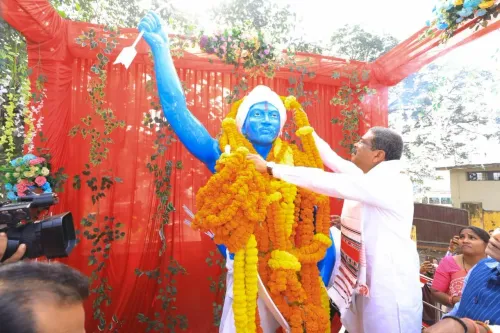
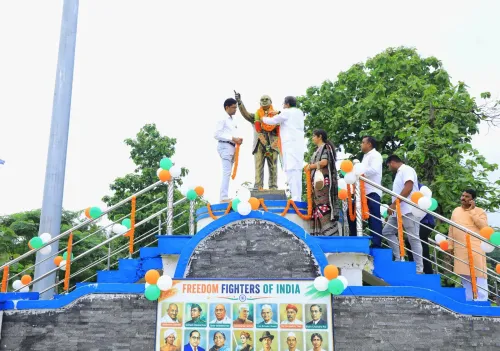
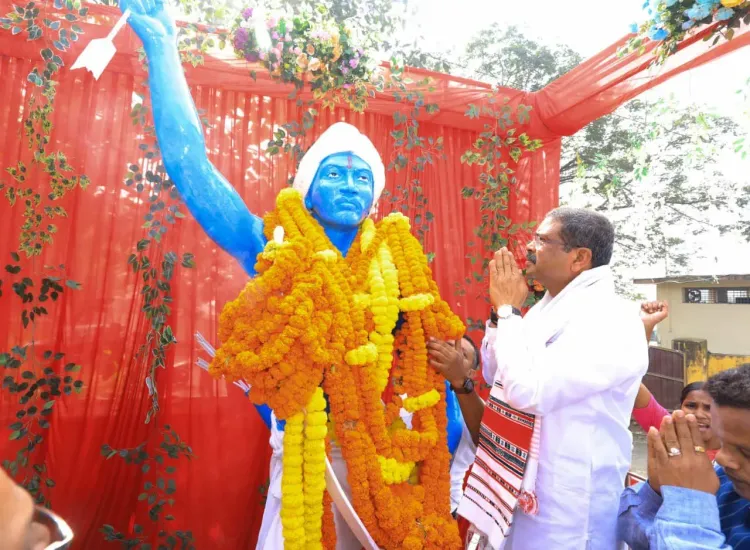
Union Education Minister Dharmendra Pradhan paid floral tribute to Bhagwan Birsa Munda at Ainthapali Chowk in Sambalpur on Janjatiya Gaurav Diwas, 15 November 2026, the fifth national observance of the tribal pride day instituted by the Modi government in 2021.
Key Takeaways
Dharmendra Pradhan paid tribute at the Birsa Munda statue at Ainthapali Chowk, Sambalpur on 15 November 2026 .
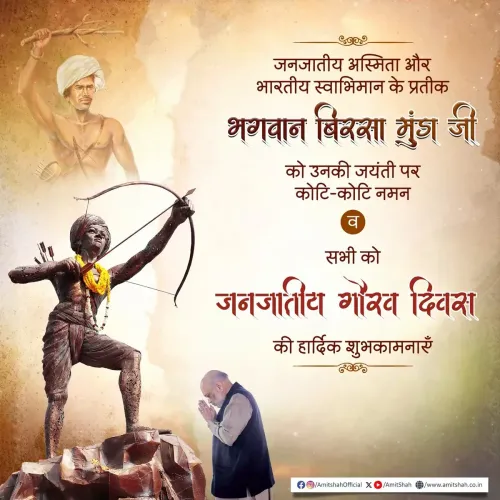
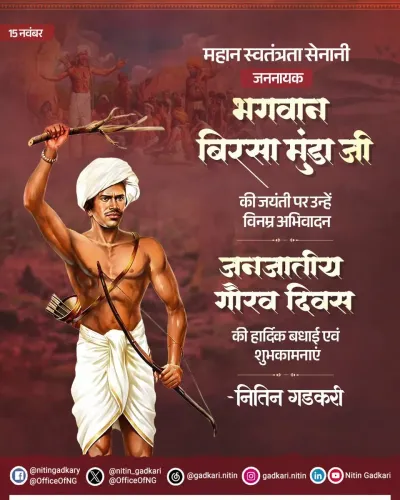
Janjatiya Gaurav Diwas marks the birth anniversary of Bhagwan Birsa Munda , born 15 November 1875 in present-day Jharkhand.
The national observance was formally instituted in 2021 by the Ministry of Tribal Affairs under the Modi government .
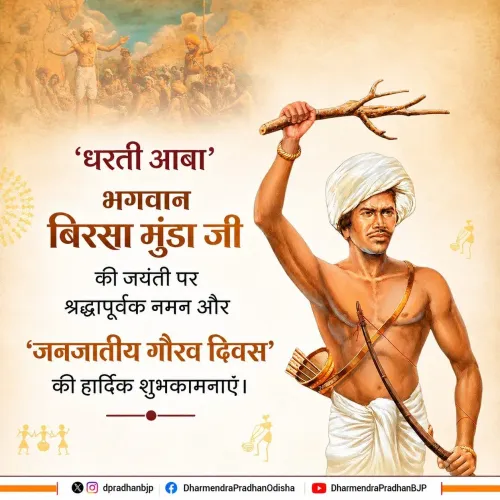
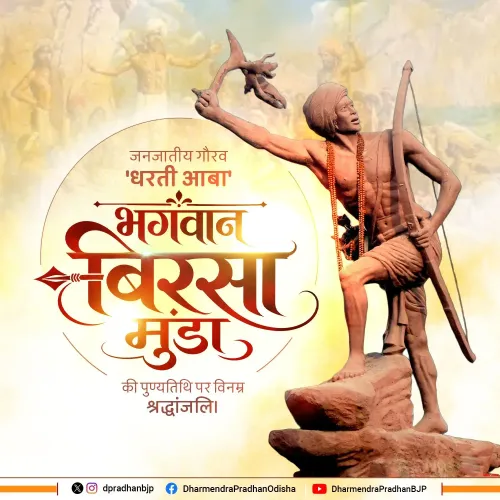
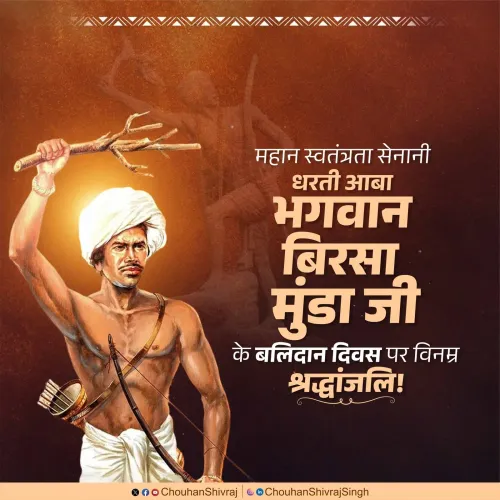
Birsa Munda, revered as 'Dharti Aaba' (Father of the Earth), led the Ulgulan uprising against British land policies before dying in custody at age 25 .
Pradhan called Birsa Munda's sacrifice 'an eternal source of inspiration' and conveyed greetings to tribal communities across India.
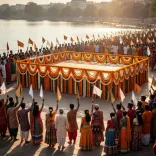
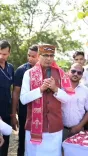
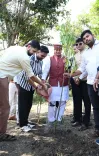
On the birth anniversary of Bhagwan Birsa Munda — the 19th-century tribal icon who defied the British empire and became immortal as 'Dharti Aaba' (Father of the Earth) — Union Education Minister Dharmendra Pradhan travelled to Sambalpur, Odisha, on Sunday, 15 November 2026, to pay floral tribute at the statue located at Ainthapali Chowk, marking the national observance of Janjatiya Gaurav Diwas.
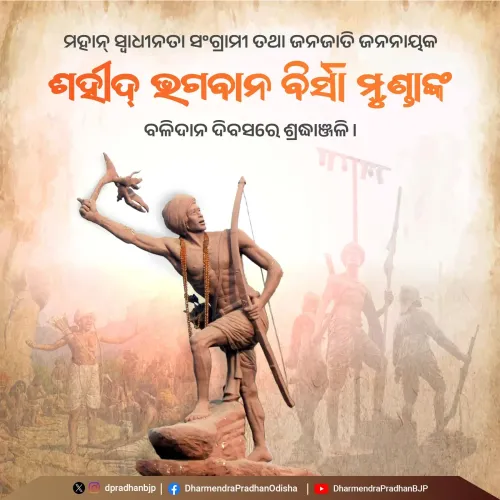
Posting in Odia on X, Pradhan wrote that Birsa Munda's 'unparalleled sacrifice and martyrdom in the struggle for Indian independence and against injustice will remain an eternal source of inspiration for all of us.' He also extended warm greetings to 'all tribal brothers and sisters and citizens of the country' on the occasion.
From Rebellion to National Day: How Birsa Munda's Legacy Was Formalised
Bhagwan Birsa Munda was born on 15 November 1875 in present-day Jharkhand. He led the Ulgulan — the Great Tumult — a fierce uprising of the Munda tribal community against British land-dispossession policies and exploitative moneylenders in the late 1890s. Arrested in 1900, he died in custody at just 25, leaving behind a movement that reverberated across colonial India's tribal heartlands.
In 2021, the Ministry of Tribal Affairs under the Narendra Modi government formally declared 15 November as Janjatiya Gaurav Diwas — a national day to honour tribal contributions to India's freedom struggle. Pradhan noted in his post that Prime Minister @narendramodi's government has 'taken the pride of the tribal society to new heights' by institutionalising this observance.
Sambalpur's Significance and Pradhan's Odia Roots
Sambalpur in western Odisha carries a substantial Scheduled Tribe population, making it a natural focal point for the day's commemorations in the state. Dharmendra Pradhan, a senior BJP leader from Odisha who previously served as Union Petroleum Minister before taking charge of the Education portfolio, is a frequent participant in state-level public commemorations — his presence at the Ainthapali Chowk statue underlines the political and cultural weight the party assigns to this observance.
The broader BJP strategy of integrating Adivasi histories into the mainstream independence narrative is visible across states with large Scheduled Tribe populations — Odisha, Jharkhand, and Chhattisgarh among them — where public installations and institutional honours for tribal icons have multiplied in recent years.
As Janjatiya Gaurav Diwas completes its fifth year as a national observance, the question sharpening in policy circles is whether the symbolic recognition translates into structural gains — in education access, land rights, and cultural preservation — for the communities Birsa Munda gave his life to defend.
Point of View
Rather than a Delhi-based event, signals that the party sees ground-level visibility in Odisha as strategically important. The institutionalisation of the day since 2021 gives the government a recurring platform to signal solidarity with tribal communities. The more demanding test, analysts would note, lies in whether policy outcomes in tribal education and land security keep pace with the commemorative energy.
NationPress
15 Nov 2026
Frequently Asked Questions
What is Janjatiya Gaurav Diwas and why is it celebrated on 15 November?
Janjatiya Gaurav Diwas is a national observance held every year on 15 November to mark the birth anniversary of tribal freedom fighter Bhagwan Birsa Munda. The Modi government formally declared the day in 2021 to highlight tribal contributions to India's independence struggle.
Who was Bhagwan Birsa Munda?
Bhagwan Birsa Munda was a 19th-century Munda tribal leader from present-day Jharkhand who led the 'Ulgulan' rebellion against British land-dispossession policies. Revered as 'Dharti Aaba' (Father of the Earth), he was arrested in 1900 and died in custody at age 25.
Where did Dharmendra Pradhan pay tribute on Janjatiya Gaurav Diwas 2026?
Union Education Minister Dharmendra Pradhan paid floral tribute at the Bhagwan Birsa Munda statue located at Ainthapali Chowk in Sambalpur, western Odisha, on 15 November 2026.
When was Janjatiya Gaurav Diwas first declared a national observance?
The Ministry of Tribal Affairs under the Narendra Modi government formally declared 15 November as Janjatiya Gaurav Diwas in 2021.
What does 'Dharti Aaba' mean in relation to Birsa Munda?
'Dharti Aaba' is an Odia and tribal honorific meaning 'Father of the Earth', a title given to Bhagwan Birsa Munda by the communities he championed during his uprising against British colonial rule.