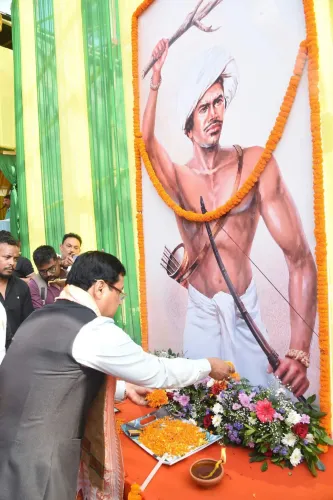
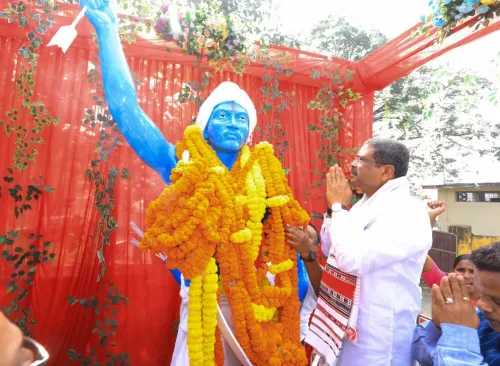
Education Minister Pradhan pays tribute to Birsa Munda in Sambalpur
Synopsis
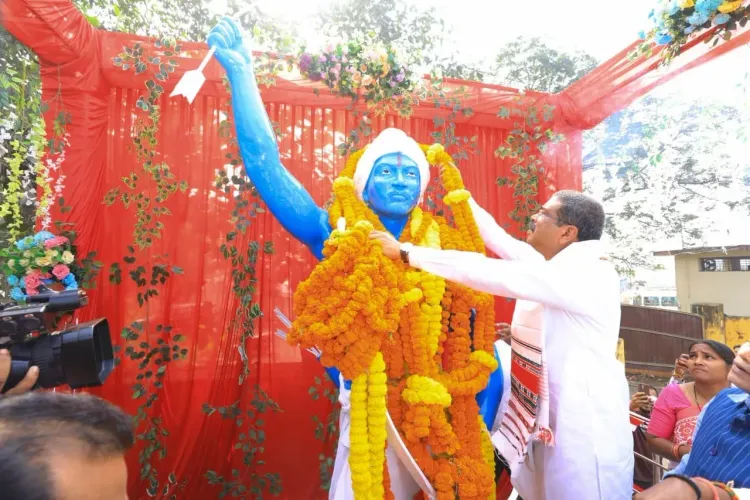
Union Education Minister Dharmendra Pradhan paid floral tributes to Bhagwan Birsa Munda in Sambalpur, Odisha, on Janjatiya Gaurav Diwas — 15 November — honouring the tribal leader's anti-colonial Ulgulan movement and his enduring role as a symbol of Adivasi self-respect and rights.
Key Takeaways
Dharmendra Pradhan offered floral tributes to Birsa Munda in Sambalpur, Odisha on 15 November 2026 .
The day is observed as Janjatiya Gaurav Diwas , declared by the Government of India in 2021 to honour tribal freedom fighters.
Birsa Munda , born 15 November 1875 , led the Ulgulan uprising against British colonial dispossession of tribal lands in the Chota Nagpur region.
Pradhan called Birsa Munda's legacy 'an invaluable heritage of Indian history' and offered koti-koti naman to the tribal leader.
Odisha has one of India's largest Scheduled Tribe populations , giving the Sambalpur event significant political and symbolic resonance.
Central government commemoration of tribal icons has grown consistently since 2014 , with efforts to reflect Adivasi history in school curricula — now under Pradhan's education brief.
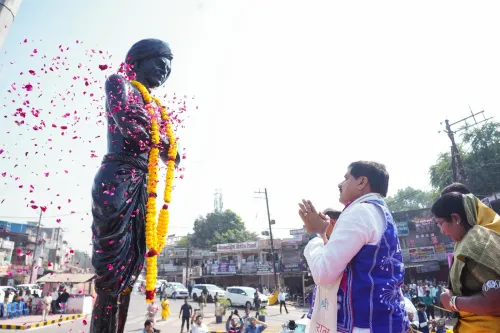
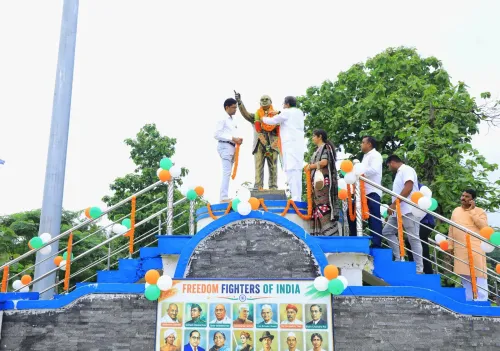
On Janjatiya Gaurav Diwas, the nation's annual day of honour for tribal freedom fighters, Union Education Minister Dharmendra Pradhan travelled to Sambalpur, Odisha, to offer floral tributes at the feet of Bhagwan Birsa Munda — the 19th-century tribal leader whose revolt against colonial rule still reverberates across central and eastern India.
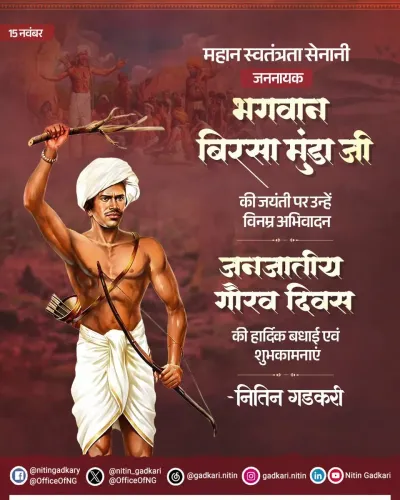
Posting from the event on Sunday, 15 November 2026, Pradhan wrote: 'aaj Sambalpur, Odisha mein Bhagwan Birsa Munda ji ki jayanti par unhein pushpanjali arpit kar naman kiya' — 'Today, on the birth anniversary of Bhagwan Birsa Munda, I offered floral tributes in Sambalpur, Odisha.' He called Birsa Munda's struggle, indomitable courage, and unwavering dedication to the nation 'an invaluable heritage of Indian history,' and said the leader had 'awakened a new consciousness of self-respect, rights and cultural identity in tribal society.' The post carried the hashtags #BirsaMunda and #JanjatiyaGauravDiwas.
Who was Birsa Munda — and why does the date matter
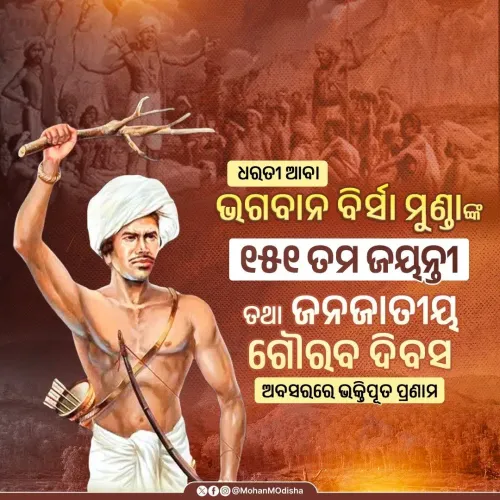
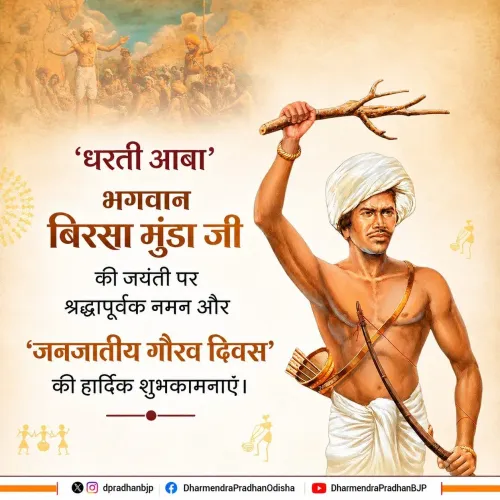
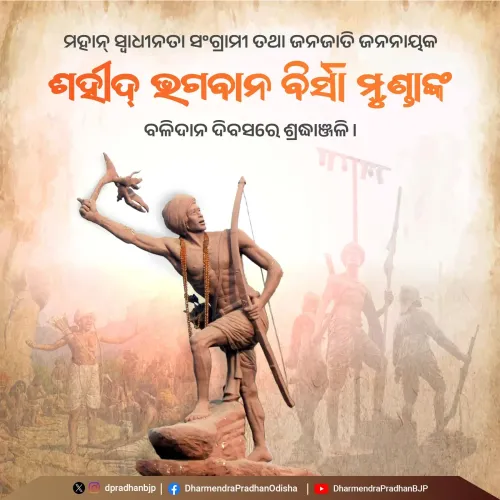
Birsa Munda was born on 15 November 1875 in the Chota Nagpur region, in what is today Jharkhand. He led the Ulgulan — the Great Tumult — a mass uprising of the Munda tribal community against British colonial dispossession of forest and agricultural lands. Arrested and imprisoned, he died in custody at just 25 years of age, yet his movement reshaped laws governing tribal land rights and embedded his name permanently in India's freedom struggle narrative.
In 2021, the Government of India formally declared 15 November as Janjatiya Gaurav Diwas to commemorate Birsa Munda and recognise the broader contribution of Adivasi communities to the independence movement. The annual observance has since become a focal point for state and central government programmes directed at tribal welfare and cultural preservation.
Sambalpur's significance as the venue
Odisha is home to one of India's largest Scheduled Tribe populations, and Sambalpur in the state's western belt sits at the heart of a region with deep tribal roots and heritage. Pradhan, himself an Odisha MP and senior BJP leader, has consistently used high-profile ceremonies in the state to underscore the Centre's engagement with tribal communities. His presence in Sambalpur on this date carries both symbolic and political weight in a state where Adivasi voters form a decisive constituency.
Central government commemorations of tribal icons have grown measurably since 2014, with parallel efforts to integrate Adivasi history into school curricula — a domain that now falls directly under Pradhan's education portfolio. The convergence of his ministerial brief with the symbolism of the day makes his presence in Sambalpur particularly pointed.
A legacy Pradhan says will inspire generations
In his post, Pradhan declared that Birsa Munda's 'sacrifice for the motherland and struggle against injustice will always inspire coming generations,' and offered what he called 'koti-koti naman' — crores of salutations — to the great jannayak, or people's leader. The tribute arrived alongside images shared from the event, underscoring a live, on-ground presence rather than a desk-posted message.
Birsa Munda's story — a young man who took on an empire with limited arms but enormous moral authority — remains one of the most potent symbols available to any Indian politician invoking the idea of grassroots resistance. As Janjatiya Gaurav Diwas deepens its roots in the national calendar, the question is no longer whether tribal history belongs in India's mainstream narrative. That argument is settled. The question now is what concrete policy weight the commemoration carries — and that answer will be written in this year's budgets and curricula, not in a wreath.
Point of View
Jharkhand and Chhattisgarh that carry decisive electoral weight. The fact that the Education Minister, rather than a junior official, led the tribute signals the government's intent to mainstream tribal icons through both ceremony and curriculum. As the National Education Policy framework continues to evolve, the degree to which Birsa Munda and other Adivasi figures are formally embedded in textbooks will be the real test of whether this symbolic investment translates into institutional change. Janjatiya Gaurav Diwas is now five years old — old enough to be evaluated on outcomes, not just optics.
NationPress
15 Nov 2026
Frequently Asked Questions
What is Janjatiya Gaurav Diwas and why is it celebrated on 15 November?
Janjatiya Gaurav Diwas is a national observance held every year on 15 November to commemorate the birth anniversary of tribal leader Birsa Munda and honour the contributions of Adivasi communities to India's freedom struggle. The Government of India declared the day in 2021 .
Who was Birsa Munda and what did he fight for?
Birsa Munda was a tribal leader born on 15 November 1875 in the Chota Nagpur region. He led the Ulgulan — the Great Tumult — a mass uprising against British colonial dispossession of tribal forest and agricultural lands, and is revered as a symbol of Adivasi self-respect and resistance.
Why did Dharmendra Pradhan go to Sambalpur for Birsa Munda's birth anniversary?
Dharmendra Pradhan offered floral tributes in Sambalpur, Odisha as part of Janjatiya Gaurav Diwas observances. Odisha has one of India's largest Scheduled Tribe populations , and Sambalpur is situated in the state's tribal heartland, making it a symbolically significant venue.
When was Janjatiya Gaurav Diwas declared by the Government of India?
The Government of India declared 15 November as Janjatiya Gaurav Diwas in 2021 , coinciding with Birsa Munda's birth anniversary, to recognise tribal contributions to the nation's freedom movement.
What is the Ulgulan movement associated with Birsa Munda?
The Ulgulan , meaning 'Great Tumult,' was a tribal uprising led by Birsa Munda in the late 19th century against British colonial exploitation and the dispossession of Munda community lands in the Chota Nagpur region of present-day Jharkhand .