CM Dhami credits PM Modi for India's oil supply stability
Synopsis
Uttarakhand CM Pushkar Singh Dhami credited PM Modi's diplomacy and strategic foresight for shielding Indian consumers from global oil supply disruptions, citing smooth petroleum availability despite international market volatility.
Key Takeaways
CM Dhami posted on 4 July 2026 crediting PM Modi's leadership for India's uninterrupted petroleum product supply amid global tensions.
India's Strategic Petroleum Reserves at Visakhapatnam, Mangalore and Padur provide a structural buffer against supply shocks.
India released 5 million barrels from strategic reserves in 2022 in coordination with IEA members to stabilise prices.
Russia's share of India's crude imports rose from under 2 per cent to over 20 per cent by 2023 as India diversified supply sources.
Phase-II SPR caverns at Chandikhol and Padur represent the next stage of India's energy security buildout.
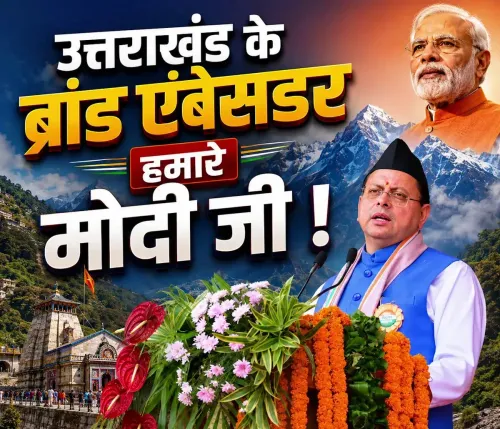
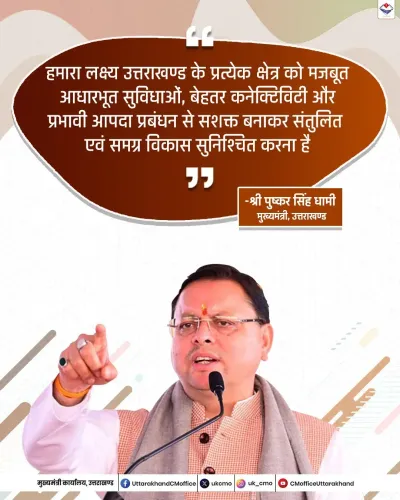
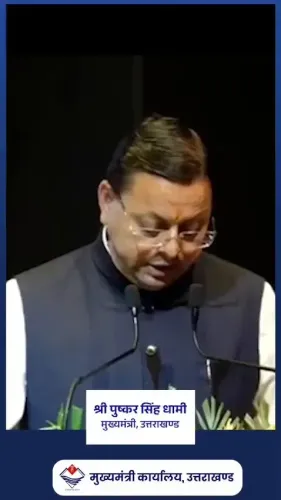
Uttarakhand Chief Minister Pushkar Singh Dhami on Saturday, 4 July 2026, credited Prime Minister Narendra Modi's leadership for ensuring uninterrupted petroleum product availability in India despite ongoing global supply tensions and price volatility in international oil markets.
Posting on X, CM Dhami wrote: 'वैश्विक स्तर पर बने तनाव के कारण अंतर्राष्ट्रीय स्तर पर तेल आपूर्ति और कीमतों की अनिश्चितताओं के बावजूद...' ['Despite uncertainties in international oil supply and prices caused by global tensions...'], adding that the central government's 'far-sighted strategy, timely decisions, and effective diplomatic efforts' ensured smooth availability of petroleum products and that ordinary citizens did not face any oil crisis.
Context
Global oil markets have faced repeated shocks in recent years, beginning with the 2022 Russia-Ukraine conflict, which disrupted established supply chains and sent crude prices surging. India, as one of the world's largest oil importers, was directly exposed to these pressures. CM Dhami's post frames the central government's response as a policy success story rooted in diplomatic agility and strategic planning.
The post follows a well-established pattern among BJP-governed states, where state leaders publicly amplify the Centre's economic and foreign policy achievements, particularly those with direct impact on household budgets.
Policy Backdrop
India's energy security architecture rests on several pillars built over the past decade. The country operates Strategic Petroleum Reserves (SPR) at Visakhapatnam, Mangalore, and Padur, developed since 2008, which provide a buffer against acute supply disruptions. In 2022, India released 5 million barrels from these reserves in a coordinated move with International Energy Agency member nations to help stabilise domestic prices.
A key pillar of supply security has been India's rapid expansion of Russian crude imports. Following the 2022 conflict, Russia's share of India's total crude imports rose from under 2 per cent to over 20 per cent by 2023, as Indian refiners capitalised on discounted barrels. Alongside this, long-term contracts with Gulf nations and the United States have provided further diversification.
The government's approach — combining source diversification, storage expansion, and bilateral energy diplomacy — has been credited with insulating Indian consumers from the worst of international price swings that have rattled other import-dependent economies.
Stakeholders and Impact
The primary beneficiaries of a stable petroleum supply are Indian consumers and small businesses, for whom fuel costs directly affect daily expenditure and logistics. Disruptions in petrol, diesel, or LPG availability can trigger inflationary cascades across food, transport, and manufacturing sectors.
Petroleum importers and state-run oil marketing companies also have a direct stake: sustained supply chains reduce the need for emergency spot purchases at elevated prices, protecting refinery margins and government subsidy outflows. Uttarakhand, as a hilly, landlocked state heavily dependent on road transport, is particularly sensitive to any fuel supply disruption.
What's Next
Attention in the energy security space is now turning to the Phase-II expansion of India's Strategic Petroleum Reserve network, with proposed caverns at Chandikhol in Odisha and an expanded facility at Padur in Karnataka. New long-term crude supply agreements are also expected to feature in upcoming bilateral energy dialogues. As geopolitical fault lines remain active, India's ability to lock in diversified, long-duration contracts will be the true test of whether the supply stability praised by leaders like CM Dhami can be structurally sustained beyond the current diplomatic cycle.
Point of View
Where a state leader reinforces the Centre's policy narrative on an issue — fuel prices — that resonates deeply with voters across income groups. By framing supply stability as the product of 'far-sighted strategy and effective diplomacy,' the messaging implicitly contrasts the current administration's record with the supply anxieties that have historically plagued India during global oil shocks. The timing, amid continuing geopolitical uncertainty in energy markets, allows the BJP to position economic competence as a core electoral asset. The post also signals that energy security — long a technocratic portfolio — is being actively claimed as a political success story ahead of any future electoral cycle.
NationPress
3 Oct 2026
Frequently Asked Questions
Why is India's oil supply stable despite global tensions in 2026?
India has maintained petroleum supply stability through a combination of Strategic Petroleum Reserves, diversified crude import sources including Russia and Gulf nations, and long-term bilateral supply contracts negotiated under PM Modi's government.
What are India's Strategic Petroleum Reserves and where are they located?
India's Strategic Petroleum Reserves are underground storage facilities at Visakhapatnam, Mangalore and Padur , developed since 2008. They can release millions of barrels to buffer domestic supply during international disruptions.
How much Russian oil does India import?
Russia's share of India's total crude oil imports rose from under 2 per cent before 2022 to over 20 per cent by 2023, making it one of India's largest crude suppliers after the 2022 global supply disruption.
What did CM Dhami say about India's energy security?
CM Dhami said that despite global tensions causing uncertainty in oil supply and prices, the central government's far-sighted strategy, timely decisions, and effective diplomatic efforts ensured smooth availability of petroleum products for Indian citizens.
What is the Phase-II expansion of India's Strategic Petroleum Reserve?
The Phase-II expansion involves building new underground crude storage caverns at Chandikhol in Odisha and expanding the existing facility at Padur in Karnataka, aimed at increasing India's strategic oil buffer capacity.