CM Dhami Hails Pantnagar University as Pillar of India's Farm Revolution

Synopsis
Uttarakhand CM Pushkar Singh Dhami on 26 June 2026 praised G.B. Pant University of Agriculture and Technology, Pantnagar — India's first agricultural university — for its six-decade role in the Green Revolution, seed research and improving the lives of lakhs of farmers.
Key Takeaways
CM Pushkar Singh Dhami publicly credited G.B.
Pant University of Agriculture and Technology, Pantnagar for its historic contribution to Indian agriculture on 26 June 2026 .
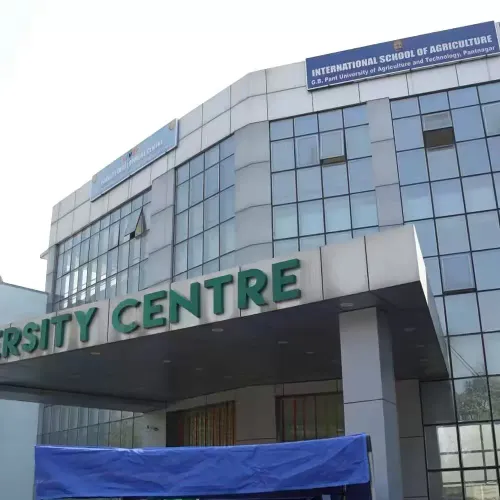
Pantnagar University , established in 1960 , is India's first agricultural university, modelled on the US Land-Grant system.
The university played a key role in India's Green Revolution of the 1960s–70s by developing high-yielding seed varieties and extension programmes.
CM Dhami highlighted improved seeds, modern technologies and agricultural education as the institution's core contributions to farmer welfare.
The university is located in Udham Singh Nagar district, Uttarakhand , on the Tarai plains — historically significant for agricultural experiments.
The statement signals continued political and policy focus on agricultural education in Uttarakhand's development agenda.
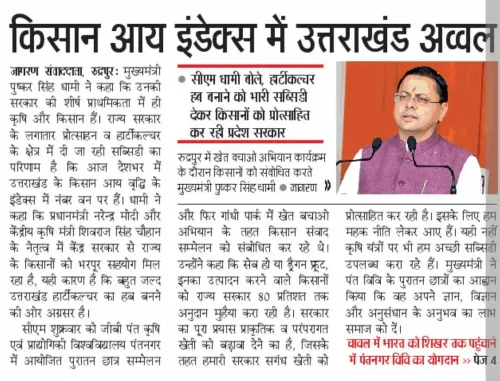
Uttarakhand Chief Minister Pushkar Singh Dhami on Friday, 26 June 2026, paid tribute to G.B. Pant University of Agriculture and Technology, Pantnagar, calling it a historic contributor to Indian agricultural modernisation, research, innovation and farmer prosperity.
Posting on X, CM Dhami wrote — translated from Hindi — that as India's first agricultural university, 'Pantnagar Vishwavidyalaya' (Pantnagar University) has made a 'historical contribution' to the modernisation of Indian agriculture, research, innovation and the prosperity of farmers. He added that the institution's role — from accelerating the Green Revolution to bringing 'positive change in the lives of lakhs of farmers' through improved seeds, modern technologies and agricultural education — has been 'always inspiring.'
Context
G.B. Pant University of Agriculture and Technology was established in 1960 at Pantnagar, a town in Udham Singh Nagar district, Uttarakhand, making it the first dedicated agricultural university in independent India. It was modelled on the US Land-Grant university system, integrating teaching, research and extension services under one roof. Its location on the fertile Tarai plains made it an ideal laboratory for the crop-science breakthroughs that would define the next two decades of Indian farming.
The university played a direct role in the Green Revolution of the 1960s and 1970s, developing and disseminating high-yielding seed varieties that helped India move from chronic food deficit toward self-sufficiency. Its extension programmes carried these technologies to farming communities across the country.
Policy Backdrop
Since Uttarakhand's formation in 2000, successive state governments have cited Pantnagar's research output as a foundation for both plains and hill farming policy. The university's seed banks, agronomy trials and trained graduates have fed into state agriculture departments and national bodies including the Indian Council of Agricultural Research (ICAR).
Nationally, state agricultural universities remain the primary institutional channel for technology dissemination, seed improvement and human-capital formation in the farm sector. CM Dhami's remarks align with a broader pattern of invoking these institutions to signal continuity with the Green Revolution legacy while addressing contemporary challenges of productivity and climate resilience.
Stakeholders and Impact
The university's most direct stakeholders are the farming communities of Uttarakhand and the wider Indo-Gangetic belt, who have benefited from improved varieties and extension advice developed at Pantnagar over six decades. Agricultural researchers, faculty and students at the institution also stand as key actors in this ecosystem.
For lakhs of small and marginal farmers, the practical outputs of Pantnagar — certified seeds, pest-management guidance, soil-health protocols — have translated into tangible yield improvements. The Chief Minister's public recognition of this contribution reinforces the political and policy salience of the institution in Uttarakhand's development narrative.
What's Next
Observers will watch whether CM Dhami's statement is followed by concrete budgetary or policy action — particularly state allocations for agricultural education and potential new memoranda of understanding between Pantnagar University and ICAR institutes in the coming fiscal year. The post signals that the Uttarakhand government views the university as a live policy asset, not merely a historical landmark, which could shape funding priorities in the agriculture and higher-education budgets ahead.
Point of View
Dhami connects the BJP government's development posture to a broadly respected chapter of post-independence statecraft. The move also subtly positions Uttarakhand — often seen primarily as a hill state — as a stakeholder in India's plains-agriculture success story. Whether the rhetoric translates into fresh funding or new research partnerships will determine whether this is a policy signal or a ceremonial tribute.
NationPress
25 Sept 2026
Frequently Asked Questions
What is G.B. Pant University of Agriculture and Technology Pantnagar known for?
G.B. Pant University of Agriculture and Technology , established in 1960 at Pantnagar, Uttarakhand , is India's first agricultural university, renowned for its role in the Green Revolution through high-yielding seed research, extension services and agricultural education that benefited lakhs of farmers.
Why did CM Dhami praise Pantnagar University?
Uttarakhand Chief Minister Pushkar Singh Dhami praised Pantnagar University on 26 June 2026 , recognising its six-decade contribution to agricultural modernisation, research, innovation and farmer prosperity, describing its role as 'always inspiring.'
When was Pantnagar University established and why is it significant?
Pantnagar University was established in 1960 as India's first dedicated agricultural university under the US Land-Grant model. It is significant for pioneering seed research and extension programmes that were central to India's Green Revolution in the 1960s and 1970s.
What is the Green Revolution and what role did Pantnagar play?
The Green Revolution was India's agricultural transformation in the 1960s–70s , driven by high-yielding crop varieties, irrigation and research institutions. Pantnagar University was a key contributor, developing improved seeds and providing training and extension services to farming communities.
What could follow CM Dhami's statement on Pantnagar University?
Policy observers will watch for increased state budget allocations for agricultural education and potential new agreements between Pantnagar University and national bodies such as ICAR , which could signal concrete follow-through on CM Dhami's public endorsement of the institution.