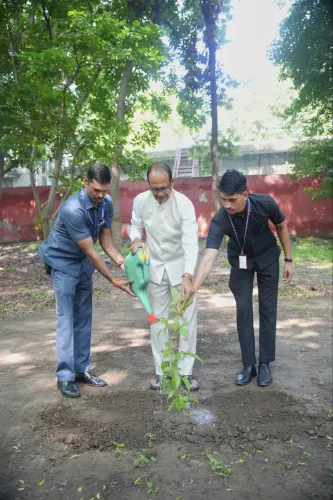
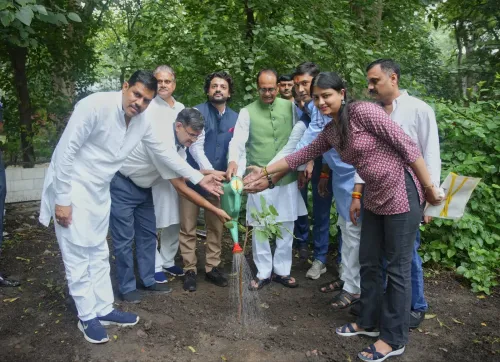
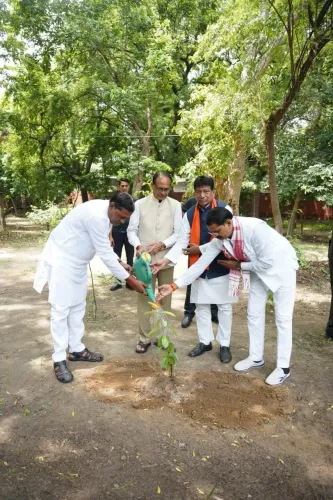
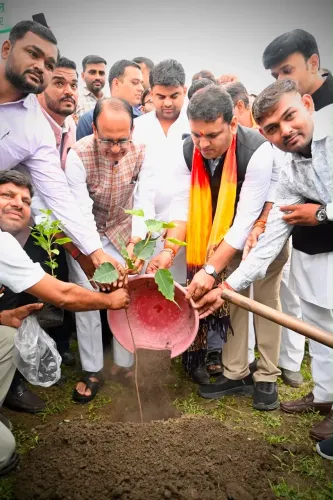
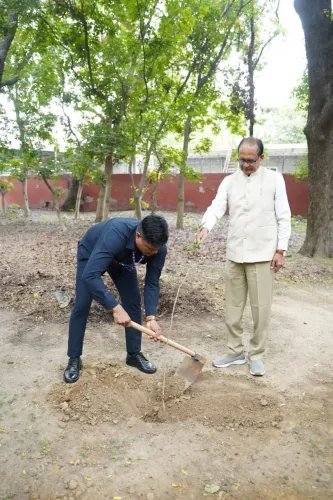
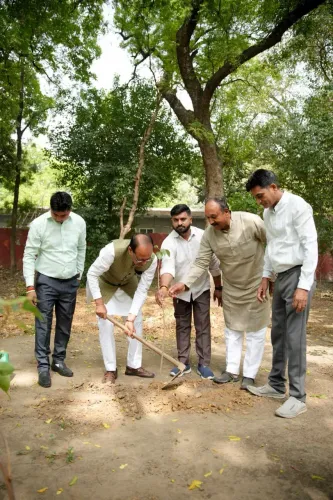
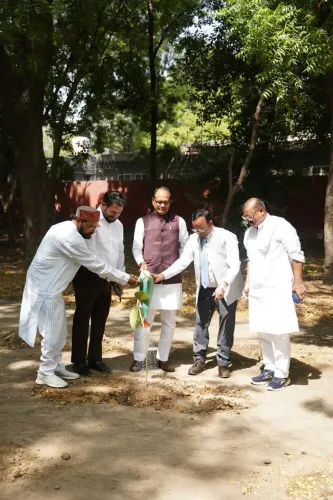
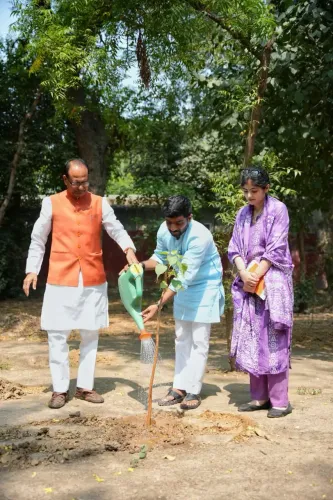
Shivraj Singh Chouhan Plants Saplings at Pantnagar Agri University
Synopsis
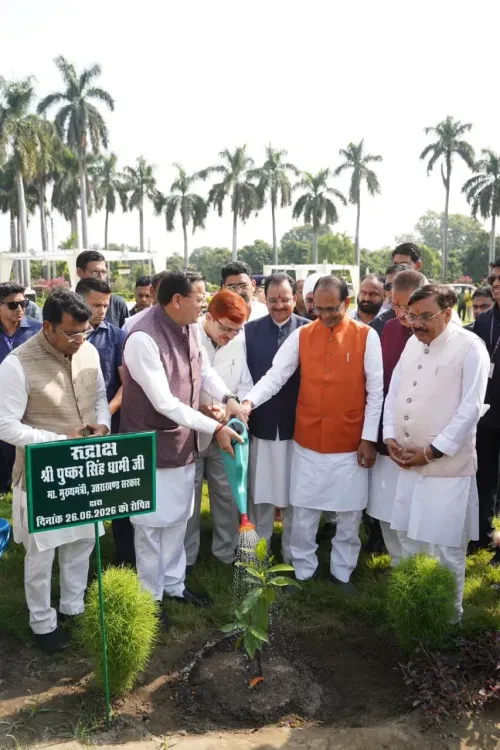
Union Agriculture Minister Shivraj Singh Chouhan joined Uttarakhand CM Pushkar Dhami and State Agriculture Minister Ganesh Joshi for a tree-plantation drive at GB Pant Agricultural University in Pantnagar on 26 June 2026, continuing his daily #OnePlantADay pledge and calling on citizens to commit to greening India.
Key Takeaways
Shivraj Singh Chouhan planted saplings at Govind Ballabh Pant University of Agriculture and Technology, Pantnagar on 26 June 2026 as part of his daily #OnePlantADay pledge.
Uttarakhand Chief Minister Pushkar Singh Dhami and State Agriculture Minister Ganesh Joshi participated alongside Chouhan.
GB Pant University, established in 1960 , is India's first agricultural university and was chosen as the venue for the drive.
The campaign aligns with India's National Forest Policy target of 33 per cent forest and tree cover under the National Mission for a Green India.
Uttarakhand faces significant ecological pressures including glacial retreat and forest fires, giving the drive added urgency in the Himalayan state.
Chouhan called on all citizens to take a pledge to make the earth 'green, lush, and prosperous' through daily plantation.
Union Agriculture Minister Shivraj Singh Chouhan joined Uttarakhand Chief Minister Pushkar Singh Dhami and State Agriculture Minister Ganesh Joshi for a tree-plantation drive on the campus of Govind Ballabh Pant University of Agriculture and Technology in Pantnagar, Uttarakhand, on Friday, 26 June 2026, as part of his ongoing daily plantation pledge under the #OnePlantADay campaign.
Context
Chouhan shared the event on X, describing Uttarakhand as 'देवभूमि' ('the land of the gods') and a sacred ground of ancient sages. He wrote that the plantation was carried out 'आध्यात्मिक चेतना से ओत-प्रोत' — 'imbued with spiritual consciousness' — underscoring the cultural resonance he attached to the act of planting trees in the Himalayan state. He called on citizens to join the pledge and make the earth 'green, lush, and prosperous.'
The choice of venue — Govind Ballabh Pant University of Agriculture and Technology — carries symbolic weight. Established in 1960 as India's first agricultural university, the Pantnagar institution has historically served as a hub for agrarian research and rural education, making it a fitting backdrop for a campaign that links environmental action with farming communities.
Policy Backdrop
India's tree-plantation tradition has deep institutional roots. Van Mahotsav, the annual afforestation festival, was launched in 1950 by K.M. Munshi to build a culture of voluntary tree-planting. Decades later, the National Mission for a Green India, approved in 2014 under the National Action Plan on Climate Change, formalised the goal of expanding forest and tree cover to meet the National Forest Policy target of 33 per cent of India's geographical area.
Chouhan himself has a track record of large-scale plantation drives. During his multiple terms as Chief Minister of Madhya Pradesh, the state government organised mass afforestation campaigns that drew national attention. His current daily pledge extends that personal commitment into his role as a Union minister.
Stakeholders and Impact
Uttarakhand, known as Devbhoomi, faces acute ecological pressures: Himalayan glaciers are retreating, forest fires have grown more frequent, and land degradation threatens both biodiversity and the livelihoods of hill farmers. Plantation activities on agricultural university campuses can feed into agroforestry promotion, encouraging farmers to integrate trees into their cropping systems for shade, soil health, and supplementary income.
Environmental groups and farming communities in the region stand to benefit if the campaign generates sustained follow-through beyond the symbolic gesture. Agricultural universities, with their research infrastructure, are well-placed to monitor sapling survival rates and share data with policymakers designing central agroforestry schemes.
What's Next
The #OnePlantADay initiative's value will ultimately be measured by sapling survival rates and whether the campaign scales beyond individual events into structured programmes at state universities and rural institutions. Watchers will look for integration with existing central schemes on agroforestry and green cover. If other state governments and Union ministers adopt similar daily pledges, the campaign could contribute meaningfully to India's climate commitments — though verification of on-ground outcomes will be essential.
Point of View
Carried out at a high-profile venue alongside a state chief minister, reflects the BJP's broader strategy of framing environmental action through cultural and spiritual idioms — invoking Uttarakhand's identity as Devbhoomi rather than citing climate data. The choice of an agricultural university signals an attempt to connect green-cover goals with the farming constituency Chouhan oversees as Union Agriculture Minister. However, the political symbolism of such events consistently outpaces verifiable ecological outcomes, and the campaign's credibility will depend on whether it translates into structured, monitored agroforestry programmes rather than remaining a series of photogenic gestures.
NationPress
24 Sept 2026
Frequently Asked Questions
What is the #OnePlantADay campaign by Shivraj Singh Chouhan?
#OnePlantADay is a personal pledge by Union Agriculture Minister Shivraj Singh Chouhan to plant at least one sapling every day, which he promotes on social media to encourage citizens to join a mass afforestation movement across India.
Where is Govind Ballabh Pant University of Agriculture and Technology located?
Govind Ballabh Pant University of Agriculture and Technology is located in Pantnagar, in the Udham Singh Nagar district of Uttarakhand. Established in 1960, it is India's first agricultural university.
Who accompanied Shivraj Singh Chouhan at the Pantnagar plantation drive?
Uttarakhand Chief Minister Pushkar Singh Dhami and Uttarakhand Agriculture Minister Ganesh Joshi joined Union Agriculture Minister Shivraj Singh Chouhan at the plantation event on 26 June 2026.
Why is Uttarakhand called Devbhoomi?
Uttarakhand is called Devbhoomi, meaning 'land of the gods,' because it is home to numerous Hindu pilgrimage sites, ancient temples, and hermitages of sages, and is considered a spiritually significant region in Hindu tradition.
What is India's National Forest Policy tree cover target?
India's National Forest Policy sets a target of bringing 33 per cent of the country's geographical area under forest and tree cover. The National Mission for a Green India, approved in 2014, is the key scheme working toward this goal.