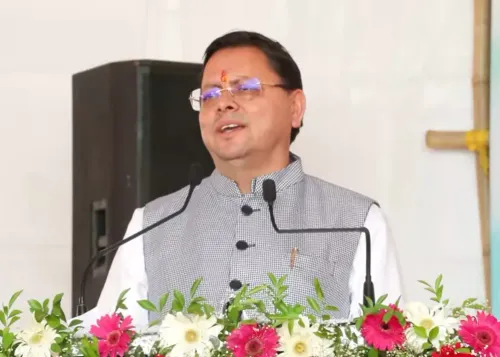
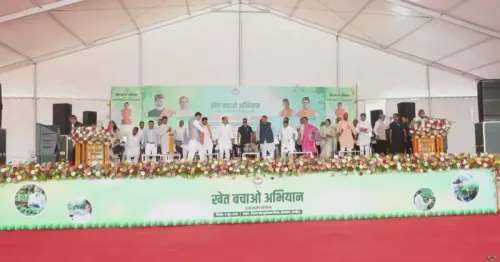
CM Dhami launches Khet Bachao Abhiyan for Uttarakhand farmland
Synopsis
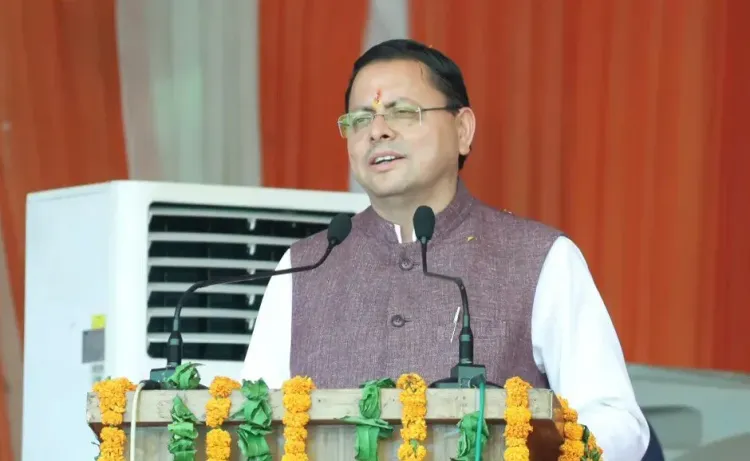
Chief Minister Pushkar Singh Dhami of Uttarakhand has invoked the Khet Bachao Abhiyan — a campaign to protect agricultural land — calling it 'the call of Mother Earth' and a resolve to secure the future of coming generations amid growing development pressures on Himalayan farmland.
Key Takeaways
The Chief Minister's Office of Uttarakhand shared a statement from CM Pushkar Singh Dhami on 26 June 2026 promoting the Khet Bachao Abhiyan .
CM Dhami described the campaign as 'the call of Mother Earth' and a resolve to secure the future of coming generations.
The campaign targets the protection of agricultural land from conversion and degradation in Uttarakhand .
Farmland in the state faces pressure from road construction, hotel development, hydropower projects and pilgrimage-route expansion.
Hill farmers and rural communities are the primary stakeholders expected to benefit from the initiative.
District-level implementation details, budgetary allocation and geographic scope of the campaign have not yet been officially confirmed.
The Chief Minister's Office of Uttarakhand, on Friday, 26 June 2026, shared a statement from Chief Minister Pushkar Singh Dhami invoking the Khet Bachao Abhiyan (Save the Farms Campaign) as both an ecological duty and an intergenerational pledge to protect the state's agricultural land.
Context
Quoting CM Dhami directly, the post read: 'Khet Bachao Abhiyan hamaari dharti maa ki pukaar hai. Yeh abhiyan aane waali peedhiyon ke bhavishy ko surakshit rakhne ka sankalp hai.' In English: 'The Save the Farms Campaign is the call of our Mother Earth. This campaign is a resolve to secure the future of generations to come.' The framing links soil conservation explicitly to cultural identity and long-term food security.
Uttarakhand is a Himalayan state where fertile valley and terrace farmland faces mounting pressure from road construction, hotel development, hydropower projects and expanding pilgrimage infrastructure. The Khet Bachao Abhiyan is positioned as a direct response to these converging threats on agricultural land.
Policy Backdrop
Indian states have increasingly framed farmland protection as both an ecological and intergenerational imperative as land-use change accelerates. Uttarakhand has previously pursued organic cultivation programmes and sought to balance agricultural preservation with infrastructure demands — a tension that has grown sharper as the state's tourism and pilgrimage economy expands.
The language of dharti maa (Mother Earth) echoes a wider national and regional rhetoric that ties soil conservation to cultural and moral obligations, not merely economic ones. By invoking future generations, CM Dhami signals that the campaign is intended as a structural, long-term commitment rather than a seasonal or localised intervention.
Stakeholders and Impact
Hill farmers and rural communities across Uttarakhand's districts stand as the primary beneficiaries of any effective farmland protection drive. Terrace farming communities in particular have seen cultivated land abandoned or converted over recent decades as younger residents migrate to urban centres and as development projects encroach on agricultural zones.
Environmental groups and agriculture-department officials are also key stakeholders, as implementation of such a campaign would require coordination across revenue, forest and agriculture departments. The success of the Khet Bachao Abhiyan will depend on whether district-level committees and enforcement mechanisms are put in place to give the initiative operational teeth.
What's Next
Observers will watch for follow-up notifications on land-conversion rules, the geographic scope of the campaign, and whether it is integrated with existing state agriculture or revenue department programmes. Any budgetary allocation or legislative backing would mark a significant escalation from a declaratory campaign to a binding policy instrument.
As Uttarakhand navigates the competing pressures of development and ecological stewardship, the Khet Bachao Abhiyan could set a precedent for how Himalayan states institutionalise farmland protection — with implications for similar terrain-sensitive regions across northern India.
Point of View
Where development pressures on fertile valley land have intensified alongside the state's booming pilgrimage economy, the campaign signals an attempt to build political capital among rural and hill-farming communities ahead of future electoral cycles. The rhetorical weight placed on 'future generations' also aligns with a national trend of embedding environmental commitments in long-horizon, legacy-style narratives. Whether the Abhiyan translates into enforceable land-conversion restrictions or remains a declaratory exercise will be the defining test of its seriousness.
NationPress
26 Jun 2026
Frequently Asked Questions
What is the Khet Bachao Abhiyan in Uttarakhand?
The Khet Bachao Abhiyan, or Save the Farms Campaign, is an initiative by the Uttarakhand government focused on protecting agricultural land from conversion and degradation to ensure long-term food security and ecological balance in the state.
What did CM Pushkar Singh Dhami say about the Khet Bachao Abhiyan?
CM Dhami described the Khet Bachao Abhiyan as 'the call of Mother Earth' and called it a resolve to secure the future of coming generations, linking soil conservation to both cultural identity and intergenerational responsibility.
Why is farmland protection important in Uttarakhand?
Uttarakhand's fertile valley and terrace farmland faces pressure from road construction, hotel development, hydropower projects and expanding pilgrimage infrastructure, making conservation campaigns like the Khet Bachao Abhiyan particularly significant for hill farming communities.
Who benefits from the Khet Bachao Abhiyan?
Hill farmers and rural communities across Uttarakhand are the primary intended beneficiaries, especially terrace-farming communities whose cultivated land has faced abandonment or conversion in recent decades.
What are the next steps for the Khet Bachao Abhiyan?
Observers are watching for district-level implementation committees, land-conversion rules, budgetary allocations and integration with existing state agriculture or revenue department programmes to determine how the campaign will be operationalised.