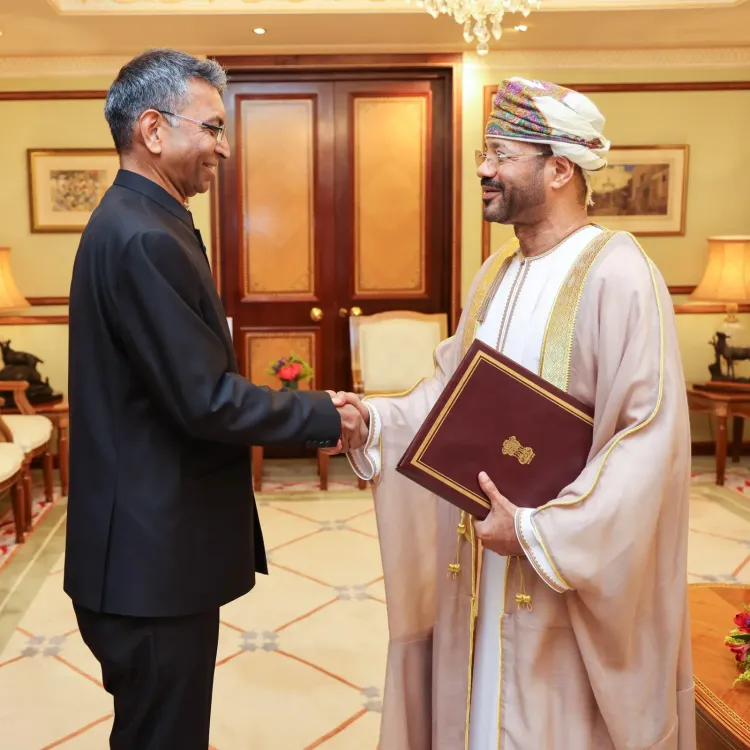
India's Ambassador Prashant Pise presents credentials to Oman's FM Albusaidi
Synopsis
India's newly appointed Ambassador to Oman, Prashant Pise, formally presented his credentials to Foreign Minister Albusaidi in Muscat on 26 June — a protocol milestone that comes at a sensitive moment for Gulf stability, weeks after PM Modi's call with Sultan Haitham reaffirmed India's commitment to Oman's sovereignty and free navigation through the Strait of Hormuz.
Key Takeaways
Prashant Pise presented credentials to Oman's Foreign Minister Sayyid Badr bin Hamad bin Hamood Albusaidi at the Ministry's General Diwan, Muscat on 26 June .
Pise assumed charge as India's Ambassador to Oman on 14 June , previously serving as Additional Secretary in the Ministry of External Affairs handling emigration and migration policy.
India and Oman have maintained diplomatic ties since 1955 , with the relationship upgraded to a Strategic Partnership in 2008 .
PM Modi spoke with Sultan Haitham bin Tariq in March , condemning violations of Oman's sovereignty and stressing dialogue amid West Asia tensions.
Both nations reaffirmed support for safe and free navigation through the Strait of Hormuz .
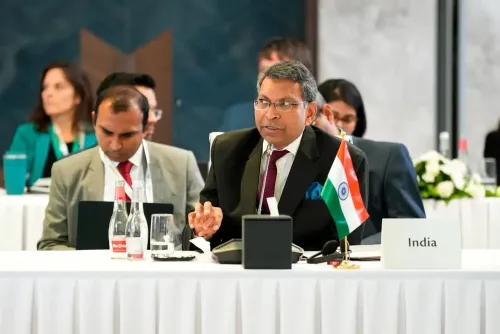
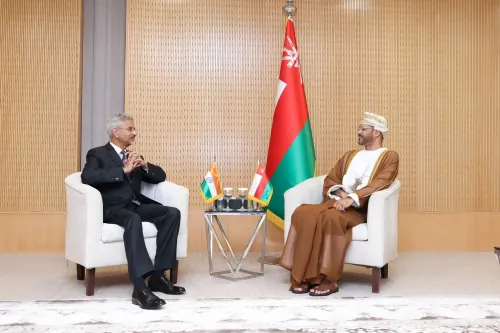
India's Ambassador to Oman, Prashant Pise, formally presented his credentials to Oman's Foreign Minister Sayyid Badr bin Hamad bin Hamood Albusaidi at the Ministry's General Diwan in Muscat on Friday, 26 June, marking a key protocol step in the diplomatic relationship between the two nations. The handover signals the formal commencement of Pise's ambassadorial duties in the Sultanate.
The Credential Ceremony
At the ceremony, Foreign Minister Albusaidi welcomed Ambassador Pise and expressed his wishes for the envoy's success in his new role. Oman's Foreign Ministry confirmed that the minister also conveyed hopes for 'further progress and prosperity' in bilateral relations between the two countries.
The occasion was attended by senior Omani officials, including Ambassador Sheikh Ahmed bin Hashil Al Muskyri, Head of the Gulf Cooperation Council and Regional Neighbourhood Department, and Ambassador Naguib bin Yahya Al Balushi, Head of the Protocol Department, alongside officials from both sides.
Pise's Background and Arrival
Prashant Pise assumed charge as India's Ambassador to Oman on 14 June, arriving in Muscat ahead of the formal credentialling. Prior to this posting, he served as Additional Secretary in India's Ministry of External Affairs, where he oversaw emigration policy, migration matters, and mobility-related affairs. Upon assuming charge, Pise paid floral tributes to Mahatma Gandhi at the Indian Embassy in Muscat — a customary gesture that the Indian Embassy described as 'a timeless symbol of truth, non-violence and moral courage.'
India-Oman Ties: Strategic Context
The credential presentation comes against a backdrop of deepening India-Oman engagement. Diplomatic ties between the two nations were established in 1955, and the relationship was elevated to a Strategic Partnership in 2008. Oman plays a significant role as India's interlocutor within the Gulf Cooperation Council (GCC), the Arab League, and the Indian Ocean Rim Association (IORA).
Notably, in March, Prime Minister Narendra Modi held a telephonic conversation with Oman's ruler Sultan Haitham bin Tariq, during which he reiterated India's condemnation of what was described as a violation of Oman's sovereignty and territorial integrity. The two leaders agreed on the need to 'prioritise dialogue and diplomacy for de-escalation and subsequent restoration of peace and stability,' according to Modi's post on X.
Regional Backdrop
The Modi-Sultan call took place in the context of heightened tensions across West Asia, following the conflict that erupted after US-Israeli strikes on Iran on 28 February, which reportedly killed Iran's Supreme Leader Ayatollah Ali Khamenei and top military officials. Iran subsequently launched drone and missile attacks targeting US and Israeli facilities, regional capitals, and allied forces across the region. Prime Minister Modi also appreciated Oman's efforts to facilitate the safe return of thousands of people, including Indian nationals, and affirmed that 'India and Oman stand for safe and free navigation through the Strait of Hormuz.'
Ambassador Pise's formal induction into his role positions India's diplomatic presence in Muscat at a particularly consequential moment for Gulf region stability.
Point of View
But its timing is not. Pise steps into Muscat at a moment when the Gulf's security architecture is under acute stress following the West Asia conflict and Iran's retaliatory strikes. Oman has historically played the quiet mediator — a role that makes India's diplomatic footprint there disproportionately valuable. Pise's background in emigration policy is also telling: with a large Indian diaspora in Oman, the bilateral agenda is as much about worker welfare and mobility as it is about strategic alignment. Whether New Delhi leverages Oman's interlocutor role more actively in the current regional crisis will be the real test of this appointment.
NationPress
26 Jun 2026
Frequently Asked Questions
Who is Prashant Pise and what is his role in Oman?
Prashant Pise is India's newly appointed Ambassador to the Sultanate of Oman. He assumed charge on 14 June and formally presented his credentials to Oman's Foreign Minister on 26 June, marking the official start of his ambassadorial duties. Prior to this posting, he served as Additional Secretary in India's Ministry of External Affairs, handling emigration policy and migration matters.
What was the significance of the credential presentation in Muscat?
The credential presentation is a formal diplomatic protocol that officially recognises an ambassador's authority to represent their country. Pise's credentialling to Foreign Minister Albusaidi formally activates India's diplomatic mission in Muscat under his leadership, at a particularly sensitive time for Gulf regional stability.
What is the current state of India-Oman bilateral relations?
India and Oman share a Strategic Partnership established in 2008, with diplomatic ties dating back to 1955. Oman serves as an important interlocutor for India within the GCC, Arab League, and IORA. PM Modi's telephonic call with Sultan Haitham in March 2025 reaffirmed the depth of the relationship amid West Asia tensions.
Why did PM Modi call Oman's Sultan Haitham in March?
PM Modi called Sultan Haitham bin Tariq in March to reiterate India's condemnation of violations of Oman's sovereignty and territorial integrity, and to agree on the importance of dialogue and diplomacy for de-escalation. The call came during heightened West Asia tensions following US-Israeli strikes on Iran and Iran's retaliatory attacks.
What is Oman's strategic importance to India?
Oman is a key strategic partner for India, serving as an interlocutor at the GCC, Arab League, and IORA. The two countries share geographic, historical, and cultural ties. Oman also plays a critical role in facilitating safe navigation through the Strait of Hormuz, which India considers vital to regional trade and energy security.