Goa CM Sawant to Inaugurate Restored Alorna Fort on June 27
Synopsis
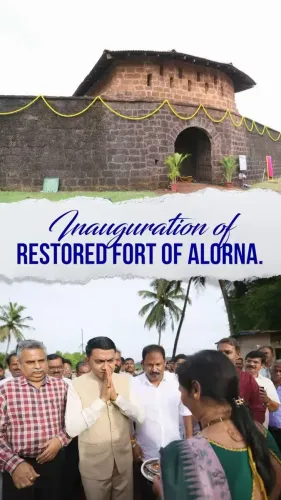
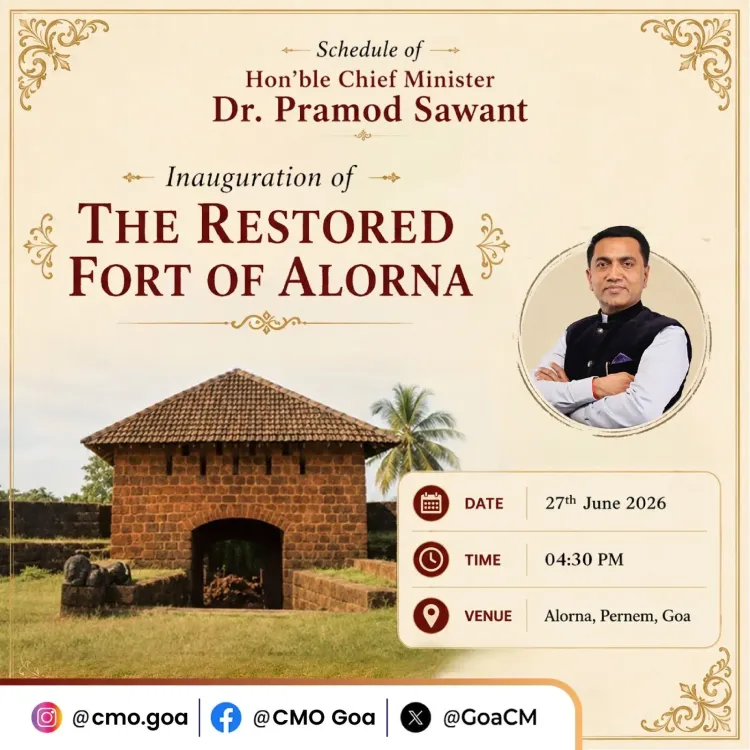
Chief Minister Dr. Pramod P. Sawant will inaugurate the restored Fort of Alorna in Pernem, Goa on 27 June 2026. The 17th-century Portuguese-era fort's revival signals Goa's strategic push to develop heritage and cultural tourism circuits beyond its traditional beach-centric identity.
Key Takeaways
Sawant , Chief Minister of Goa, will inaugurate the restored Fort of Alorna on 27 June 2026 .
The fort is located in Alorna village, Pernem taluka — Goa's northernmost district bordering Maharashtra.
Fort of Alorna is a 17th-century Portuguese-era structure originally built for defence and later used for administration.
The inauguration is framed by the Goa government as a step toward heritage conservation and cultural tourism promotion.
The restoration follows earlier Goa government fort projects, including work at Reis Magos Fort , reflecting a sustained policy of colonial monument revival.
Key beneficiaries include Pernem residents , heritage tourists, and the broader Goa tourism sector .
The Chief Minister's Office of Goa announced on 26 June 2026 that Chief Minister Dr. Pramod P. Sawant will inaugurate the restored Fort of Alorna in Alorna, Pernem on 27 June 2026, marking a significant step in the state's heritage conservation and cultural tourism drive.
Context
The Fort of Alorna, a 17th-century Portuguese-era structure in Pernem taluka — Goa's northernmost administrative division bordering Maharashtra — was originally constructed for defensive purposes and later served administrative functions under colonial rule. The fort's restoration and formal inauguration by Dr. Sawant brings renewed public attention to one of northern Goa's lesser-visited historical landmarks.
The Chief Minister's Office described the event as 'another significant step towards preserving Goa's rich historical heritage and promoting cultural tourism in the State.' The ceremony is scheduled for 27 June 2026 at the fort premises in Alorna village.
Policy Backdrop
The Goa government has undertaken fort restoration projects periodically across the state, with earlier works at sites such as Reis Magos Fort in northern Goa setting a precedent for colonial-era monument conservation. These efforts reflect a deliberate policy pivot away from Goa's dominant beach-tourism identity toward a broader heritage and cultural tourism circuit.
Dr. Sawant, who has held the Chief Ministership since 2019 and overseen portfolios including tourism and public works, has positioned heritage restoration as a pillar of sustainable tourism development. The Alorna inauguration fits within that longer arc of state-level investment in historical infrastructure.
Across India, state governments have increasingly targeted lesser-known colonial and pre-colonial monuments to distribute visitor footfall beyond saturated urban heritage zones, generate local employment, and build distinctive regional tourism identities. Goa's approach with Alorna mirrors this national pattern.
Stakeholders and Impact
Residents of Pernem taluka stand to benefit most immediately, as the fort's opening to visitors could stimulate local hospitality, guided-tour, and artisan economies in a region that has historically seen lower tourism investment compared to coastal and central Goa. Heritage tourists and cultural travellers represent the primary visitor demographic the state is targeting.
The broader Goa tourism sector — already one of India's most competitive — gains a new heritage anchor point in the north, potentially extending average tourist stays and diversifying itineraries beyond beaches and churches. Community stakeholders in Alorna and surrounding villages could see increased footfall and associated economic activity following the inauguration.
What's Next
The inauguration of Alorna Fort is expected to be followed by state tourism department announcements on visitor amenities, ticketing, and guided-tour infrastructure at the site. Observers will also watch subsequent Goa state budget cycles for allocations toward additional fort restorations and northern Goa heritage circuits.
If the Alorna model proves successful in drawing sustained visitor interest, it could accelerate the state's pipeline of colonial monument restorations and cement Pernem as a distinct heritage destination within Goa's tourism map.
Point of View
The administration is lending political weight to what has historically been a low-visibility conservation agenda. The move aligns with a wider Indian state-level trend of monetising colonial-era infrastructure for cultural tourism without heavy private investment. Whether the Alorna model translates into sustained visitor numbers will test the government's capacity to follow through with amenities, marketing, and community integration beyond the inauguration moment.
NationPress
25 Sept 2026
Frequently Asked Questions
When will Alorna Fort be inaugurated in Goa?
The restored Fort of Alorna will be inaugurated on 27 June 2026 by Goa Chief Minister Dr. Pramod P. Sawant at the fort premises in Alorna village, Pernem.
Where is Fort of Alorna located?
Fort of Alorna is located in Alorna village, Pernem taluka , the northernmost administrative division of Goa, bordering Maharashtra.
What is the history of Fort of Alorna?
The Fort of Alorna is a 17th-century Portuguese-era structure originally constructed for defensive purposes and later used for colonial administration in Goa.
Why is Goa restoring its forts?
The Goa government is restoring forts like Alorna to preserve historical heritage and develop cultural tourism circuits , diversifying beyond the state's traditional beach tourism economy.
Who is the Chief Minister of Goa?
Dr. Pramod P. Sawant is the Chief Minister of Goa, holding the position since 2019 , with portfolios that include tourism and public works.