CM Sawant Inaugurates Restored 17th-Century Sankhali Fort
Synopsis
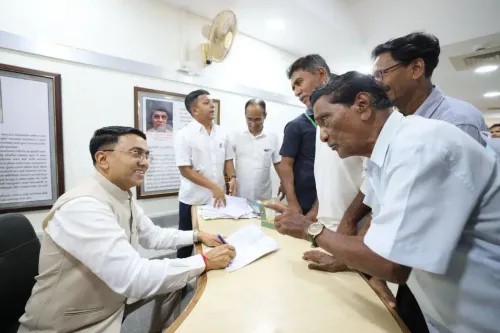
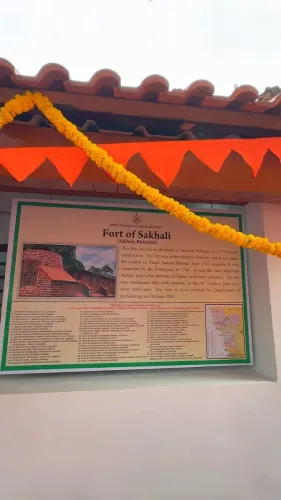
Goa Chief Minister Pramod Sawant inaugurated the restored Sankhali Fort, a 17th-century structure built by the Sawant Bhonsle rulers in North Goa. The conservation project, executed by the state Department of Archaeology, is part of a wider push to revive indigenous heritage monuments and expand Goa's tourism map beyond its coastal and Portuguese-era landmarks.
Key Takeaways
Goa CM Pramod Sawant inaugurated the restored Sankhali Fort in North Goa.
The fort was originally built in the 17th century by the Sawant Bhonsle rulers.
Restoration was carried out by the Department of Archaeology, Government of Goa.
The project highlights indigenous heritage alongside Goa's better-known Portuguese-era monuments.
The site is expected to feed into Goa's expanding heritage tourism circuit.
Sawant called preservation of heritage monuments a 'collective responsibility'.
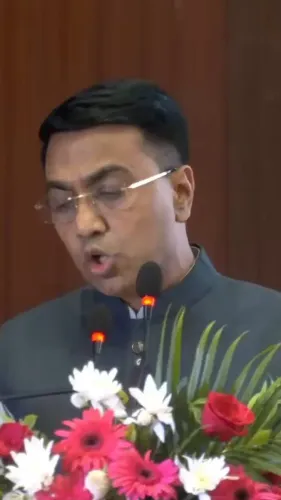
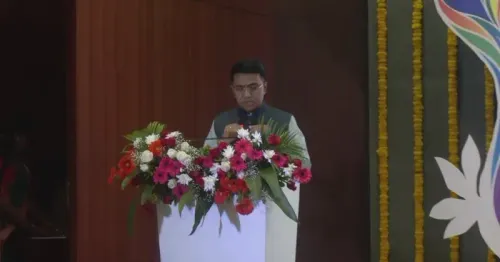
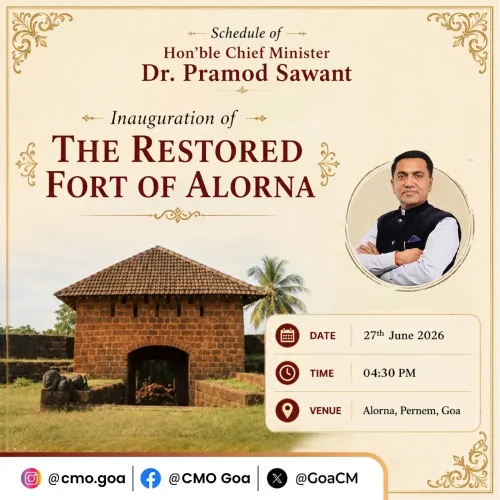
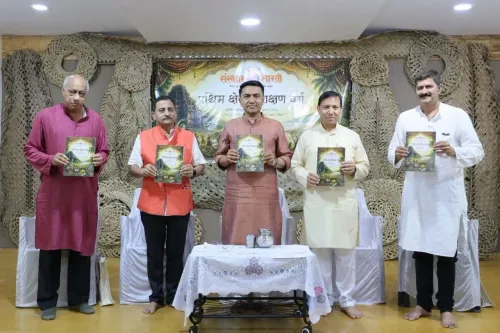
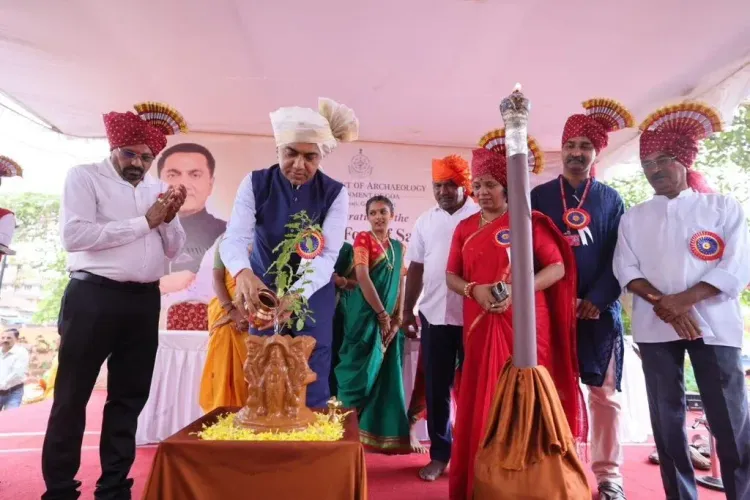
Goa Chief Minister Pramod Sawant on Wednesday inaugurated the restored Sankhali Fort in North Goa, a 17th-century structure revived under a conservation project executed by the Department of Archaeology, Government of Goa. The Chief Minister announced the inauguration on X, framing the project as part of a broader push to safeguard the state's indigenous heritage monuments.
In his post, Sawant said he was 'pleased to inaugurate the restored Sankhali Fort' and described the monument as 'an important symbol of Sankhali's rich history and cultural legacy'. He added that 'our heritage monuments are living symbols of our identity and history, and preserving them is our collective responsibility'.
Context
The Sankhali Fort, located in Bicholim taluka of North Goa, was originally built in the 17th century by the Sawant Bhonsle rulers, a regional Maratha-lineage dynasty that held sway over parts of the Konkan coast. The fort served as a stronghold during a period when the territory now comprising Goa was contested between regional kingdoms and the Portuguese.
For centuries, the structure remained a quiet marker of Sankhali's pre-Portuguese past, overshadowed in popular memory by the more prominent coastal forts and churches of the Estado da India. The restoration brings the site back into public view as a functioning heritage destination.
Policy backdrop
Since Goa attained statehood in 1987, successive governments have periodically funded the restoration of pre-Portuguese and colonial-era forts through the Department of Archaeology. The agency is tasked with the survey, protection and conservation of monuments and archaeological sites that fall outside the ambit of centrally protected structures.
The Sankhali Fort project fits into a wider state effort to diversify Goa's cultural narrative beyond the dominant Portuguese-era heritage, foregrounding indigenous dynasties such as the Sawant Bhonsles, the Kadambas and other regional rulers. Similar restoration drives at lesser-known forts across the state have been pitched as both cultural recovery and a means of distributing tourism beyond the saturated coastal belt.
Stakeholders and impact
For residents of Sankhali, the revived fort offers a visible anchor for local identity and a potential boost to small-business activity tied to visitor footfall. Heritage tourists, increasingly drawn to hinterland Goa, gain another waypoint beyond the beaches and Old Goa basilicas.
Archaeology officials, meanwhile, have a working case study for handling weather-worn laterite fortifications in the Western Ghats foothills. The Chief Minister's framing of preservation as a 'collective responsibility' also signals an expectation that the local community will participate in the upkeep of the restored site.
The project sits within a nationwide pattern in which states are conserving lesser-known heritage sites for educational and economic purposes, often pairing restoration with interpretation centres, signage and curated tourism circuits.
What's next
Attention will turn to the next round of state budget allocations for monument conservation and whether the Sankhali Fort is formally integrated into Goa's official heritage tourism circuits. The state has flagged several other inland forts as candidates for similar treatment, and the pace of those projects will indicate how durable the current emphasis on indigenous heritage proves to be.
If the Sankhali model is replicated, Goa's tourism map could shift meaningfully inland over the coming years, with the Department of Archaeology emerging as a more visible player in the state's cultural economy.
Point of View
The state is doing what several Indian governments have done in recent years: using heritage conservation as both identity politics and tourism diversification. The real test will be whether such restorations are followed by sustained interpretation, signage and circuit integration, or whether they remain one-off ribbon-cuttings. For now, it slots neatly into the BJP-led government's wider emphasis on civilisational continuity and regional pride.
NationPress
18 Oct 2026
Frequently Asked Questions
Who built the Sankhali Fort in Goa?
The Sankhali Fort was originally built in the 17th century by the Sawant Bhonsle rulers, a regional Maratha-lineage dynasty that held sway over parts of the Konkan coast including areas now in Goa.
Where is Sankhali Fort located?
Sankhali Fort is located in the town of Sankhali in Bicholim taluka, North Goa. It sits in the hinterland away from the state's better-known coastal belt.
Who restored the Sankhali Fort?
The restoration was undertaken by the Department of Archaeology, Government of Goa, the state agency responsible for survey, protection and conservation of Goa's monuments and archaeological sites.
Why is the Sankhali Fort restoration significant?
It is significant because it revives a pre-Portuguese, indigenous-era monument and supports Goa's effort to diversify its cultural narrative and heritage tourism beyond Portuguese-era landmarks.
Can tourists visit the restored Sankhali Fort?
Following its inauguration by Chief Minister Pramod Sawant, the restored fort is open as a heritage site and is expected to be integrated into Goa's wider heritage tourism circuits over time.