CM Pramod Sawant Hails Sankhali Fort Restoration as Heritage Legacy
Synopsis
Goa Chief Minister Pramod Sawant announced the restoration of the historic Sankhali Fort, calling it a symbolic legacy of the state's past. The conservation push aligns with Goa's broader strategy of leveraging Portuguese-era forts for heritage tourism and cultural preservation, with attention now turning to the site's integration into formal tourism circuits.
Key Takeaways
Goa CM Pramod Sawant announced the restoration of the Sankhali Fort on 3 June 2026 .
He described the fort as a 'symbolic legacy' of Goa's history preserved for future generations.
The project fits Goa's wider pattern of restoring Portuguese-era forts for heritage tourism.
The post used hashtags #SankhaliFort and #RestoringHeritage and included a video.
Scope, cost and timeline of the restoration were not disclosed in the announcement.
Possible next step: integration of the fort into Goa's tourism circuit.
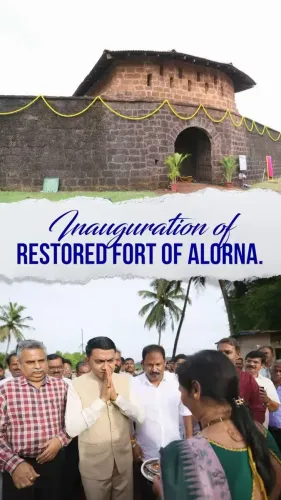
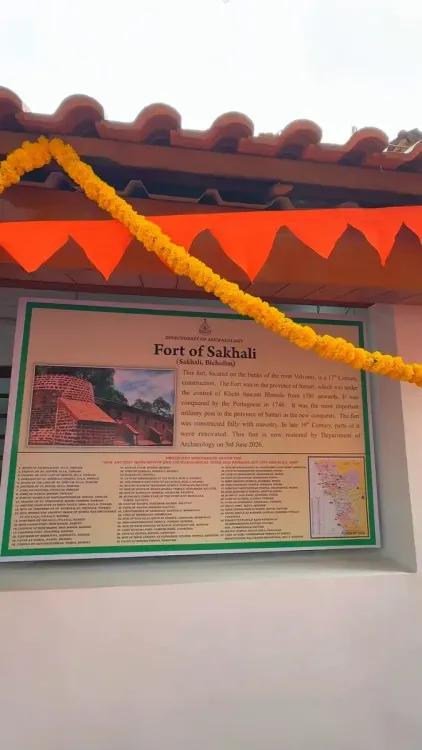
Goa Chief Minister Pramod Sawant on Wednesday, 3 June 2026, announced the completion of restoration work at the Sankhali Fort, framing the conservation effort as part of a broader push to safeguard the state's Portuguese-era architectural inheritance. In a post on X accompanied by a video walkthrough, the Chief Minister described the fort as a 'symbolic legacy' of Goa's past now preserved for future generations.
'The Sankhali Fort is a symbolic legacy of Goa's history that we have proudly restored to preserve this chapter for our future generations,' Sawant wrote, tagging the announcement with #SankhaliFort and #RestoringHeritage. The post positions the project within the state government's ongoing heritage conservation agenda.
Context
The Sankhali Fort, located in the North Goa region, is among several fortified structures across the state that trace their lineage to the centuries-long Portuguese presence on the Konkan coast. Goa's forts — including better-known sites such as Aguada, Chapora, Reis Magos and Corjuem — have long served as visual anchors of the state's distinct colonial-era identity.
Restoration of these structures has been an episodic exercise, often handled by the state's archaeology and tourism departments. Sawant's framing of Sankhali Fort as a chapter preserved 'for future generations' echoes the language used by the administration for earlier heritage projects.
Policy backdrop
Since taking office as Chief Minister in 2019, Sawant has positioned heritage and tourism as intertwined pillars of Goa's development pitch. Successive state budgets have carried allocations for fort conservation, signage upgrades, and integration of heritage sites into curated tourist circuits.
The effort also dovetails with central government schemes that support cultural heritage conservation across coastal and former colonial regions of India. For a state where tourism contributes a significant share of economic activity, the restoration of lesser-visited forts is often pitched as a way to diversify visitor flow beyond beach destinations.
Stakeholders and impact
The most immediate beneficiaries are local communities in and around Sankhali, who stand to gain from increased visitor footfall, ancillary services and guide work if the site is added to mainstream tourism itineraries. Heritage tourists and conservation enthusiasts form a second constituency, with restored forts offering interpretive value beyond their visual appeal.
Conservation specialists typically watch such announcements for details on the methods used — whether original materials and techniques have been preserved, or whether modern interventions dominate. The Chief Minister's post did not specify the scope, cost or duration of the restoration work, leaving those particulars for subsequent official disclosures.
What's next
Attention now turns to whether the Sankhali Fort will be formally folded into Goa's heritage tourism circuit, potentially with ticketed access, guided tours or cultural programming. Future state budget cycles may also indicate whether the Sankhali project is a one-off or the template for a wider rollout covering other neglected forts.
For Sawant, the announcement reinforces a governance narrative that pairs cultural stewardship with economic opportunity — a positioning that is likely to recur as Goa continues to negotiate the balance between mass tourism, environmental limits and the preservation of its layered history.
Point of View
The Chief Minister is signalling a broader, more distributed heritage map — one that could spread tourist footfall and political dividends beyond the coastal belt. The announcement also fits a wider national arc in which state leaders increasingly invoke heritage restoration as a marker of governance. The real test will be whether the project sustains conservation standards or becomes another photo-op site.
NationPress
19 Sept 2026
Frequently Asked Questions
Where is the Sankhali Fort located?
The Sankhali Fort is located in Goa and is part of the state's collection of Portuguese-era fortified structures. It lies in the Sankhali area of North Goa.
Who announced the restoration of Sankhali Fort?
Goa Chief Minister Pramod Sawant announced the restoration of the Sankhali Fort through a post on X on 3 June 2026, calling it a symbolic legacy of the state's history.
Why is Goa restoring its old forts?
Goa's forts are restored to preserve Portuguese-era architectural heritage and to support tourism. Successive state governments have used such projects to diversify the tourism mix beyond beaches.
What did Pramod Sawant say about Sankhali Fort?
Sawant said the Sankhali Fort is a symbolic legacy of Goa's history that has been proudly restored to preserve the chapter for future generations.
Will Sankhali Fort be part of Goa tourism circuit?
That has not been formally confirmed, but integration into Goa's heritage tourism circuit is a likely next step. Future state budget provisions may indicate the direction.