CM Dhami Leads 'Save Democracy' March in Rudrapur
Synopsis
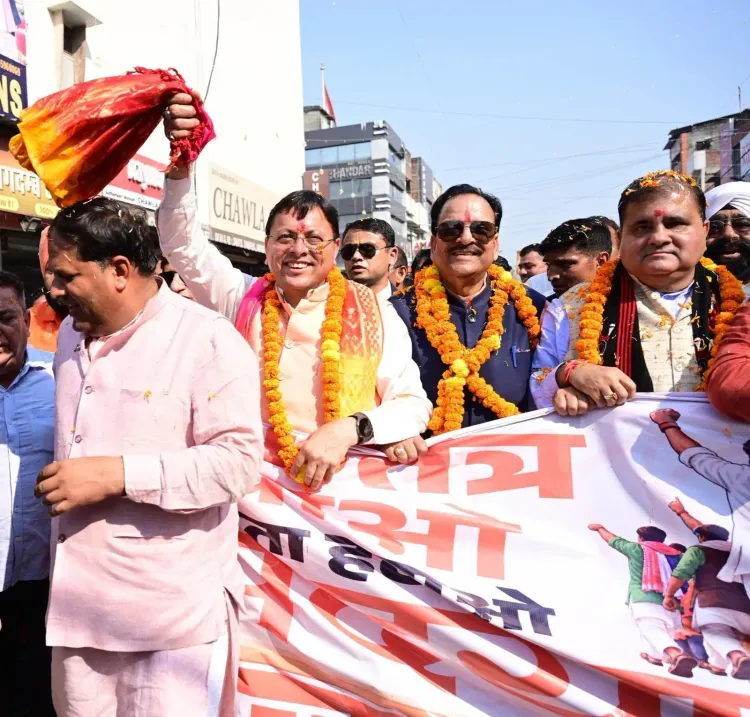
Uttarakhand CM Pushkar Singh Dhami led a 'Save Democracy, Remove Anarchy' foot march in Rudrapur on November 3, 2026, drawing thousands of women, youth, and party workers. The march centred on democracy, national security, and voter list purity — a pattern increasingly common in BJP state-level political mobilisation.
Key Takeaways
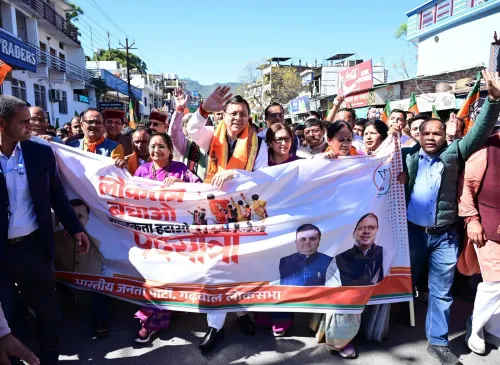
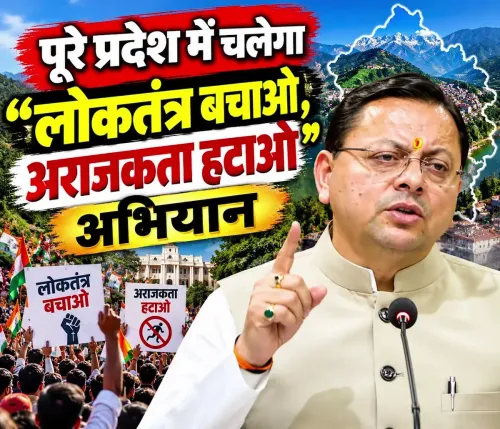
CM Pushkar Singh Dhami addressed the 'Loktatantra Bachao, Arajkata Hatao' padyatra in Rudrapur on November 3, 2026 .
The march drew thousands of participants, including women's groups ( matrashakti ), youth, and BJP workers.
Three core themes were foregrounded: democracy, national security, and voter list sanctity .
Rudrapur, in Udham Singh Nagar district , is a key political and industrial hub in Uttarakhand.
The event fits a broader BJP pattern of public marches centred on electoral roll integrity across Indian states.
Follow-up from the Uttarakhand election commission and opposition responses remain to be watched.
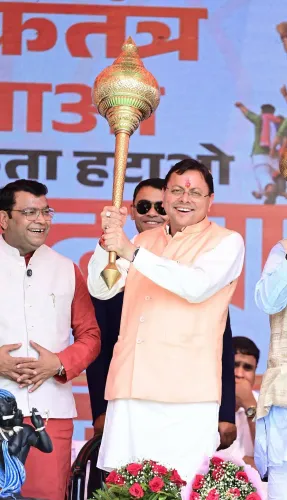
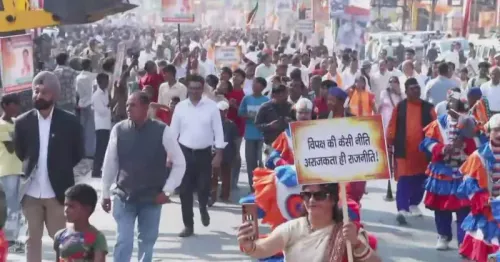
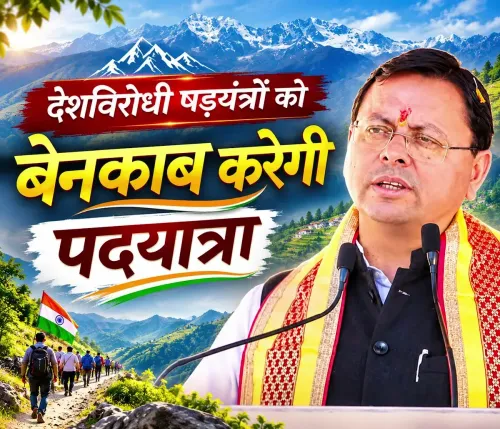
Thousands poured into the streets of Rudrapur on Tuesday, November 3, 2026, as Uttarakhand Chief Minister Pushkar Singh Dhami anchored a mass padyatra — a public foot march — under the banner 'Loktatantra Bachao, Arajkata Hatao' ('Save Democracy, Remove Anarchy'), drawing what organisers described as a flood of citizens united around national interest.
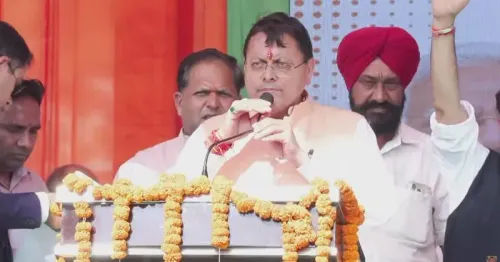
Dhami described the turnout as a reflection of the public's 'unbreakable resolve and awareness towards national interest,' pointing specifically to the participation of women's groups, youth, and party workers. The march, he said, gave voice to public sentiment on three pillars: democracy, national security, and the sanctity of the voter list.
Rudrapur as a Political Flashpoint
Rudrapur, the industrial hub of Udham Singh Nagar district, carries significant political weight in Uttarakhand. It sits at the crossroads of migration, industry, and demographic change — making voter-roll integrity a particularly charged local issue. The city has historically been a competitive constituency, and any large-scale political mobilisation here sends a signal beyond the district.
Voter List Sanctity at the Centre of the March
The explicit focus on matdata suchi ki shuchita — purity of the electoral rolls — places this march squarely in a national BJP pattern. Across multiple states, leaders have periodically called attention to demands for updated, clean voter lists, often framing irregularities as a threat to democratic integrity. The Rudrapur march formalises that demand at the street level, with mass participation lending it visible political weight.
The imagery Dhami invoked is telling: he referred to participants as devtulya janta — 'godlike citizens' — a phrase that frames ordinary voters as the moral authority above any political institution. Thousands of women — matrashakti — marched alongside youth and BJP workers, a combination the party consistently deploys to signal broad-based, cross-generational appeal.
What the Slogan Signals
The phrase 'Remove Anarchy' is pointed. Without naming a specific opponent, it implies that a threat to democratic order already exists and must be actively pushed back. That framing — casting the ruling party as the defender of stability against unnamed destabilising forces — is a recurring motif in BJP political communication ahead of elections or significant political milestones. Whether a specific trigger in Uttarakhand prompted this march on this date has not been independently established.
The Uttarakhand election commission's response to demands around voter list revision, and any reaction from opposition parties in the state, will determine whether this march marks the start of a sustained political campaign or a single show of organisational strength.
When thousands of women and young voters march through an industrial city demanding clean rolls and national security, the message is simple: the ground is being prepared, and the mobilisation has already begun.
Point of View
Remove Anarchy' march in Rudrapur is a textbook example of BJP's ground-mobilisation strategy — using the language of democratic defence to energise cadre and frame opponents as a threat before any formal electoral cycle begins. Dhami's decision to spotlight voter list purity reflects a national party line that has gained traction in multiple states, turning an administrative exercise into a political cause. Rudrapur's demographic complexity — with its large migrant workforce and competitive constituency history — makes it a calculated choice of venue. The march signals that Uttarakhand's BJP leadership is actively preparing the organisational and narrative ground, even in the absence of an immediately scheduled election.
NationPress
3 Nov 2026
Frequently Asked Questions
What is the 'Loktatantra Bachao, Arajkata Hatao' padyatra in Rudrapur?
It is a public foot march organised in Rudrapur, Uttarakhand on November 3, 2026, led by Chief Minister Pushkar Singh Dhami, calling for the protection of democracy, national security, and the sanctity of the voter list.
Why did CM Dhami hold a march in Rudrapur specifically?
Rudrapur is a major political and industrial hub in Udham Singh Nagar district, making it a strategically significant venue for large-scale political mobilisation in Uttarakhand.
What does 'voter list sanctity' mean in this context?
It refers to demands that electoral rolls be kept clean, accurate, and free of irregularities — a theme BJP leaders have raised across multiple states as part of voter-list revision drives.
Who participated in the Rudrapur padyatra?
Thousands of participants joined, including women's groups (matrashakti), youth, and BJP party workers from the region.
Is this march connected to upcoming elections in Uttarakhand?
No immediate election has been announced, but such marches are a common feature of BJP political mobilisation ahead of assembly or local body polls, serving to energise cadre and build public narratives.