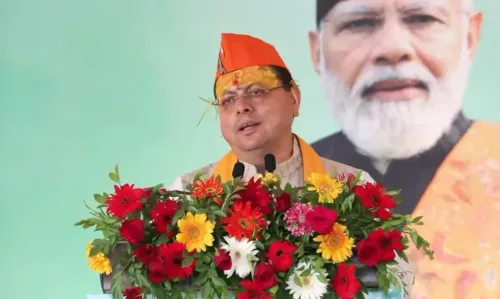
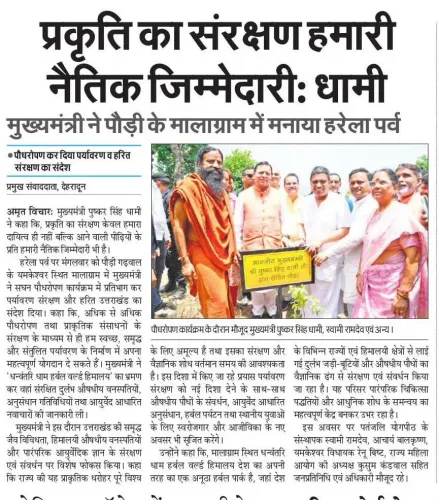
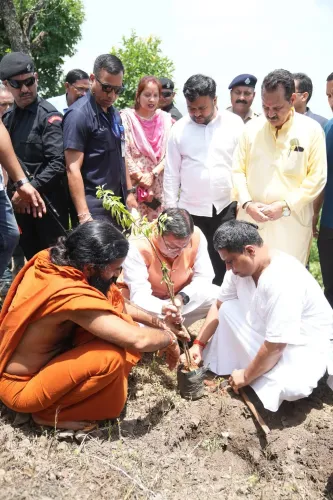
CM Dhami leads tree plantation at Jageshwar Dham on Harela

Synopsis
Uttarakhand CM Pushkar Singh Dhami joined a tree-plantation drive at the ancient Jageshwar Dham temple complex on Harela, 16 July 2026, continuing the state tradition of anchoring afforestation campaigns in Kumaoni cultural practice during the monsoon season.
Key Takeaways
CM Pushkar Singh Dhami participated in tree plantation at Jageshwar Dham , Almora, on 16 July 2026 .
Harela is a traditional Kumaoni monsoon festival that Uttarakhand administrations have used as the centrepiece of annual state-wide afforestation drives.
Jageshwar Dham is a cluster of over 100 ancient Shiva temples in a deodar forest, recognised as a major pilgrimage and heritage site.
Uttarakhand's forest cover is critical for water security, biodiversity, and the livelihoods of forest-dependent communities across the Himalayan region.
The event aligns with the national Green India Mission , under which states receive support for compensatory afforestation and ecosystem restoration.
The next Harela cycle in July 2027 and state budget allocations for afforestation will indicate whether today's political signal translates into sustained policy commitment.
Uttarakhand Chief Minister Pushkar Singh Dhami participated in a tree-plantation drive and associated programmes at Jageshwar Dham on the occasion of Harela on Thursday, 16 July 2026, marking the festival with a live-streamed public event at the ancient Shiva temple complex in Almora district.
Context
Harela — हरेला, meaning 'day of green' — is a traditional Kumaoni festival that falls at the onset of the monsoon season. It is observed through the ritual sowing of seeds, community celebrations, and, in its modern state-sponsored form, organised tree-plantation drives. The festival holds deep ecological and cultural significance for communities across the Kumaon region of Uttarakhand.
Jageshwar Dham, a cluster of more than 100 ancient Shiva temples nestled in a deodar forest in Almora district, serves as both a major pilgrimage site and a symbol of the inseparable relationship between faith and forest in the Himalayan belt. Holding the plantation event at this heritage site lends the drive a cultural and spiritual dimension beyond routine afforestation.
Policy Backdrop
Uttarakhand administrations have for several years used Harela as the anchor for state-wide afforestation campaigns, framing the folk tradition as a vehicle for measurable environmental outcomes. The approach reflects a broader strategy of embedding climate-resilience goals within cultural practice, making community participation more organic.
The state's dependence on its forest cover — for water security, biodiversity, tourism, and the livelihoods of forest-dependent communities — gives such drives practical urgency beyond symbolism. Uttarakhand's forests also fall within the ecologically sensitive Himalayan region, where deforestation and climate change have accelerated risks of landslides and soil erosion in recent years.
The event at Jageshwar Dham also aligns with the Green India Mission, the national programme aimed at increasing forest and tree cover and enhancing ecosystem services, under which states receive funding for compensatory afforestation and restoration activities.
Stakeholders and Impact
The primary beneficiaries of sustained afforestation in the Kumaon hills are Kumaoni villagers and forest-dependent communities whose water sources, agricultural micro-climates, and pastoral livelihoods are directly tied to the health of surrounding forests. Pilgrims and heritage tourism stakeholders at Jageshwar Dham also have a stake in the ecological integrity of the surrounding deodar groves.
By holding the event at a recognised heritage and pilgrimage site, the state government signals to religious communities that environmental stewardship is consistent with — and even demanded by — local tradition. This framing has historically helped mobilise volunteer participation beyond what top-down government campaigns typically achieve.
What's Next
The Harela plantation drive of July 2026 sets a benchmark against which the state's next annual cycle in July 2027 will be measured. Observers will watch for whether state budget allocations for compensatory afforestation and Green India Mission projects reflect the political priority signalled by CM Dhami's personal participation. The choice of Jageshwar Dham as the venue may also prompt similar high-profile events at other heritage forest sites across Uttarakhand in coming years.
Point of View
But the choice of a high-visibility heritage venue raises the stakes and the scrutiny. The event fits a broader BJP pattern of presenting ecological initiatives through the lens of civilisational continuity and Hindu cultural heritage, making them simultaneously more politically resonant and harder to critique. Whether the symbolism translates into verifiable plantation outcomes and budget commitments will determine its lasting policy value.
NationPress
16 Jul 2026
Frequently Asked Questions
What is Harela festival and why is it celebrated?
Harela is a traditional Kumaoni festival observed at the onset of the monsoon season in Uttarakhand. It involves the ritual sowing of seeds, community celebrations, and — in its modern state-sponsored form — tree-plantation drives, symbolising the arrival of greenery and agricultural renewal.
Where is Jageshwar Dham located?
Jageshwar Dham is located in Almora district , Uttarakhand. It is an ancient cluster of more than 100 Shiva temples set within a dense deodar forest and is recognised as a major Hindu pilgrimage and heritage site.
Why did CM Dhami attend the Harela event at Jageshwar Dham?
CM Pushkar Singh Dhami participated in the tree-plantation drive and associated programmes at Jageshwar Dham on 16 July 2026 as part of the state government's annual Harela afforestation campaign, which combines cultural tradition with environmental goals.
What is Uttarakhand's Harela tree plantation drive?
Uttarakhand administrations have for several years used the Harela festival as the anchor for a state-wide tree-plantation campaign, framing the Kumaoni folk tradition as a vehicle for afforestation targets and climate-resilience measures in the Himalayan region.
What is the Green India Mission?
The Green India Mission is a national programme aimed at increasing forest and tree cover and enhancing ecosystem services across India. States including Uttarakhand receive funding under it for compensatory afforestation and ecological restoration activities.