CM Dhami Orders Full Monsoon Readiness Across Uttarakhand
Synopsis
Chief Minister Pushkar Singh Dhami chaired a pre-monsoon review on 9 June 2026, directing all Uttarakhand departments to complete infrastructure repairs, stock medical supplies, pre-position heavy machinery, and establish 24x7 weather-alert chains before the rains arrive. A pothole-free road deadline of 15 November 2026 was set, and the Kainchi Dham bypass was announced for immediate opening.
Key Takeaways
CM Dhami chaired a pre-monsoon preparedness review at the Uttarakhand secretariat on 9 June 2026 , issuing directives across all departments.
All state roads must be pothole-free by 15 November 2026 ; heavy machinery is to be pre-positioned at vulnerable sites before monsoon onset.
The Kainchi Dham bypass opens for traffic from 10 June 2026 to ease pilgrim congestion at the shrine.
District Magistrates must maintain updated lists of pregnant women in remote areas and arrange hospital-adjacent accommodation and heli-ambulance access for them.
A 24×7 coordination mechanism linking IMD, the State Emergency Operations Centre, and district control rooms is mandated, with village-level weather alerts required.
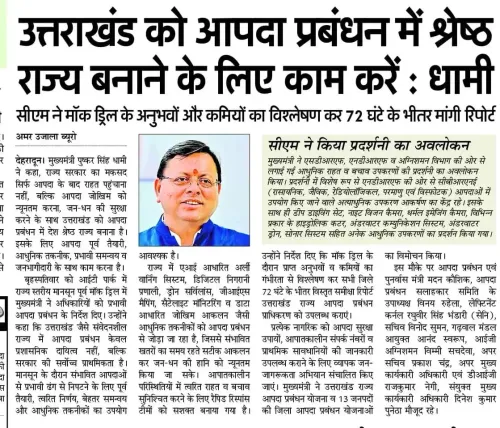
Uttarakhand's disaster management model received international recognition at the BRICS Disaster Risk Reduction Working Group meeting, praised for technology-driven coordination and continuous innovation.
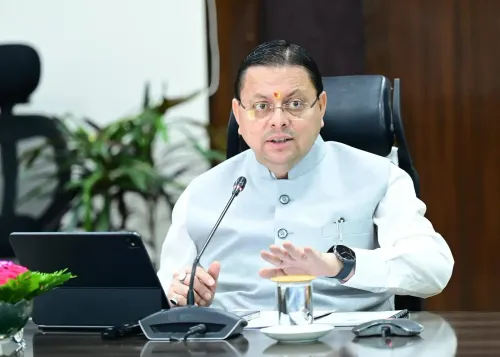
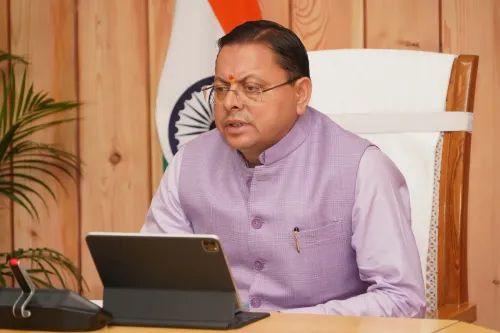
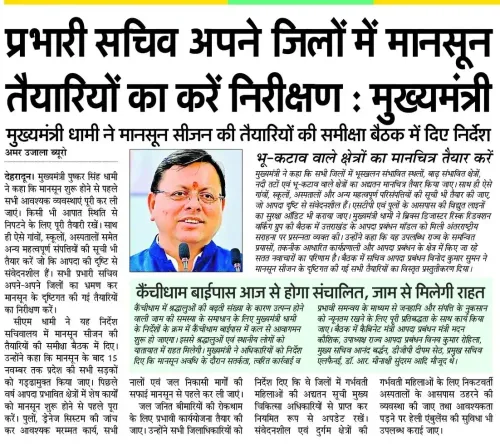
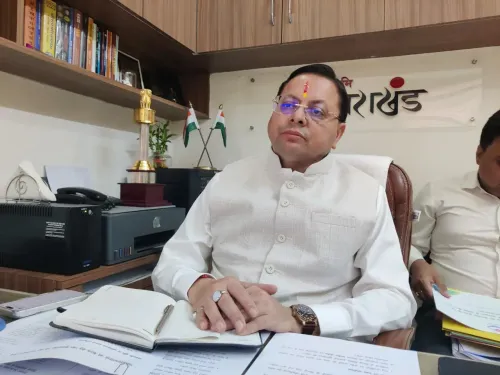
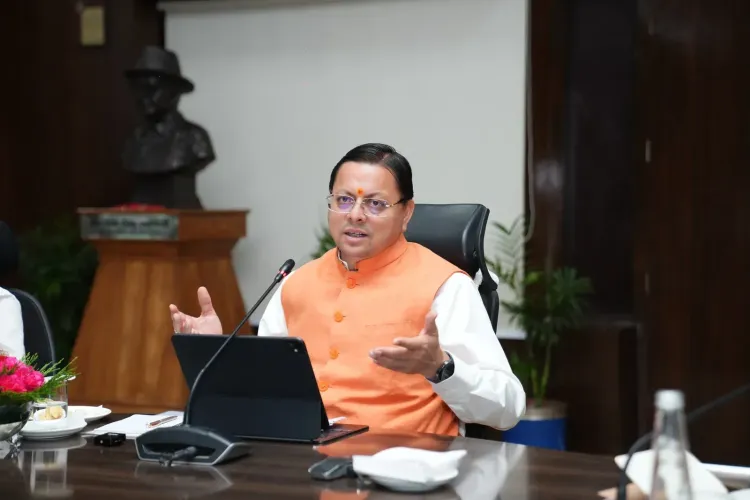
The Chief Minister's Office of Uttarakhand announced on Tuesday, 9 June 2026 that Chief Minister Pushkar Singh Dhami chaired a comprehensive pre-monsoon preparedness review at the state secretariat, directing all departments to complete necessary arrangements before the monsoon season begins. The review covered disaster management, public services, health infrastructure, road safety, and early-warning systems across the state.
Context
CM Dhami instructed officials that all departments must work in a coordinated manner to strengthen disaster management, public amenities, health services, and basic infrastructure. He directed that pending works in areas affected by last year's disasters be completed before the onset of the monsoon, and that bridges, culverts, and drainage systems be inspected and repaired on a time-bound basis. Drains and water-discharge channels must be cleared before the rains arrive.
A key infrastructure announcement made during the meeting: the Kainchi Dham bypass — ordered by the Chief Minister to ease severe traffic congestion caused by growing numbers of devotees at the shrine — is set to open for traffic from 10 June 2026. The bypass is expected to provide significant relief to pilgrims and local residents.
Policy Backdrop
Uttarakhand, a Himalayan state with steep terrain and a history of extreme rainfall events, has conducted structured pre-monsoon reviews since the devastating 2013 Kedarnath floods prompted a major overhaul of the State Disaster Management Authority. The state's approach pairs engineering maintenance with inter-departmental health and communication protocols, a model that has drawn attention at multilateral forums.
The Chief Minister expressed satisfaction that Uttarakhand's disaster management model received international recognition at the BRICS Disaster Risk Reduction Working Group meeting. He congratulated the Uttarakhand State Disaster Management Authority (USDMA), the State Disaster Response Force (SDRF), the ULMMCC, and all associated agencies, stating that the achievement reflects the state's coordinated efforts, technology-driven methods, and continuous innovation in disaster management.
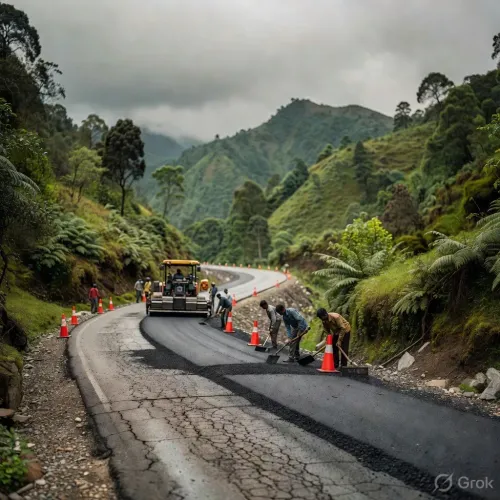
A firm deadline was set: all roads across the state must be pothole-free by 15 November 2026. Heavy machinery — including JCBs, excavators, dumpers, and cranes — is to be pre-positioned at vulnerable sites, and alternative routes must be identified for roads that are repeatedly blocked during the monsoon.
Stakeholders and Impact
The directives carry specific provisions for vulnerable groups. District Magistrates have been asked to obtain updated lists of pregnant women in their districts from Chief Medical Officers and keep them current. For pregnant women in remote and difficult-to-access areas, arrangements for accommodation near hospitals must be made, and heli-ambulance services are to be made available when required.
The Health Department has been directed to prepare an effective action plan to prevent dengue, malaria, and other waterborne diseases, and to ensure adequate stocks of life-saving medicines, medical equipment, and ambulances. Pilgrims on the Char Dham Yatra route — which draws millions of visitors annually — will receive real-time weather alerts, with the India Meteorological Department (IMD), the State Emergency Operations Centre, and district control rooms operating on a 24×7 coordination basis. Weather alerts must reach village level rapidly.
All senior secretaries have been directed to personally visit their respective districts and inspect monsoon preparedness on the ground. Warning boards and information signage are to be installed in flood-prone areas, and relief and rescue material must be adequately stocked at every tehsil. Encroachments affecting drainage and traffic flow must be removed as a priority before the rains begin.
What's Next
The 15 November 2026 pothole-free road deadline and the performance of the newly opened Kainchi Dham bypass once heavy rains begin will be closely watched as early indicators of the review's effectiveness. A safety audit of electrical lines near sewage treatment plants (STPs) and bridges has also been ordered to prevent prolonged disruptions to power, drinking water, roads, and telecommunications during the rainy season.
Secretary, Disaster Management, Vinod Kumar Suman presented a detailed briefing on all preparations undertaken ahead of the monsoon season. With district-level inspections by departmental secretaries and a technology-backed early-warning chain now mandated, the state is positioning its 2026 monsoon response as a benchmark for Himalayan governance — one that will face its first real test within weeks.
Point of View
Health, electricity, drainage, and pilgrimage safety — signals that the Dhami administration is treating monsoon preparedness as a governance credibility test ahead of the 2027 assembly cycle. The international recognition at the BRICS forum gives the state a reputational asset it is clearly keen to protect, making visible failures during the rains politically costly. The heli-ambulance and pregnant-women provisions are notably specific and suggest lessons absorbed from past monsoon fatalities in remote districts. The hard November 2026 pothole deadline is unusual in its precision and will serve as a public accountability marker once the season ends.
NationPress
26 Oct 2026
Frequently Asked Questions
What did CM Dhami announce for Uttarakhand monsoon 2026 preparedness?
CM Pushkar Singh Dhami directed all state departments to complete infrastructure repairs, pre-position heavy machinery, stock medical supplies, and establish 24x7 weather-alert coordination before the monsoon begins. He also set a deadline of 15 November 2026 for all state roads to be made pothole-free.
When will the Kainchi Dham bypass open?
The Kainchi Dham bypass is set to open for traffic from 10 June 2026, following CM Dhami's earlier directions to resolve severe congestion caused by the growing number of devotees visiting the shrine.
What health measures has Uttarakhand ordered ahead of monsoon 2026?
The Health Department has been directed to prepare an action plan against dengue, malaria, and waterborne diseases, ensure adequate stocks of life-saving medicines and ambulances, and arrange hospital-adjacent accommodation and heli-ambulance access for pregnant women in remote areas.
What is the BRICS Disaster Risk Reduction Working Group recognition for Uttarakhand?
Uttarakhand's disaster management model received international recognition at the BRICS Disaster Risk Reduction Working Group meeting for its coordinated, technology-driven approach and continuous innovation. CM Dhami congratulated the USDMA, SDRF, and all related agencies for the achievement.
How will Char Dham pilgrims receive weather alerts during monsoon 2026?
IMD, the State Emergency Operations Centre, and district control rooms are to operate on a 24x7 basis, with weather alerts disseminated rapidly down to village level. Tourists and pilgrims on Char Dham Yatra routes will receive timely weather information as part of the new coordination framework.