CM Dhami Orders Secure, Clean Kanwar Yatra from July 30
Synopsis
Chief Minister Pushkar Singh Dhami held a high-level review in Haridwar on 21 July 2026, directing departments to deliver a safe, organised, and clean Kanwar Yatra from 30 July, with AI surveillance, pink toilets, water ambulances, and strict law-and-order enforcement.
Key Takeaways
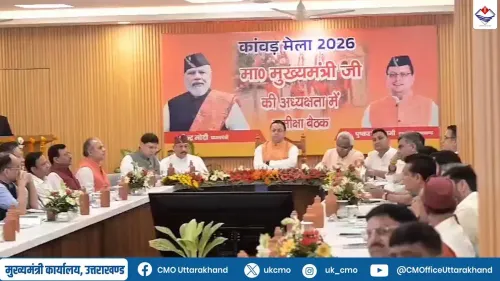
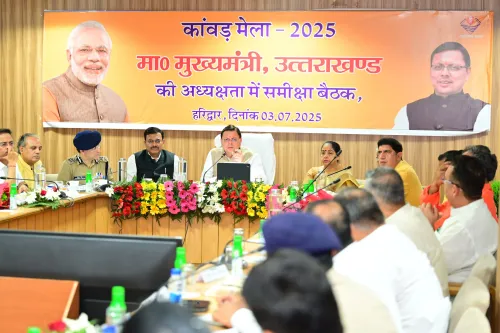
CM Pushkar Singh Dhami chaired a high-level Kanwar Mela review at Haridwar's Mela Control Bhavan on 21 July 2026 .
The Kanwar Yatra is scheduled to begin on 30 July ; pilgrim safety and convenience are declared the state's top priority.
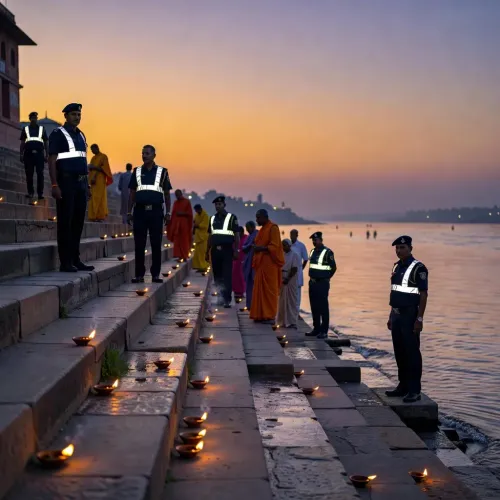
CCTV cameras, drones, and AI-based surveillance are to be deployed across the entire mela area; extra police to be stationed in sensitive zones.
Pink toilets for women pilgrims and water ambulances at key ghats are among the specific new infrastructure directives.
SDRF, NDRF, water police, and fire services are to be kept on full alert with contingency plans for heavy rain and other emergencies.
VIP movement must not disrupt pilgrim travel; daily reviews by District Magistrates and SSPs are mandated throughout the yatra.
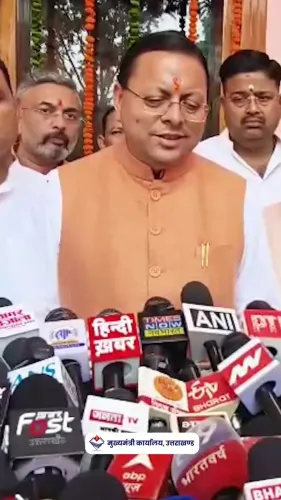
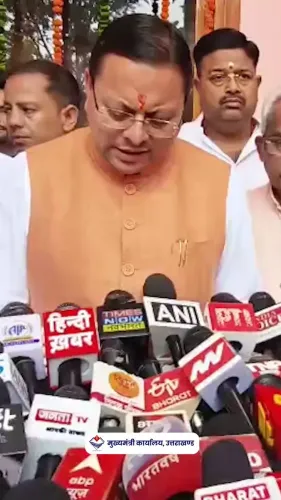
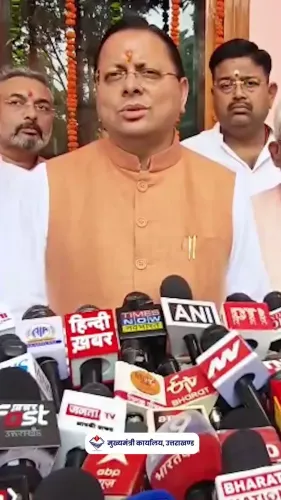
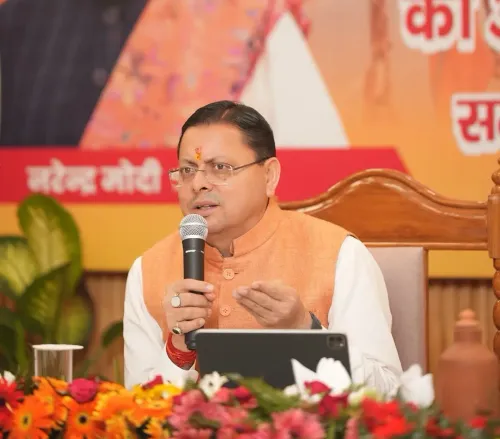
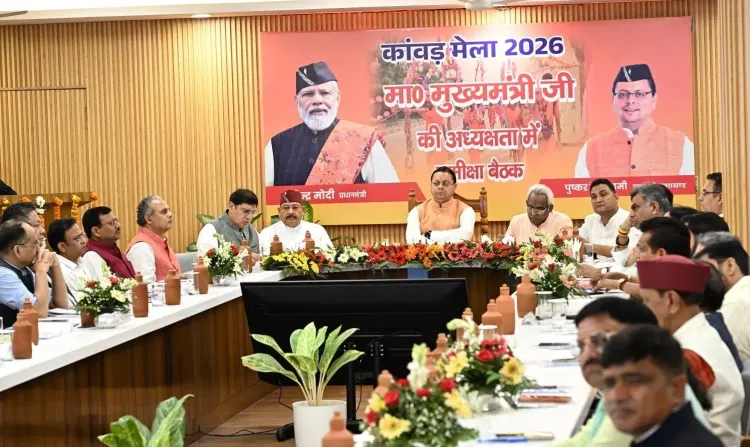
Chief Minister Pushkar Singh Dhami chaired a high-level review meeting at the Mela Control Bhavan auditorium in Haridwar on Tuesday, 21 July 2026, issuing comprehensive directives to all departments to ensure the upcoming Kanwar Yatra — commencing 30 July — is conducted safely, in an orderly manner, and with full attention to pilgrim welfare.
Context
CM Dhami set out a three-part governing vision for the pilgrimage season, declaring that the state's goal must be 'Surakshit Kanwar, Suvyavasthit Kanwar aur Swachh Kanwar' — 'Safe Kanwar, Organised Kanwar and Clean Kanwar.' He said every pilgrim must return from Devbhoomi Uttarakhand safe, satisfied, and with a pleasant experience, calling this the state government's 'vikalp rahit sankalp' — 'non-negotiable resolve.'
The meeting brought together senior district officials, police officers, and representatives of emergency services to review the full spectrum of preparations ahead of the pilgrimage, which draws millions of kanwariyas (devotees) to collect sacred Ganga water and carry it to Shiva shrines across northern India.
Policy Backdrop
Uttarakhand has institutionalised pre-Kanwar review meetings at Haridwar as an annual exercise in multi-departmental coordination, reflecting the state's identity as Devbhoomi — the 'Land of Gods' — and its strategic emphasis on safe religious tourism. This year's directives go further on technology and gender-sensitive infrastructure.
CM Dhami ordered the deployment of CCTV cameras, drones, and AI-based surveillance systems across the entire mela area — an approach that mirrors crowd-management practices refined at the Kumbh Mela and other large national gatherings. He also directed that additional police forces be stationed in sensitive and highly sensitive zones, and that strict action be taken immediately against anyone disturbing law and order or spreading rumours on social media.
On sanitation, the Chief Minister specifically directed that an adequate number of clean pink toilets be installed at all major locations for women pilgrims — a directive that builds on the state's ongoing sanitation drives. A no-plastic campaign and regular cleanliness drives are also to run throughout the pilgrimage route and mela area.
Stakeholders and Impact
The directives span multiple departments and community stakeholders. CM Dhami called on local elected representatives, social organisations, voluntary bodies, traders, religious scholars (dharmacharyas), and saints to actively participate in making the mela a success. He directed that video messages from saints and religious leaders be prepared and circulated among pilgrims to ensure the yatra proceeds in a disciplined and dignified manner.
For medical preparedness, he ordered sufficient medical camps, ambulances, doctors, and paramedical staff at all major halting points and mela zones. Water ambulances are to be deployed at key ghats, while SDRF (State Disaster Response Force), NDRF, water police, and fire services are to remain on full alert. Contingency plans for heavy rainfall, waterlogging, and other emergencies must be in place with rapid-response protocols.
On traffic, the Chief Minister ordered an effective traffic plan with separate arrangements for pilgrims and local residents where needed. He was unequivocal that VIP movement must not disrupt pilgrim movement under any circumstances. Hotels, dhabas, and food establishments are to face regular food-quality inspections, and all establishments must display their licences and registrations prominently.
What's Next
District Magistrates and Senior Superintendents of Police have been directed to review arrangements daily and resolve any issues immediately. Round-the-clock control rooms and helplines are to remain fully operational throughout the yatra period. The Chief Minister also referenced the broader national context, noting that under Prime Minister Narendra Modi's leadership, India has achieved remarkable progress across sectors despite global challenges, and that Uttarakhand too has seen unprecedented development in every field.
With the Kanwar Yatra set to begin on 30 July, the next critical test will be the on-ground rollout of pink toilets, medical infrastructure, water ambulances, and the AI-surveillance network — and whether the state's 'non-negotiable resolve' translates into a seamless experience for the millions of pilgrims expected this season.
Point of View
Gender-sensitive sanitation, water ambulances, and social-media monitoring — signal that Uttarakhand is treating the Kanwar Yatra as a flagship governance showcase, not merely a routine religious event. The 'non-negotiable resolve' framing and the explicit invocation of PM Modi's national-achievement narrative suggest the administration is keen to position the pilgrimage as a proof point of the BJP's Devbhoomi development story ahead of any future electoral cycle. The emphasis on strict action against rumour-mongers on social media also reflects a broader national pattern of pre-emptive information control at mass gatherings. Whether the multi-departmental coordination holds under the pressure of millions of pilgrims will be the real test of these well-articulated intentions.
NationPress
22 Jul 2026
Frequently Asked Questions
When does Kanwar Yatra 2026 start in Uttarakhand?
The Kanwar Yatra is scheduled to begin on 30 July 2026 , as announced by CM Pushkar Singh Dhami at a review meeting in Haridwar on 21 July.
What security arrangements are planned for Kanwar Yatra 2026?
CM Dhami has directed deployment of additional police in sensitive zones, CCTV cameras, drones, and AI-based surveillance across the mela area, along with SDRF, NDRF, water police, and fire services on full alert.
What facilities are being arranged for women pilgrims during Kanwar Yatra?
The Chief Minister has specifically directed that an adequate number of clean pink toilets be installed for women pilgrims at all major locations along the Kanwar route and mela area.
Will VIP movement affect Kanwar Yatra pilgrims in Uttarakhand?
CM Dhami has explicitly ordered that VIP movement must not disrupt pilgrim travel under any circumstances during the Kanwar Yatra.
What medical arrangements are in place for Kanwar Mela 2026?
The government has directed sufficient medical camps, ambulances, doctors, and paramedical staff at all major halting points, plus water ambulances at key ghats in Haridwar.