Mahua Moitra Calls to Name, Shame & Boycott Official 'Sandeep Lamba'

Synopsis
TMC MP Mahua Moitra on 21 July 2026 publicly named Sandeep Lamba, calling him a 'brute,' demanding a social boycott, and urging legal teams to initiate court proceedings — rejecting the defence that the individual was 'just doing his job.'
Key Takeaways
TMC MP Mahua Moitra posted on X on 21 July 2026 calling for the naming, shaming, and social boycott of individuals she termed 'brutes.' She specifically identified a person named Sandeep Lamba as the first to be 'marked out,' asking for details on his residence and official record.
Moitra explicitly rejected the defence that the individual was 'just doing his job,' framing the conduct as inexcusable.
She appealed directly to legal teams to begin court paperwork against those named.
The post sits within a broader pattern of Indian opposition MPs using public naming and legal pressure as dual accountability tools against officials.
No formal complaints or official responses had been publicly confirmed at the time of publication.
TMC MP Mahua Moitra on Tuesday, 21 July 2026, publicly called for the naming, shaming, and social boycott of individuals she described as 'brutes,' specifically identifying a person named Sandeep Lamba and urging legal teams to initiate court proceedings against him. The post, made on X, also asked supporters to document where Lamba lives and what his record is.
Context
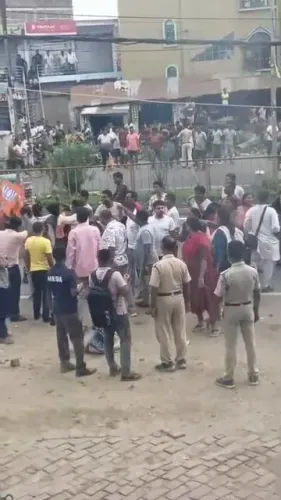
Moitra's post was a direct response to what appears to be an earlier statement defending the conduct of an individual — likely a law enforcement or administrative official — on the grounds that he was 'just doing his job.' Moitra flatly rejected that framing, writing: 'No! He was not just doing his job!' She then called for coordinated public and legal action, asking civil society and legal professionals to step in.
The post names Sandeep Lamba as the first individual to be 'marked out,' requesting details about his residence and official record. Moitra also thanked, in brief, those who she implied were already working on the matter.
Policy Backdrop
Indian opposition MPs have periodically named specific officials in public statements demanding legal and social consequences for alleged misconduct during enforcement or administrative actions. These episodes consistently generate a sharp debate: proponents argue that public accountability is a democratic corrective when institutional mechanisms fail; critics contend that naming individuals online can expose them to mob harassment before due process runs its course.
Moitra herself has a documented record of aggressive parliamentary and public challenges to what she characterises as official overreach. Her calls typically combine demands for formal legal action with appeals to civil society pressure — a dual-track approach that has precedent in Indian opposition politics.
Stakeholders and Impact
The immediate stakeholders include Sandeep Lamba — whose identity, role, and the specific incident that prompted this post have not been independently verified — as well as law enforcement bodies, civil society organisations, and legal advocacy groups that Moitra is directly addressing. If legal teams respond to her call, formal complaints or petitions could follow swiftly.
Broader civil society actors and social media communities are also implicated: Moitra's appeal for a 'social boycott' is a call to collective, non-state action that sits in a legally and ethically contested space in India. Courts have, in past cases, weighed in on whether such public campaigns constitute legitimate protest or cross into intimidation.
What's Next
The key developments to watch are whether any formal legal complaints are filed by the teams Moitra has addressed, whether the individual named responds publicly or through counsel, and whether the matter is raised in a parliamentary forum. Any police or administrative response to the public naming will also be significant. Given Moitra's profile and the directness of the post, the episode is likely to attract further political and legal commentary in the coming days.
Point of View
Bypassing institutional channels that are often seen as slow or compromised. The explicit call for a 'social boycott' — rather than just a court case — signals an intent to impose reputational costs independent of judicial outcomes. This approach is politically effective for opposition optics but raises genuine due-process questions, since the underlying incident and the named individual's role remain publicly unverified. The episode will likely sharpen the ongoing debate in India about the boundaries between legitimate public accountability and online targeting of individuals.
NationPress
22 Jul 2026
Frequently Asked Questions
Who is Sandeep Lamba named by Mahua Moitra?
Sandeep Lamba is the individual publicly named by TMC MP Mahua Moitra in a post on 21 July 2026. She called for his social boycott and urged legal teams to file court proceedings against him. His identity, role, and the specific incident involved have not been independently verified.
What did Mahua Moitra post on X on 21 July 2026?
Mahua Moitra posted a call to 'name, shame and ensure social boycotts' for individuals she described as 'brutes,' specifically identifying Sandeep Lamba first. She also asked legal teams to begin court paperwork and rejected the defence that the person was 'just doing his job.'
Is it legal for an MP to call for a social boycott of an individual in India?
The legality depends on context. Indian courts have distinguished between legitimate public protest and campaigns that constitute harassment or defamation. Calls for social boycott by public figures occupy a contested legal space and have been challenged in court in past cases.
What action is Mahua Moitra asking legal teams to take?
Moitra asked legal teams to 'start paperwork' — meaning to initiate formal legal proceedings or complaints — against Sandeep Lamba and others she described as brutes. No specific charges or court filings had been publicly confirmed at the time of publication.
Why do Indian opposition MPs publicly name officials?
Opposition MPs in India have periodically named specific officials to apply public pressure when they believe institutional accountability mechanisms are insufficient or slow. The strategy combines reputational consequences with formal legal action, though it is also criticised for bypassing due process.