CM Dhami pays tribute to Shaheed Udham Singh in Gadarpur
Synopsis
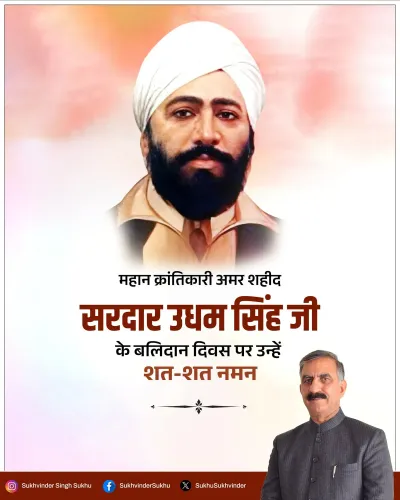
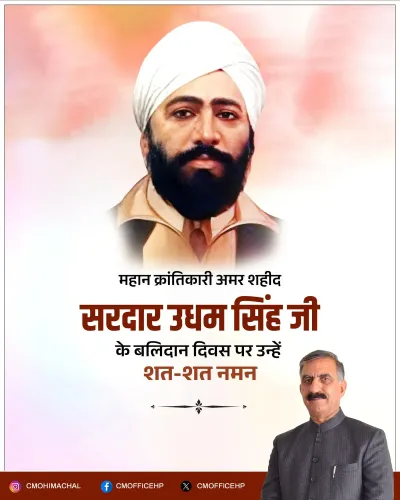
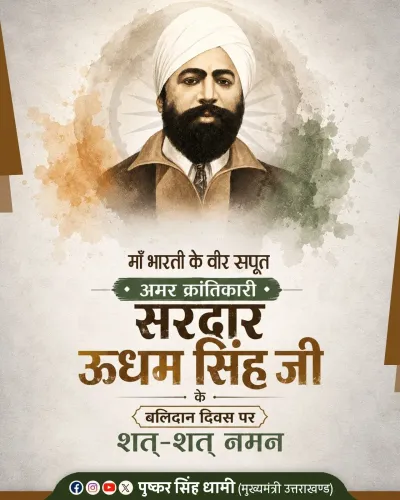
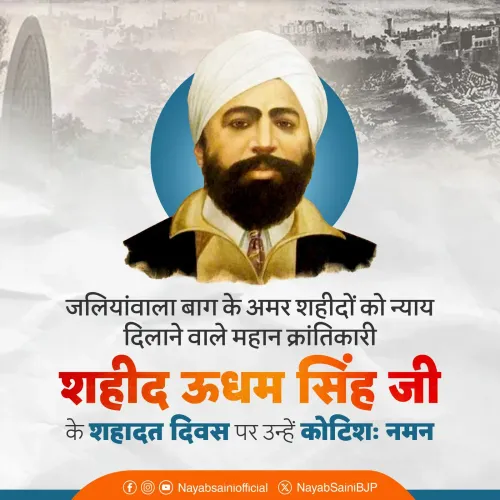
Chief Minister Pushkar Singh Dhami paid tribute to revolutionary martyr Udham Singh at Kamboj Dharmshala Gurudwara in Gadarpur on his 86th martyrdom anniversary, invoking the Jallianwala Bagh massacre and calling on citizens to honour his legacy through nation-building.
Key Takeaways
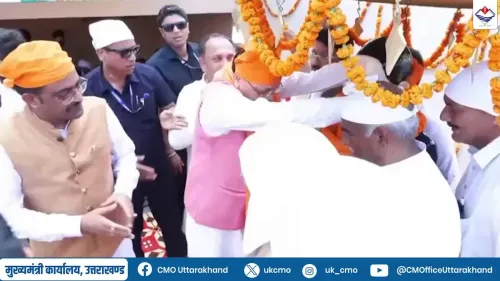
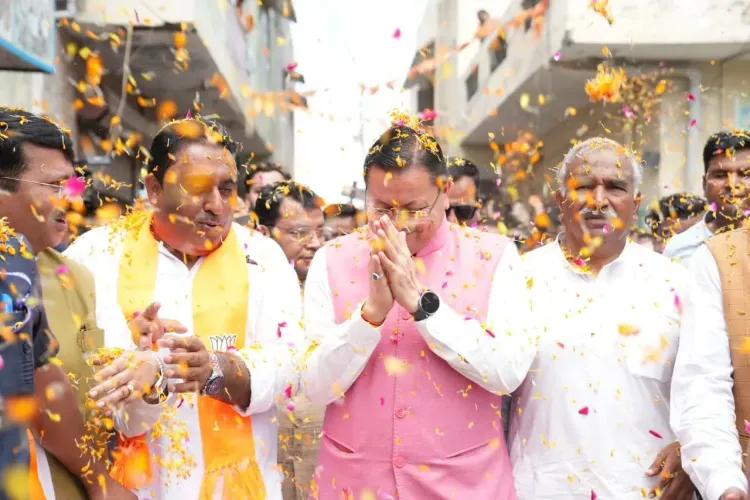
CM Pushkar Singh Dhami garlanded the statue of Udham Singh at Kamboj Dharmshala, Gadarpur on 31 July 2026 , his martyrdom anniversary.
Dhami participated in the Akhand Paath and offered prayers at the Gurudwara for Uttarakhand's prosperity.
He described the Jallianwala Bagh massacre of 1919 as 'an extremely painful and dark chapter of Indian history.' Udham Singh was executed on 31 July 1940 in London after assassinating Michael O'Dwyer to avenge the massacre.
The CM acknowledged the Sikh community's significant contribution to Uttarakhand's development.
The event was held in Udham Singh Nagar district , the district named after the martyr himself.
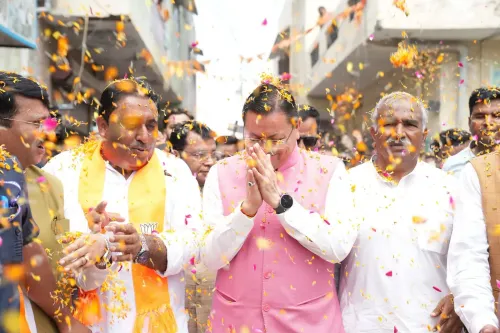
Eighty-six years after Udham Singh walked to the gallows in London — unbowed, unrepentant, and certain that history would vindicate him — Chief Minister Pushkar Singh Dhami stood before his statue at Kamboj Dharmshala, Gadarpur on 31 July 2026 and placed a garland in his honour. The martyrdom anniversary of the man who avenged Jallianwala Bagh drew the Chief Minister's Office of Uttarakhand to this Udham Singh Nagar town for a solemn tribute that wove together revolutionary memory and Sikh spiritual tradition.
A garland, a prayer, and a vow at the Gurudwara
Dhami did not stop at the statue. He participated in the Akhand Paath (uninterrupted recitation of the Guru Granth Sahib) and bowed his head at the Gurudwara, praying for the prosperity of Uttarakhand. Speaking at the gathering, he described the occasion as 'veerta aur pavitrata ka adbhut sangam' — 'a remarkable confluence of valour and sanctity.'
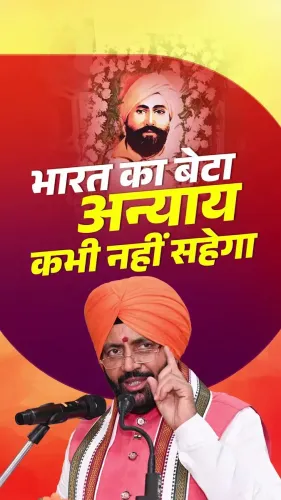
The Chief Minister invoked the emotional core of Udham Singh's legacy directly: 'Whenever we recall the sacrifice, courage, and patriotism of Amar Shaheed Udham Singh, our chests swell with pride.' He called the Jallianwala Bagh massacre of 1919 'an extremely painful and dark chapter of Indian history' and said Udham Singh's act of retribution introduced the world to India's self-respect, courage, and indomitable resolve.
Udham Singh's long shadow over Udham Singh Nagar
Udham Singh was executed on 31 July 1940 after he shot dead Michael O'Dwyer — the former Lieutenant Governor of Punjab who had backed the Amritsar massacre — at a London hall twenty-one years after the atrocity. The district of Udham Singh Nagar in Uttarakhand, where Gadarpur sits, is named in his honour, making this annual tribute a homecoming of sorts for the revolutionary's memory.
The 1919 Jallianwala Bagh massacre, in which British troops opened fire on an unarmed crowd gathered in an Amritsar garden, killing hundreds, became a defining wound in India's independence movement. Udham Singh, who was present that day as a young man, spent two decades plotting his response. His execution in London made him a martyr celebrated across Punjab and beyond.
Sikh community's stake in Devbhoomi
Dhami used the occasion to explicitly acknowledge the Sikh community's contribution to Uttarakhand's development, calling it significant to the state's growth story. He drew a direct line from the teachings of Shri Guru Granth Sahib Ji — humanity, compassion, truth, brotherhood, and selfless service — to the values that he said must guide the state's future.
State administrations across India have marked 31 July as Udham Singh's martyrdom day since independence, but in Uttarakhand the occasion carries added resonance given the district named after him. The gathering at Gadarpur included local legislators and BJP functionaries, reflecting the event's dual character as both a patriotic commemoration and a community outreach moment for the Sikh electorate in the Terai belt.
Dhami closed with a call to action: keep Udham Singh's ideals alive in your hearts and contribute to nation-building by walking the path he showed. The revolutionary's life, he said, 'inspires us toward courage, self-respect, patriotism, and sacrifice.' That message, delivered at a Gurudwara on the anniversary of a hanging, carried a weight no press release could manufacture.
Point of View
A constituency that matters in the state's electoral arithmetic. By personally attending and invoking Guru Granth Sahib's teachings alongside the revolutionary's legacy, CM Dhami fuses patriotic commemoration with community outreach in a single gesture. The naming of Udham Singh Nagar district after the martyr gives this event a local resonance that amplifies its political and emotional weight beyond a routine tribute. As Uttarakhand positions itself on heritage tourism, events like this also quietly lay groundwork for linking Sikh historical sites to the state's cultural economy.
NationPress
31 Jul 2026
Frequently Asked Questions
Who was Udham Singh and why is he remembered on 31 July?
Udham Singh was an Indian revolutionary executed on 31 July 1940 in London after he assassinated Michael O'Dwyer, the former Lieutenant Governor of Punjab, to avenge the 1919 Jallianwala Bagh massacre in which British troops killed hundreds of unarmed civilians in Amritsar.
Where is Udham Singh Nagar district and why is it named after him?
Udham Singh Nagar is a district in the Terai region of Uttarakhand, named in honour of the martyr to recognise his role in India's freedom struggle. Gadarpur , where today's tribute was held, is one of its major towns.
What did CM Dhami do at Gadarpur on 31 July 2026?
CM Pushkar Singh Dhami garlanded Udham Singh's statue at Kamboj Dharmshala , participated in the Akhand Paath , and offered prayers at the Gurudwara, praying for Uttarakhand's prosperity and calling on citizens to follow the martyr's ideals.
What was the Jallianwala Bagh massacre?
The Jallianwala Bagh massacre took place on 13 April 1919 in Amritsar, Punjab, when British troops under General Dyer opened fire on a large, unarmed crowd, killing hundreds. It became one of the most traumatic events in India's colonial history and a catalyst for the independence movement.
What did CM Dhami say about the Sikh community's role in Uttarakhand?
Dhami stated that the Sikh community has made a significant contribution to the development of Uttarakhand, and drew on the teachings of Shri Guru Granth Sahib Ji — humanity, compassion, brotherhood, and selfless service — as values that should guide the state's progress.