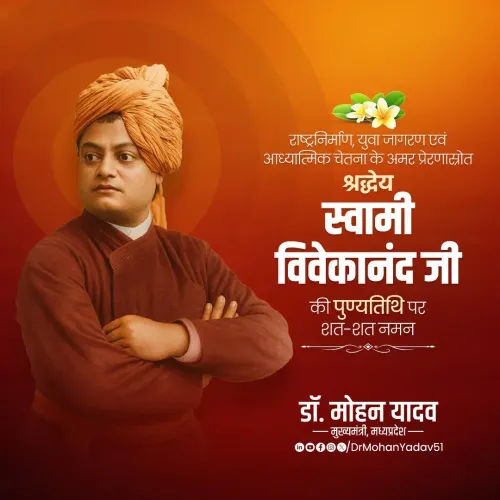
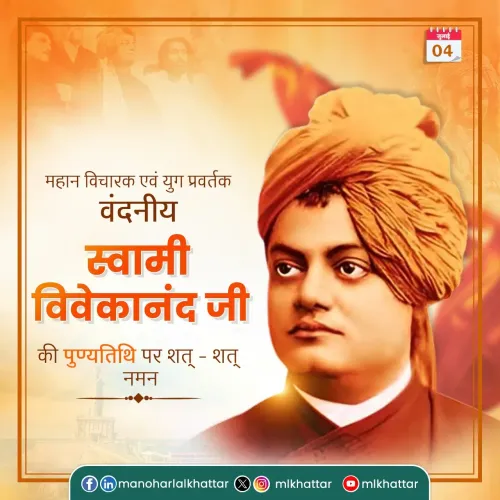
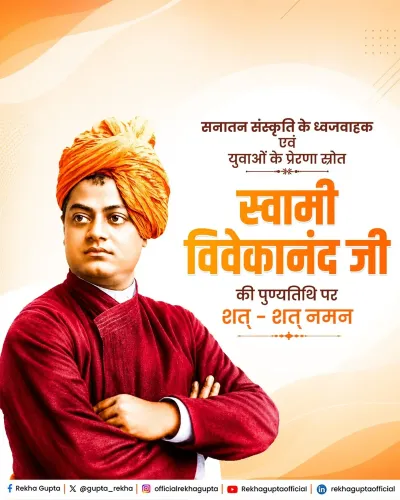
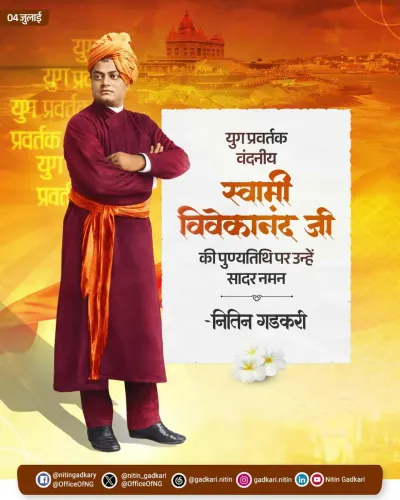
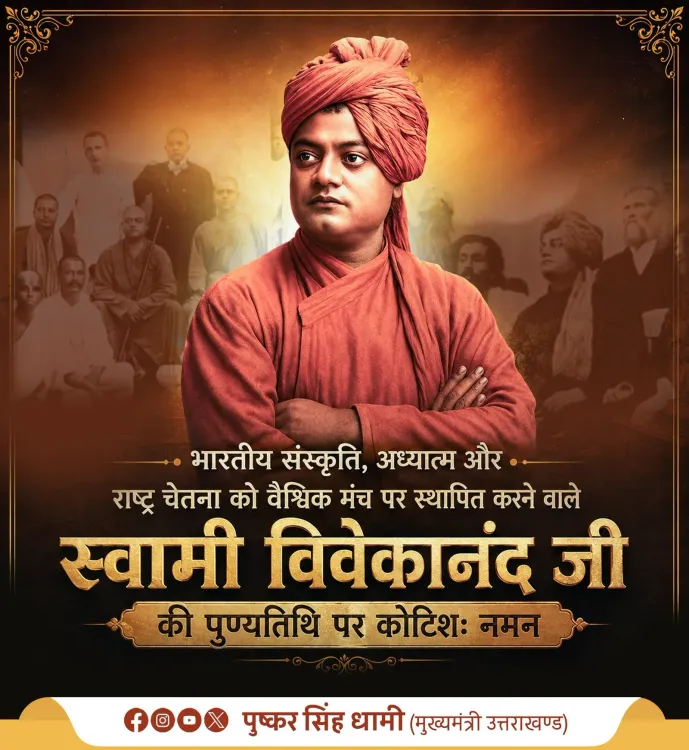
CM Dhami Pays Tribute to Swami Vivekananda on Death Anniversary
Synopsis
Uttarakhand Chief Minister Pushkar Singh Dhami marked Swami Vivekananda's death anniversary on 4 July 2026, honouring the philosopher-monk's spiritual and nationalist legacy and urging citizens to build a developed, self-reliant, and globally respected India.
Key Takeaways
CM Pushkar Singh Dhami paid tribute to Swami Vivekananda on his death anniversary, 4 July 2026 .
Dhami described Vivekananda as a 'great philosopher, powerful orator, and source of inspiration for the youth.' The post linked Vivekananda's Vedantic legacy to the national goals of Viksit Bharat and Atmanirbhar Bharat .
Swami Vivekananda (1863–1902) famously represented Indian spiritual thought at the Parliament of the World's Religions, Chicago, 1893 .
The Government of India has observed 12 January , Vivekananda's birth anniversary, as National Youth Day since 1984 .
Uttarakhand , with its deep spiritual heritage, provides a natural backdrop for CM Dhami's consistent cultural-nationalist messaging.
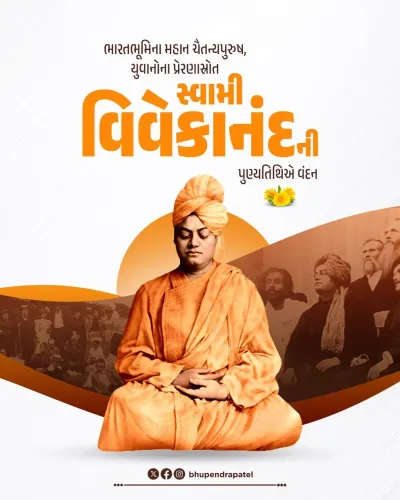
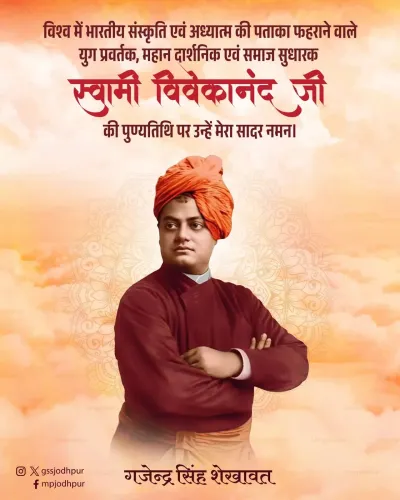
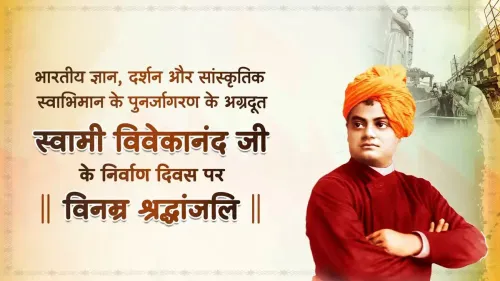
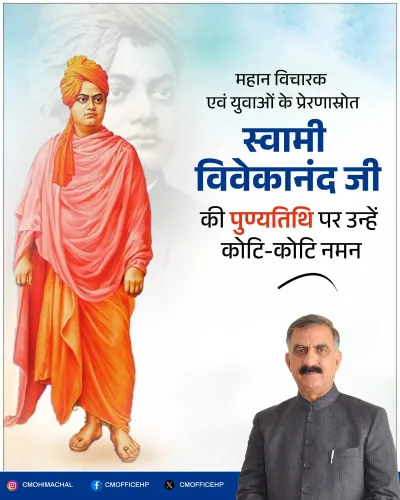
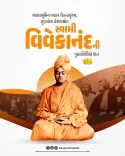
Uttarakhand Chief Minister Pushkar Singh Dhami on Saturday, 4 July 2026 paid tribute to Swami Vivekananda on his death anniversary, invoking the philosopher-monk's legacy of spiritual consciousness, nationalism, and service as a guiding light for building a self-reliant and globally respected India.
Context
In his post, CM Dhami offered 'kotishaः naman' (salutations in the millions) to Vivekananda, describing him as a 'great philosopher, powerful orator, and source of inspiration for the youth.' He wrote that Vivekananda's 'vigorous ideas, spiritual consciousness, and nationalist thought brought new prestige to Indian culture, Sanatan philosophy, and the glorious tradition of Vedanta on the world stage.'
The Chief Minister concluded with a call to action: 'Let us, by imbibing his ideals, further strengthen our resolve to build a developed, self-reliant, and Vishwaguru India' — a direct echo of the current national policy vocabulary around Viksit Bharat and Atmanirbhar Bharat.
Policy Backdrop
Swami Vivekananda (1863–1902) was the Hindu monk and Vedanta philosopher who famously addressed the Parliament of the World's Religions in Chicago in 1893, placing Indian spiritual thought on the international stage. His death anniversary falls on 4 July, and his birth anniversary, 12 January, has been observed as National Youth Day by the Government of India since 1984.
Uttarakhand, as a state with deep spiritual and cultural significance — home to major pilgrimage sites and religious institutions — has a particular resonance with Vivekananda's Vedantic heritage. CM Dhami, who has led the state since 2021, has consistently aligned governance messaging with themes of cultural pride and national self-confidence.
Stakeholders and Impact
The tribute is directed most visibly at Indian youth, mirroring the central government's framing of Vivekananda as a patron figure for young citizens. Cultural and religious organisations across Uttarakhand and India that draw on Vedantic traditions are the secondary audience for such messaging.
Within the Bharatiya Janata Party's broader communication strategy, invoking 19th-century reformers such as Vivekananda serves to connect spiritual heritage with contemporary ambitions. The mention of 'Vishwaguru Bharat' (India as world teacher) and 'Atmanirbhar Bharat' (self-reliant India) ties the commemoration explicitly to flagship national policy goals.
What's Next
State-level cultural and youth programmes in Uttarakhand that draw on Vivekananda's philosophy are expected to intensify in the run-up to National Youth Day on 12 January 2027. The annual observance provides a structured platform for state governments to translate such commemorative messaging into on-ground events.
The broader pattern of BJP leaders linking Vivekananda's ideals to present-day policy rhetoric suggests that themes of self-reliance, national confidence, and civilisational pride will continue to feature prominently in CM Dhami's public communications ahead of any state-level political or cultural milestones.
Point of View
Atmanirbhar Bharat, Vishwaguru — in the moral authority of 19th-century reformers, lending historical depth to present-day political goals. By invoking Vivekananda on his death anniversary rather than only on the more prominent National Youth Day, Dhami signals a year-round commitment to this cultural framing rather than a calendar-driven one. For Uttarakhand specifically, a state whose identity is inseparable from spiritual geography, such messaging reinforces the Chief Minister's positioning as a custodian of Hindu civilisational values. The convergence of commemoration and policy vocabulary is unlikely to be accidental — it keeps the 'Vishwaguru' aspiration in public discourse without requiring a formal policy announcement.
NationPress
4 Jul 2026
Frequently Asked Questions
When is Swami Vivekananda's death anniversary?
Swami Vivekananda's death anniversary falls on 4 July each year. He passed away on 4 July 1902 at the age of 39.
What is National Youth Day in India and why is it linked to Vivekananda?
National Youth Day is observed on 12 January every year, which is Swami Vivekananda's birth anniversary. The Government of India designated this date as National Youth Day in 1984 to honour his message of self-confidence, service, and national pride directed at young people.
What did Swami Vivekananda achieve at the Chicago Parliament of Religions?
At the Parliament of the World's Religions in Chicago in 1893 , Swami Vivekananda delivered a landmark address introducing Vedanta and the universality of Hindu philosophy to a global audience, significantly raising the international profile of Indian spiritual thought.
What is Vishwaguru Bharat and how does it relate to Vivekananda?
'Vishwaguru Bharat' refers to the aspiration of India becoming a world teacher or global moral and intellectual leader. BJP leaders frequently cite Vivekananda's success in presenting Indian philosophy to the world as a historical precedent for this contemporary national ambition.
Who is Pushkar Singh Dhami and what is his political background?
Pushkar Singh Dhami is the Chief Minister of Uttarakhand , a post he has held since 2021 . He is a senior leader of the Bharatiya Janata Party and has focused his tenure on cultural, developmental, and religious themes aligned with the party's broader ideology.