CM Dhami: Phase 2 of 'Jan-Jan Ki Sarkar' Drive Reaches 50,000+
Synopsis
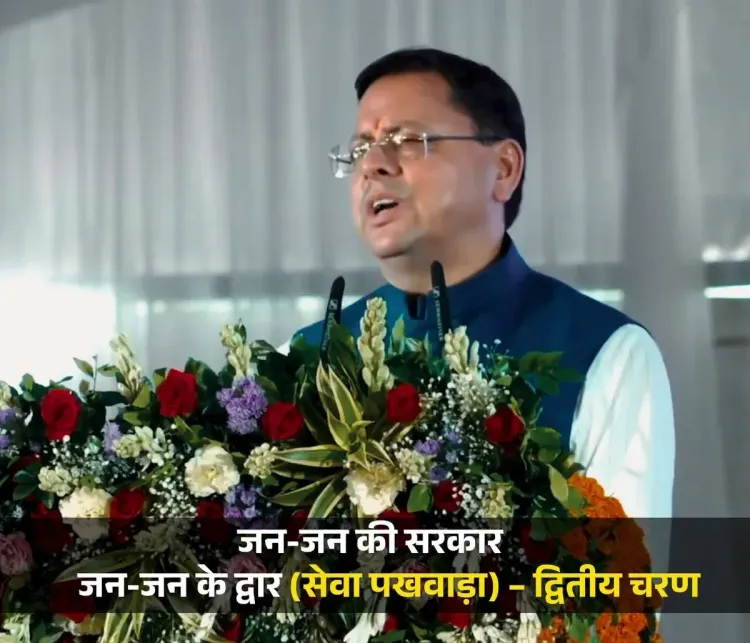
Uttarakhand CM Pushkar Singh Dhami announced that Phase 2 of the 'Jan-Jan Ki Sarkar, Jan-Jan Ke Dwar' (Seva Pakwada) campaign is running statewide with strong public participation, having already connected over 50,000 people and resolving their grievances on the spot.
Key Takeaways
Uttarakhand CM Pushkar Singh Dhami confirmed the launch and active progress of Phase 2 of the Seva Pakwada outreach campaign on 8 July 2026 .
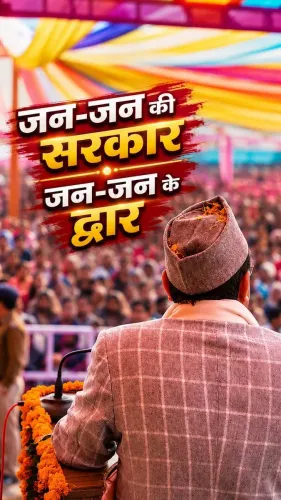
The campaign is formally titled 'Jan-Jan Ki Sarkar, Jan-Jan Ke Dwar' and aims to bring government services directly to residents across the state.
More than 50,000 people have participated in the camps so far during the two phases combined.
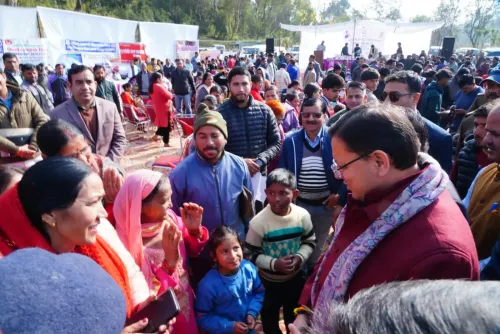
Grievances are being resolved on the spot at the camps, bypassing standard bureaucratic routing.
Phase 1 was described as having achieved 'unprecedented success' before Phase 2 was launched.
The campaign reflects the BJP-led Uttarakhand government's strategy of direct, visible governance delivery ahead of future electoral cycles.
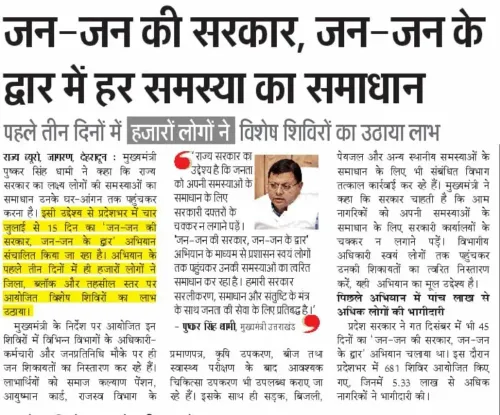
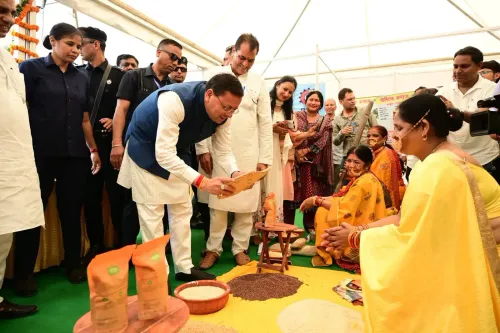
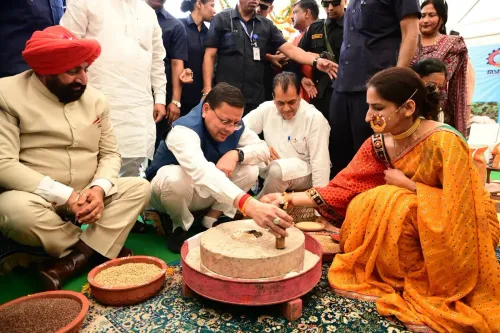
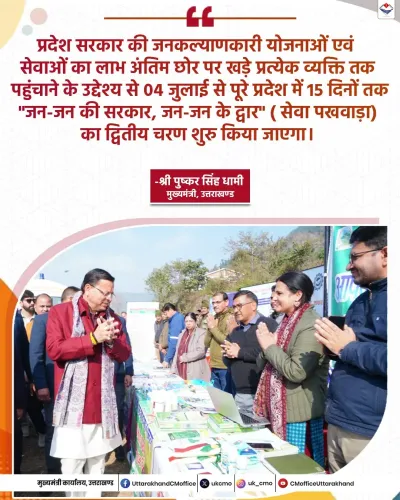
Uttarakhand Chief Minister Pushkar Singh Dhami announced on Wednesday, 8 July 2026 that the second phase of the state government's outreach campaign 'Jan-Jan Ki Sarkar, Jan-Jan Ke Dwar' (Government for Every Person, at Every Doorstep) — also called Seva Pakwada — is underway across Uttarakhand, with more than 50,000 people already connected through its camps and their grievances resolved on the spot.
Context
Posting on X, CM Dhami described the second phase as being conducted with 'prabhavi evam janbhagidari' (effective and participatory) momentum statewide, building on what he called the 'unprecedented success' of the first phase. He noted that public enthusiasm and broad participation have continued into the current phase, with citizens actively engaging with the camps.
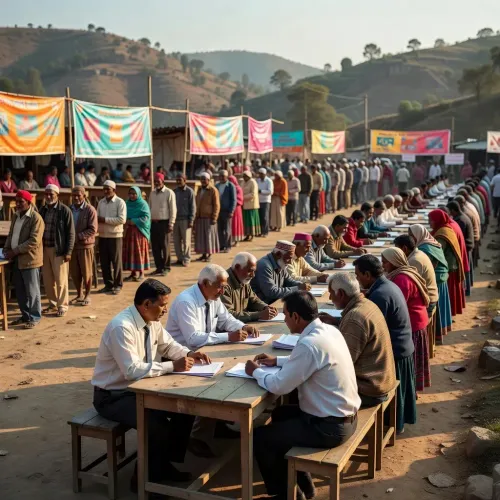
The campaign's name — 'Jan-Jan Ki Sarkar, Jan-Jan Ke Dwar' — reflects a stated commitment to bringing government services directly to ordinary residents, bypassing the need to travel to administrative offices. The camps are designed to offer on-the-spot resolution of individual grievances and service requests.
Policy Backdrop
Seva Pakwada (Service Fortnight) is a citizen-outreach model that the Bharatiya Janata Party (BJP)-led government in Uttarakhand has used to bring district-level administration closer to residents, particularly in remote hill areas where access to government offices is difficult. The format typically involves teams of officials setting up camps in villages and urban wards to accept applications, disburse scheme benefits, and address pending complaints.
The two-phase structure suggests a planned, statewide rollout rather than a one-off event, with the first phase having concluded before the current second phase was launched. The milestone of 50,000-plus beneficiaries reached through the camps underscores the scale at which the drive is operating.
Stakeholders and Impact
The primary beneficiaries are ordinary residents of Uttarakhand — particularly those in rural and semi-urban areas — who use the camps to raise issues related to land records, pensions, ration cards, health services, and other state-administered schemes. For the state administration, the camps serve as a direct feedback mechanism and a visible demonstration of governance delivery.
With more than 50,000 people already having participated, the campaign has reached a significant cross-section of the state's roughly 1.1 crore population. The emphasis on 'twrit evam prabhavi samadhan' (swift and effective resolution) at the camp itself — rather than routing complaints through bureaucratic channels — is the model's distinguishing feature.
What's Next
The second phase is described as actively ongoing, meaning the participation count is expected to climb further before the phase concludes. If the two-phase pattern holds, the government may announce a summary of total beneficiaries and grievances resolved once the campaign closes, which could serve as a metric for the programme's overall reach.
The Dhami government's continued emphasis on such outreach drives ahead of local governance cycles signals that direct-delivery, camp-based administration is likely to remain a signature feature of its public engagement strategy in Uttarakhand.
Point of View
000 beneficiaries across both phases in a state of roughly 1.1 crore residents is a meaningful number, but the real test lies in whether grievances logged at camps translate into durable resolution rather than one-time optics. The two-phase structure and the CM's personal amplification of the milestone on social media suggest this is as much a communication strategy as a service-delivery exercise. As Uttarakhand approaches future local-body and assembly cycles, such outreach drives are likely to intensify.
NationPress
8 Jul 2026
Frequently Asked Questions
What is the 'Jan-Jan Ki Sarkar, Jan-Jan Ke Dwar' campaign in Uttarakhand?
'Jan-Jan Ki Sarkar, Jan-Jan Ke Dwar,' also called Seva Pakwada, is an Uttarakhand government outreach initiative where officials set up camps across the state to meet residents directly, accept service requests, and resolve grievances on the spot without requiring citizens to visit government offices.
How many people have benefited from Seva Pakwada camps so far?
According to CM Pushkar Singh Dhami's post on 8 July 2026, more than 50,000 people have been connected through the Seva Pakwada camps across both phases of the campaign.
What is Phase 2 of Seva Pakwada and when did it start?
Phase 2 of the Seva Pakwada campaign is the second leg of the 'Jan-Jan Ki Sarkar, Jan-Jan Ke Dwar' drive, launched after Phase 1 concluded. As of 8 July 2026, it is actively running across Uttarakhand with strong public participation.
What kinds of problems are resolved at Seva Pakwada camps?
The camps are designed to address a range of citizen grievances related to state-administered services such as land records, pensions, ration cards, and welfare scheme benefits, with officials empowered to provide on-the-spot resolution.
Who is running the Seva Pakwada campaign in Uttarakhand?
The Seva Pakwada campaign is being run by the BJP-led Uttarakhand state government under Chief Minister Pushkar Singh Dhami as part of its direct public outreach and governance delivery strategy.