CM Dhami Pitches Self-Employment to Power Uttarakhand's Rural Economy
Synopsis
Chief Minister Pushkar Singh Dhami on 28 October 2026 outlined a vision to strengthen Uttarakhand's rural economy by connecting the state's natural resources, local products and youth talent to self-employment, enabling young people to become job creators themselves.
Key Takeaways
CM Pushkar Singh Dhami on 28 October 2026 articulated a three-pillar rural economic strategy for Uttarakhand centred on natural resources, local products, and youth talent.
The stated goal is to make youth self-reliant and capable of employing others — a multiplier model of grassroots job creation.
The vision aligns with the national Atmanirbhar Bharat initiative launched in 2020 , which promotes local-resource-driven entrepreneurship.
Uttarakhand has historically faced severe rural out-migration; self-employment schemes targeting local assets are a direct policy response to that challenge.
No specific scheme name, budget figure, or implementation timeline was announced in this statement — the communication is directional in nature.
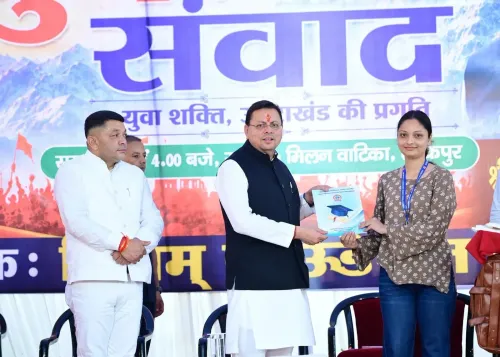
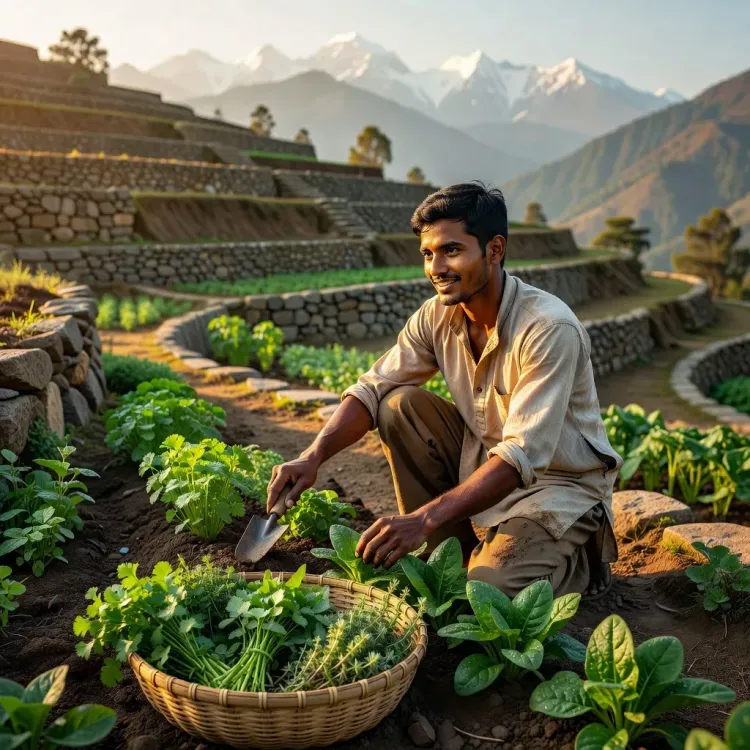
Uttarakhand's villages hold untapped wealth — in their forests, their fields, and their restless young people. On Wednesday, 28 October 2026, Chief Minister Pushkar Singh Dhami made the case that connecting all three is the surest route to a stronger rural economy, stating that the state's goal is to make youth self-reliant while enabling them to generate employment for others.
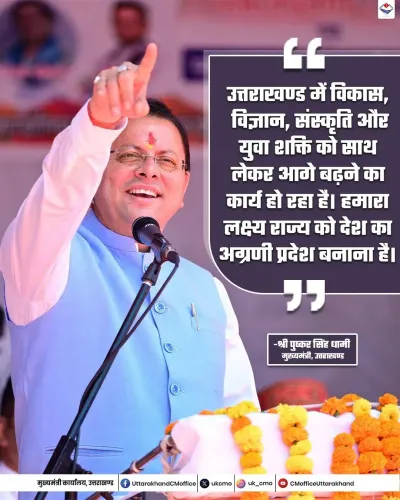
Quoting the Chief Minister directly, the Chief Minister's Office of Uttarakhand posted: 'हमारा प्रयास है कि प्रदेश के प्राकृतिक संसाधनों, स्थानीय उत्पादों और युवाओं की प्रतिभा को स्वरोजगार से जोड़कर ग्रामीण अर्थव्यवस्था को मजबूत बनाया जाए' — 'Our effort is to strengthen the rural economy by linking the state's natural resources, local products and the talent of its youth to self-employment, so that young people become self-reliant and are also able to provide employment to others.'
Dhami's Three-Pillar Formula: Resources, Products, Talent
CM Dhami, who has been at the helm of Uttarakhand since 2021, is anchoring this vision on three concrete assets the hill state already possesses: its natural resources, its locally grown and crafted products, and the skills of its youth. The framing is deliberate — rather than waiting for large industry to arrive, the plan is to build economic activity from the ground up, turning what the state already has into livelihoods.
The approach aligns squarely with the national Atmanirbhar Bharat initiative, launched in 2020, which pushed states to leverage local ecosystems for entrepreneurship rather than depend solely on centralised job creation. For a Himalayan state like Uttarakhand, that means organic produce, biodiversity-linked enterprises, and artisan-skill clusters — sectors where the state holds a genuine competitive edge.
The Migration Problem That Makes This Urgent
Uttarakhand's rural economy has long bled talent to the plains. Chronic out-migration from mountain villages — young workers leaving for Delhi, Dehradun, or further afield — has hollowed out entire communities, leaving behind ageing populations and underused land. Self-employment schemes targeting local resources are, in part, a direct answer to that slow-moving crisis.
Linking youth talent to local produce — whether it is medicinal herbs, organic cereals, handlooms, or eco-tourism — creates anchors that keep skills and incomes inside the state. The multiplier logic Dhami is invoking is straightforward: one self-employed young person who can hire even two others quietly compounds across hundreds of villages.
What the Statement Does Not Yet Say
The Chief Minister's statement is directional rather than programmatic — no specific scheme, budget allocation, or target figure is named. The research notes the possibility of concrete announcements in upcoming state plans or budget provisions for rural entrepreneurship, but none have been detailed yet. The political signal, however, is clear: rural self-reliance is the frame through which the Dhami government wants its economic agenda to be read heading into the next planning cycle.
Uttarakhand's bet is that the mountains themselves are an asset, not a handicap — and that the right policy wiring can turn that geography into a jobs engine. The Chief Minister has set the direction. The numbers will tell the story.
Point of View
Which plays well both in Dehradun and in New Delhi's Atmanirbhar ecosystem. The absence of specific schemes, however, means it functions more as a vision reset than a policy announcement. For Uttarakhand, where out-migration has been a chronic governance failure across party lines, the test will be whether this directional language is followed by measurable budget commitments in the next state plan. The self-employment-as-job-creator framing is shrewd: it positions rural youth as economic agents, not welfare recipients, which carries significant political resonance in an election-aware environment.
NationPress
28 Oct 2026
Frequently Asked Questions
What did CM Pushkar Singh Dhami say about Uttarakhand's rural economy?
On 28 October 2026, CM Dhami stated that the state's goal is to strengthen the rural economy by connecting Uttarakhand's natural resources, local products and youth talent to self-employment, enabling young people to become self-reliant and to create jobs for others.
What is Uttarakhand's self-employment plan for rural youth?
The Dhami government's stated approach is to link the state's biodiversity, organic produce, artisan skills and other local assets to self-employment opportunities, so that rural youth can build livelihoods without migrating to urban centres.
How does Uttarakhand's rural economy plan connect to Atmanirbhar Bharat?
It mirrors the Atmanirbhar Bharat framework launched in 2020, which encourages states to use locally available resources and entrepreneurship to drive economic self-reliance rather than depending on centralised or large-scale industrial job creation.
Why is rural out-migration a problem in Uttarakhand?
Chronic migration of young workers from mountain villages to plains cities like Delhi and Dehradun has depopulated rural Uttarakhand, leaving agricultural land underused and communities without working-age residents — a challenge that self-employment schemes are partly designed to address.
Has Uttarakhand announced a specific rural self-employment scheme after Dhami's statement?
As of this statement on 28 October 2026, no specific scheme name, budget allocation or implementation timeline has been announced; the Chief Minister's communication is directional, with concrete policy details expected in upcoming state plans.