CM Dhami promotes Bilvakeshwar Mahadev Temple in Haridwar

Synopsis
Uttarakhand CM Pushkar Singh Dhami has spotlighted the Bilvakeshwar Mahadev Temple on Bilva Parvat in Haridwar, calling it a sacred Puranic site where Goddess Parvati performed penance, and urged pilgrims to visit it during their Haridwar stay.
Key Takeaways
CM Pushkar Singh Dhami promoted the Bilvakeshwar Mahadev Temple on Bilva Parvat, Haridwar via a post on 20 July 2026 .
The temple is associated with the belief that Goddess Parvati performed intense penance here to attain Lord Shiva as her husband.
The site is referenced in the Skanda Purana , one of Hinduism's eighteen major Puranas.
The appeal is part of Uttarakhand 's broader strategy to promote lesser-known pilgrimage sites alongside established centres like Haridwar and Rishikesh .
The Char Dham Mahamarg project (initiated 2016 ) reflects the state's ongoing investment in religious tourism infrastructure.
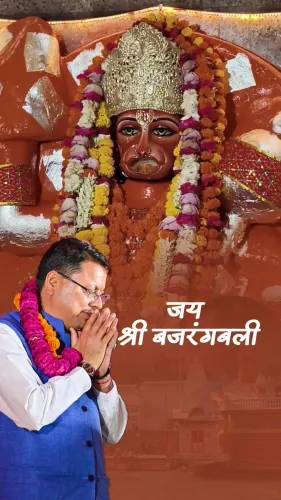
Uttarakhand Chief Minister Pushkar Singh Dhami on Monday, 20 July 2026, urged devotees and pilgrims visiting Haridwar to make a point of visiting the Bilvakeshwar Mahadev Temple on Bilva Parvat, describing it as an exceptionally sacred and ancient tirtha deeply rooted in Sanatan tradition.
In his post, CM Dhami wrote: 'धर्मनगरी हरिद्वार के बिल्व पर्वत पर विराजमान श्री बिल्वकेश्वर महादेव मंदिर अत्यंत पावन एवं पौराणिक तीर्थ स्थल है' — 'The Shri Bilvakeshwar Mahadev Temple, situated on Bilva Parvat in the holy city of Haridwar, is an exceptionally sacred and ancient pilgrimage site.' He further noted the belief that it was at this very site that Goddess Parvati performed intense penance to attain Lord Shiva as her husband, and that the shrine finds mention in the Skanda Purana.
Context
The Bilvakeshwar Mahadev Temple stands atop Bilva Parvat, a hill in Haridwar, one of India's most prominent pilgrimage cities situated on the banks of the Ganga in Uttarakhand. The temple is dedicated to Lord Shiva and is considered among the older Shiva shrines in the region. The Skanda Purana, one of the eighteen major Puranas in Hindu scripture, references this site in connection with the penance of Goddess Parvati, lending the temple deep mythological and devotional significance.
CM Dhami made the appeal in the context of a visit to Haridwar, calling the temple a 'pavitra dham' — a sacred abode — connected to faith, spirituality, and Sanatan tradition.
Policy Backdrop
The Uttarakhand government has long positioned the state as the spiritual heartland of India. Infrastructure initiatives such as the Char Dham Mahamarg project, initiated around 2016, were designed to improve road connectivity to major pilgrimage centres and boost religious tourism across the state.
Promoting lesser-known tirthas such as Bilvakeshwar Mahadev alongside established centres like Haridwar and Rishikesh is consistent with a broader state strategy to distribute pilgrim footfall and develop the full spectrum of Uttarakhand's sacred geography. BJP-led administrations in the state have consistently used official communication channels to highlight ancient Shiva and Shakti sites as part of this cultural-religious positioning.
Stakeholders and Impact
The primary beneficiaries of increased visibility for the Bilvakeshwar Mahadev Temple are pilgrims, religious tourists, and local communities in Haridwar who depend on temple-related commerce. Haridwar already draws millions of visitors annually, and drawing attention to sites on Bilva Parvat could encourage longer stays and broader exploration of the city's religious heritage beyond the main Har Ki Pauri ghats.
For the state government, amplifying awareness of Puranic-era sites reinforces Uttarakhand's brand as a centre of Sanatan heritage, which has direct implications for tourism revenue and cultural diplomacy.
What's Next
Observers will watch for any follow-up announcements from the Uttarakhand government regarding temple infrastructure upgrades at Bilva Parvat or the formal inclusion of Bilvakeshwar Mahadev in official Haridwar tourism itineraries and promotional packages. The CM's itinerary in the region and any forthcoming religious congregations could provide further context for this outreach.
Point of View
The outreach signals an intent to broaden Haridwar's pilgrim economy beyond its iconic ghats. This fits a wider pattern across BJP-ruled states where temple heritage is leveraged as both a cultural anchor and an economic development tool. Whether the post translates into concrete infrastructure or tourism-package announcements for Bilva Parvat will be the real test of its policy intent.
NationPress
21 Jul 2026
Frequently Asked Questions
Where is the Bilvakeshwar Mahadev Temple located?
The Bilvakeshwar Mahadev Temple is located on Bilva Parvat, a hill in Haridwar, Uttarakhand, on the banks of the Ganga.
Why is the Bilvakeshwar Mahadev Temple significant?
The temple is significant because it is believed to be the site where Goddess Parvati performed intense penance to attain Lord Shiva as her husband, and the site is mentioned in the Skanda Purana.
What did CM Pushkar Singh Dhami say about the Bilvakeshwar Mahadev Temple?
CM Dhami described the temple as an exceptionally sacred and ancient tirtha, urged devotees visiting Haridwar to visit it, and highlighted its connection to faith, spirituality, and Sanatan tradition.
Is the Bilvakeshwar Mahadev Temple mentioned in Hindu scriptures?
Yes, the temple's location on Bilva Parvat in Haridwar finds mention in the Skanda Purana, one of the eighteen major Puranas in Hindu religious literature.
How is Uttarakhand promoting religious tourism?
Uttarakhand has promoted religious tourism through initiatives like the Char Dham Mahamarg project and by highlighting ancient pilgrimage sites, including lesser-known tirthas such as Bilvakeshwar Mahadev, to increase pilgrim footfall across the state.