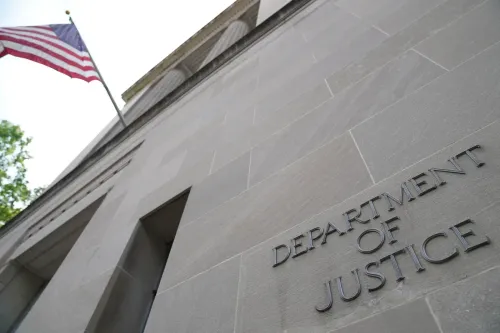
White House Launches Largest-Ever Denaturalization Drive

Synopsis
The White House on 21 July 2026 declared the launch of 'the largest denaturalization effort ever,' asserting that naturalized American citizenship is a privilege contingent on upholding US laws and values — signalling a major escalation in federal efforts to revoke citizenship obtained through fraud or misrepresentation.
Key Takeaways
The White House announced on 21 July 2026 what it called 'the largest denaturalization effort ever.' Denaturalization is a civil legal process requiring a suit in US district court ; it targets citizenship obtained through fraud or willful misrepresentation.
The Department of Justice established a dedicated denaturalization section in 2018 , providing institutional infrastructure for an expanded programme.
Operation Janus (2016) previously flagged thousands of naturalization cases with fingerprint discrepancies for potential fraud review.
Naturalized citizens — including a large Indian-American population — are the primary group affected by any escalation in revocation proceedings.
Specific numerical targets and timelines have not been disclosed; federal court dockets will be the key indicator of actual scale.
The White House announced on Tuesday, 21 July 2026, what it described as 'the largest denaturalization effort ever,' framing American citizenship obtained through naturalization as a privilege that carries obligations under US law and values.
Context
The official White House account posted: 'The Largest Denaturalization Effort Ever. American citizenship through naturalization is a privilege. America's laws and values must be upheld and respected.' The statement signals a major escalation in the use of an existing but rarely deployed legal mechanism — the revocation of naturalized citizenship.
Denaturalization is a formal legal process rooted in US immigration law that allows federal authorities to strip citizenship granted through naturalization if it was obtained through fraud, willful misrepresentation, or concealment of disqualifying facts. It requires a civil suit filed in a US district court and cannot be pursued administratively.
Policy Backdrop
The current push builds on institutional groundwork laid in prior years. In 2018, the Department of Justice (DOJ) created a dedicated denaturalization section to pursue cases involving immigration fraud and national-security-related concealment — a significant structural investment that signalled growing federal appetite for such prosecutions.
Earlier, Operation Janus — an interagency review launched in 2016 — flagged thousands of naturalization cases with fingerprint discrepancies for potential fraud investigation. The US Citizenship and Immigration Services (USCIS), operating under the Department of Homeland Security, refers suspected fraud cases to DOJ for civil litigation. Historical precedent also exists: after World War II, the United States pursued denaturalization of individuals who had concealed Nazi affiliations when applying for citizenship.
The White House framing of citizenship as a 'privilege' rather than a permanent right for naturalized individuals reflects a legal posture that courts have upheld in specific fraud contexts, though the standard of proof required remains high under existing statute.
Stakeholders and Impact
The effort most directly affects naturalized US citizens — a population that includes a significant number of individuals of Indian origin. The Indian-American community is among the largest naturalized immigrant groups in the United States, with hundreds of thousands having obtained citizenship through the standard naturalization process over recent decades.
Immigration enforcement agencies — USCIS, Immigration and Customs Enforcement (ICE), and the DOJ civil litigation units — are the primary operational actors. Legal advocacy groups representing immigrant communities are expected to scrutinize the scope, targeting criteria, and due-process safeguards of any expanded filing programme.
The characterization of the effort as the 'largest ever' suggests a scale that goes beyond the relatively small number of cases historically pursued each year, though specific numerical targets and operational timelines have not been detailed in the post.
What's Next
Observers will watch federal court dockets closely for a surge in civil denaturalization filings across US district courts. Any regulatory or statutory changes that expand the grounds for revocation — beyond the current fraud and misrepresentation standards — would represent a more fundamental legal shift and would likely face constitutional challenge.
For the Indian diaspora and other immigrant communities, the development underscores the importance of monitoring how enforcement priorities evolve and whether existing due-process protections are maintained as the programme scales.
Point of View
Whose diaspora in the United States is large and deeply naturalized, this represents a development worth tracking at the diplomatic and consular level. The key question is whether the expansion stays within existing statutory and due-process guardrails or tests new legal boundaries that courts will ultimately have to adjudicate.
NationPress
21 Jul 2026
Frequently Asked Questions
What is denaturalization in the United States?
Denaturalization is the legal process by which the US government revokes citizenship that was granted through naturalization. It requires the Department of Justice to file a civil suit in a federal district court and must be based on evidence that the citizenship was obtained through fraud, willful misrepresentation, or concealment of disqualifying facts.
Can the US government take away naturalized citizenship?
Yes, but only through a court process. The government cannot strip naturalized citizenship administratively; it must prove in a US district court that the citizenship was obtained unlawfully, typically through fraud or concealment of material facts at the time of the naturalization application.
How does the White House denaturalization effort affect Indian Americans?
Indian Americans are among the largest groups of naturalized US citizens, so any large-scale denaturalization programme has potential implications for the community. However, the effort targets individuals who allegedly obtained citizenship through fraud or misrepresentation, not law-abiding naturalized citizens.
What was Operation Janus and how is it related?
Operation Janus was a 2016 interagency review that identified thousands of naturalization cases with fingerprint discrepancies suggesting possible fraud. It provided a database of cases that federal agencies could pursue for denaturalization, and it laid groundwork for the DOJ's dedicated denaturalization section created in 2018.
What legal standard is required to denaturalize a US citizen?
The government must meet a high burden of proof in civil court, demonstrating that the individual procured citizenship illegally — typically through fraud, willful misrepresentation, or concealment of facts that would have made them ineligible at the time of naturalization. The process includes full judicial review and due-process protections.