CM Majhi: Odisha leads India's mineral output, eyes value addition
Synopsis
Odisha CM Mohan Charan Majhi declared on 21 July 2026 that Odisha is India's top Resources-pillar performer, supplying nearly half the country's metallic minerals and nearly a quarter of its coal, and pledged to deepen industrial value addition and job creation.
Key Takeaways
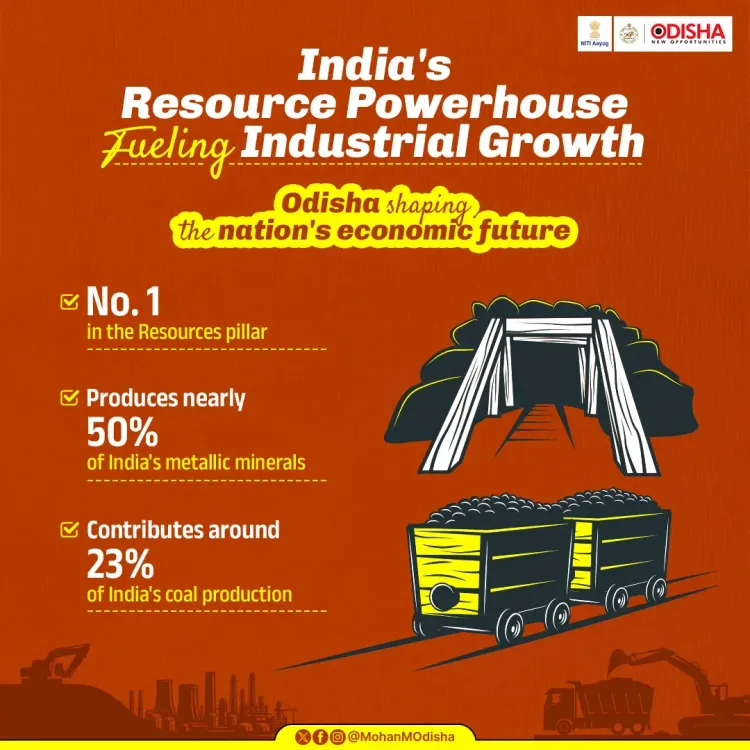
1 in India's Resources pillar, according to CM Mohan Charan Majhi's post on 21 July 2026 .
The state produces nearly 50 per cent of India's metallic minerals, including iron ore, bauxite and chromite.
Odisha contributes around 23 per cent of India's total coal production.
The state government has committed to moving up the value chain through beneficiation, smelting and downstream manufacturing.
Policy groundwork includes the Odisha Industrial Policy Resolution 2015 and the Make in Odisha Conclave launched in 2016.
New mineral concession rules and the next Make in Odisha event are the near-term milestones to watch.
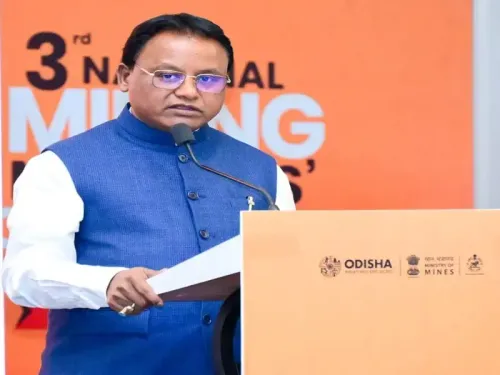
Odisha Chief Minister Mohan Charan Majhi on Tuesday, 21 July 2026, highlighted the state's dominant position in India's mineral economy, stating that Odisha ranks as the No. 1 performer in the Resources pillar and produces nearly 50 per cent of India's metallic minerals while contributing around 23 per cent of national coal output. Majhi underscored the state government's commitment to converting these natural endowments into industrial expansion and jobs.
Context
Posting under the hashtags #InvestInOdisha and #IndustrialGrowth, CM Majhi wrote: 'Odisha's natural strengths continue to power India's industrial progress. We remain committed to transforming these inherent strengths into greater value addition, industrial expansion and employment opportunities for our people.' The post frames Odisha not merely as a raw-material supplier but as a state actively seeking to capture more of the value chain within its borders.
The remarks come as competition among mineral-rich states to attract downstream processing investment intensifies, with the national push for self-reliance in metals and energy minerals providing a tailwind for such positioning.
Policy Backdrop
Odisha's industrial policy lineage supports Majhi's pitch. The Odisha Industrial Policy Resolution 2015 offered targeted incentives for mineral-based industries and downstream processing units such as pelletisation plants and aluminium smelters. The Make in Odisha Conclave, launched in 2016, further positioned the state as a preferred investment destination for metals and manufacturing, drawing commitments from domestic and international players.
At the national level, the National Mineral Policy 2019 revised by the Central government emphasised domestic exploration, sustainable extraction and downstream value addition — objectives that align closely with the direction CM Majhi articulated. The Atmanirbhar Bharat framework has since reinforced the case for building captive beneficiation capacity inside mineral-producing states rather than exporting unprocessed ore.
Odisha holds substantial reserves of iron ore, bauxite, chromite and coal — resources that feed integrated steel plants and thermal power capacity across the country. Successive state administrations have sought to shift the state's economic profile from extraction toward smelting, refining and allied manufacturing.
Stakeholders and Impact
The primary beneficiaries of the strategy outlined by CM Majhi are Odisha's mineral industries, the state's workforce and the broader steel and power sectors that depend on reliable, competitively priced raw-material supply. Greater in-state processing would mean higher royalty revenues, more skilled employment and stronger backward linkages for local suppliers.
For national industries, a shift toward value-added output from Odisha could affect raw-material logistics and pricing for integrated steel mills and thermal power plants that currently source ore and coal directly from the state. Investors in pelletisation, aluminium smelting and coal-based chemicals stand to gain if the policy environment translates into concrete concessions and infrastructure support.
What's Next
Attention will turn to the rollout of new mineral concession rules and any fresh investment proposals that may be unveiled at the next edition of the Make in Odisha conclave. Action at the state assembly on mining revenue sharing and local employment quotas will also be closely watched as indicators of how the government intends to operationalise its stated commitment to value addition.
With Odisha staking its claim as India's foremost mineral-resources state, the policy choices made in the coming months will determine whether the current rhetoric translates into structural shifts in the state's industrial economy — and in India's metals and energy supply chain.
Point of View
Timed to reinforce Odisha's brand as India's premier mineral-resources state at a moment when downstream processing capacity is a national priority. By anchoring the message in the 'No. 1 Resources pillar' ranking, the BJP-led government is attempting to convert raw statistical dominance into a competitive edge for attracting smelting and manufacturing capital. The emphasis on 'value addition' and 'employment' also serves a domestic political purpose, addressing longstanding criticism that mineral wealth has not translated into commensurate local prosperity. Whether the rhetoric is matched by concrete policy action — on concession terms, logistics infrastructure and revenue sharing — will define the credibility of this positioning.
NationPress
21 Jul 2026
Frequently Asked Questions
What percentage of India's metallic minerals does Odisha produce?
According to CM Mohan Charan Majhi , Odisha produces nearly 50 per cent of India's metallic minerals, including key resources such as iron ore, bauxite and chromite.
What is Odisha's share in India's coal production?
CM Majhi stated that Odisha contributes around 23 per cent of India's total coal production, making it one of the country's most significant coal-supplying states.
What is the Make in Odisha Conclave?
The Make in Odisha Conclave is a state-level investment summit launched in 2016 to position Odisha as a preferred destination for metals, manufacturing and mineral-based industries.
Who is Mohan Charan Majhi?
Mohan Charan Majhi is the Chief Minister of Odisha and a BJP leader who assumed office in 2024 following the state assembly elections.
What is Odisha's industrial policy for minerals?
The Odisha Industrial Policy Resolution 2015 provides incentives for mineral-based industries and downstream processing units such as pelletisation plants and aluminium smelters, forming the backbone of the state's mineral industrialisation strategy.