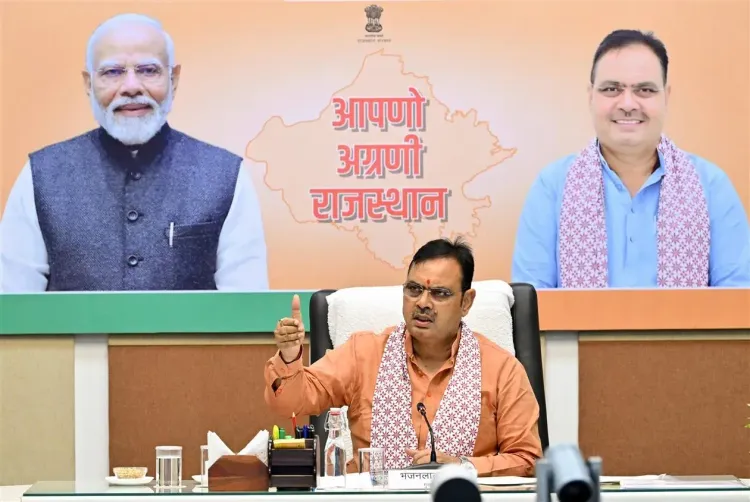
CM Bhajanlal chairs SC-ST atrocity law review meet in Rajasthan
Synopsis
Chief Minister Bhajanlal Sharma chaired Rajasthan's State-Level Vigilance and Monitoring Committee on 21 July 2026, directing strict enforcement of the SC-ST Prevention of Atrocities Act, faster case disposal, improved conviction rates, and timely financial relief to victims.
Key Takeaways
Chief Minister Bhajanlal Sharma chaired Rajasthan's State-Level Vigilance and Monitoring Committee meeting on 21 July 2026 .
The meeting reviewed enforcement of the Scheduled Castes and Scheduled Tribes (Prevention of Atrocities) Act, 1989 , a central law amended in 2015 .
Directions were issued for strict action against crimes targeting SC and ST communities and for improving conviction rates .
District and sub-divisional level vigilance committees were directed to hold meetings regularly.
The government emphasised time-bound financial assistance to atrocity victims and faster disposal of pending cases.
The review also included a directive to promote social harmony across the state.
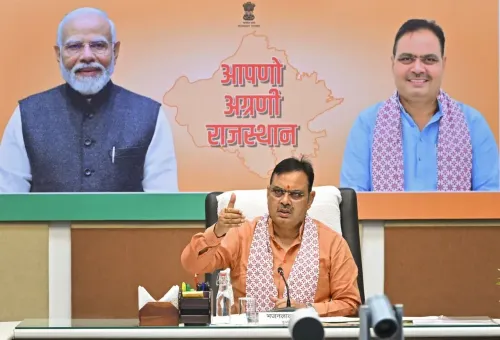
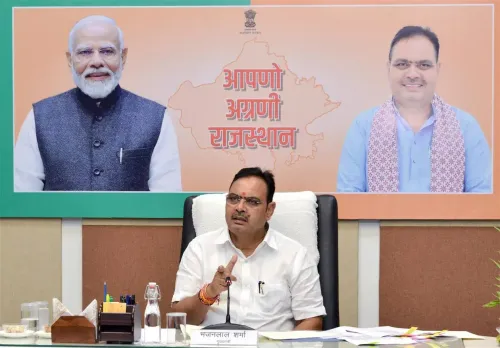
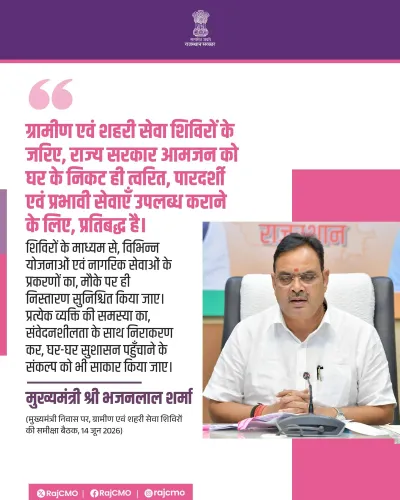
The Chief Minister's Office of Rajasthan announced on Tuesday, 21 July 2026 that Chief Minister Bhajanlal Sharma chaired the State-Level Vigilance and Monitoring Committee meeting to review implementation of the Scheduled Castes and Scheduled Tribes (Prevention of Atrocities) Act, with a focus on disposing of pending cases and delivering timely financial relief to victims.
The official post stated: 'अनुसूचित जाति एवं जनजाति (अत्याचार निवारण) अधिनियम के प्रभावी क्रियान्वयन, लंबित प्रकरणों के निस्तारण तथा पीड़ितों को समयबद्ध आर्थिक सहायता प्रदान करने की समीक्षा की गई' — ('A review was conducted on effective implementation of the SC-ST [Prevention of Atrocities] Act, disposal of pending cases, and provision of time-bound financial assistance to victims.')
Context
The Scheduled Castes and Scheduled Tribes (Prevention of Atrocities) Act, 1989 — commonly referred to as the POA Act — is central legislation that mandates special courts, victim rehabilitation, and financial relief for those subjected to atrocities on account of their caste identity. An amendment in 2015 strengthened provisions for speedy trials and enhanced compensation frameworks. Under the POA Rules, every state is required to constitute a State-Level Vigilance and Monitoring Committee to periodically assess the law's on-ground impact.
Rajasthan, a state with significant Scheduled Caste and Scheduled Tribe populations, has maintained such committees since the 1990s. Tuesday's meeting represents a statutory review exercise under that standing mandate.
Policy Backdrop
The meeting issued directions on four specific fronts: strict action against crimes committed against SC and ST communities; improvement in conviction rates; regular conduct of meetings by district and sub-divisional level committees; and promotion of social harmony. These directives align with a recurring national challenge — conviction rates under the POA Act have historically lagged behind registration of cases, prompting state governments to convene such reviews to tighten inter-departmental coordination.
CM Bhajanlal Sharma, who took office in December 2023 following the BJP's victory in the Rajasthan assembly elections, presided over the committee. The meeting also underscored the need for lower-tier administrative bodies at the district and sub-divisional levels to hold regular sittings, a requirement that in practice often goes unmet across states.
Stakeholders and Impact
The primary beneficiaries of the review are SC and ST atrocity victims in Rajasthan who are entitled to economic assistance under the POA Act but often face delays in receiving it due to administrative backlogs. Timely relief disbursement — a central theme of the meeting — directly affects the financial security of vulnerable families during prolonged legal proceedings.
The directive to improve conviction rates is significant for law-enforcement agencies, public prosecutors, and the judiciary. Low conviction rates have been a persistent concern cited in parliamentary debates and state legislative discussions, making this a politically and socially sensitive metric for the Bhajanlal Sharma government.
What's Next
Outcomes of the meeting are expected to cascade to district and sub-divisional vigilance committees across Rajasthan, which have been directed to convene regularly. The Rajasthan Home Department and the Social Justice and Empowerment Department will be watched for subsequent quarterly reports on case disposal figures and conviction data. Whether the directives translate into measurable improvements in relief disbursal timelines and prosecution outcomes will determine the practical impact of Tuesday's high-level review.
Point of View
But the explicit emphasis on conviction-rate improvement and time-bound victim relief signals that the Bhajanlal Sharma government is aware of the political cost of being seen as passive on caste-based atrocities. For a BJP government in Rajasthan, demonstrating proactive enforcement of SC-ST protective legislation is both a governance imperative and an electoral calculation, given the community's significant share of the state's voter base. The directive to revive district and sub-divisional committee meetings points to a structural gap in implementation that has persisted across multiple administrations. Whether these directions produce measurable results will be tested in the next round of state crime data.
NationPress
21 Jul 2026
Frequently Asked Questions
What is the SC-ST Prevention of Atrocities Act?
The Scheduled Castes and Scheduled Tribes (Prevention of Atrocities) Act, 1989 is a central law that provides for special courts, financial relief, and rehabilitation for victims of caste-based atrocities in India. It was amended in 2015 to strengthen provisions for speedy trials and enhanced compensation.
What did the Rajasthan vigilance committee meeting on 21 July 2026 decide?
The meeting chaired by CM Bhajanlal Sharma directed strict action against crimes targeting SC and ST communities, improvement in conviction rates, regular sittings of district and sub-divisional committees, and timely financial assistance to atrocity victims.
What is the State-Level Vigilance and Monitoring Committee in Rajasthan?
It is a statutory body mandated under the POA Act Rules to periodically review the implementation of the SC-ST Atrocities Act, monitor pending cases, and oversee relief disbursement to victims at the state level.
Why are conviction rates under the POA Act low in India?
Low conviction rates under the POA Act are a persistent national challenge attributed to factors such as witness intimidation, delayed trials, inadequate prosecution, and inter-departmental coordination gaps — issues that state vigilance committees are tasked with addressing.
Who is Bhajanlal Sharma and when did he become Rajasthan CM?
Bhajanlal Sharma is the Chief Minister of Rajasthan, appointed in December 2023 after the BJP won the state assembly elections. He chairs the State-Level Vigilance and Monitoring Committee under the POA Act in his capacity as CM.