Mahua Moitra: Rahul Gandhi dragged from Delhi protest

Synopsis
TMC MP Mahua Moitra alleged on 21 July 2026 that Delhi Police physically removed Leader of the Opposition Rahul Gandhi from a peaceful sit-in protest in central Delhi, calling it an attack on democracy and accusing the Modi government of placing the capital 'under siege.'
Key Takeaways
TMC MP Mahua Moitra posted on X on 21 July 2026 alleging Delhi Police dragged Leader of the Opposition Rahul Gandhi away from a sit-in protest.
Moitra described Delhi as being 'under siege by Modi's police,' framing the incident as a democratic emergency.
The post included a video and was shared at 9:39 PM IST .
Delhi Police operates under the Ministry of Home Affairs , not the elected Delhi government.
Rahul Gandhi has held the formal position of Leader of the Opposition in the Lok Sabha since the 2024 general elections , a role that carries statutory privileges.
The INDIA bloc , formed in 2023 , has a documented pattern of staging protests in central Delhi over governance and civil liberties concerns.
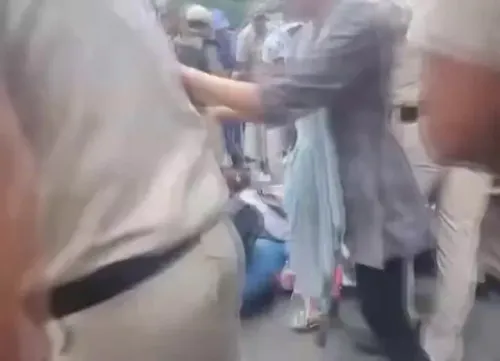
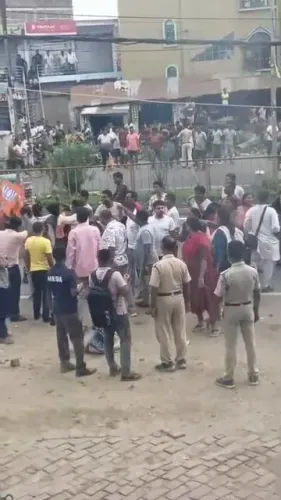
TMC MP Mahua Moitra on Tuesday, 21 July 2026 alleged that Leader of the Opposition Rahul Gandhi was physically removed by Delhi Police from a peaceful sit-in protest in the national capital, describing the scene as Delhi being 'under siege by Modi's police.'
Context
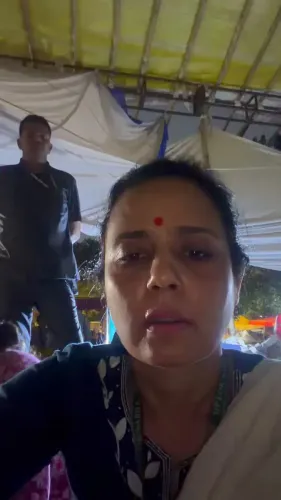
Moitra posted a video on X stating that 'the Leader of India's Opposition is being dragged by Narendra Modi's cops away from a peaceful sit-in protest.' The post, shared at 9:39 PM IST, was accompanied by a video and framed the incident as an assault on democratic norms. She declared, 'Democracy in India is happening right now,' in a tone of sharp alarm.
The protest appears to have taken place in central Delhi, where opposition demonstrations are routinely staged near Parliament or other symbolic locations. Delhi Police, which functions under the Ministry of Home Affairs and not the elected Delhi government, is the central agency responsible for managing law and order in the capital.
Policy Backdrop
Rahul Gandhi was formally recognised as Leader of the Opposition in the Lok Sabha following the 2024 general elections — restoring a constitutional position that had remained vacant since 2014. As Leader of the Opposition, Gandhi holds a statutory office that carries specific privileges and protections under parliamentary convention.
Opposition parties, including the INDIA bloc — a coalition formed in 2023 comprising the Indian National Congress, the All India Trinamool Congress, and several regional parties — have repeatedly used sit-ins and marches in Delhi to press their concerns on governance, federal relations, and civil liberties. Police handling of such demonstrations has drawn repeated criticism from opposition leaders and civil society groups since 2014.
Stakeholders and Impact
If confirmed, the physical removal of the Leader of the Opposition from a lawful protest would carry significant constitutional weight, potentially raising questions of parliamentary privilege and the right to peaceful assembly under Article 19 of the Indian Constitution. Opposition parties are expected to cite the incident on the floor of the House and in public forums.
Civil liberties advocates and legal experts have in the past filed court petitions challenging protest management by Delhi Police, and similar recourse is likely here. The Ministry of Home Affairs, which oversees Delhi Police, had not issued any public statement at the time of publication.
What's Next
The incident is likely to dominate the opposition's agenda in the next sitting of Parliament, where members may attempt to raise privilege motions or adjournment notices. Legal challenges over the conduct of security forces at the protest site are also a plausible next step.
The broader pattern of opposition-versus-central-authority confrontations in Delhi suggests this episode will feed into the wider political contest between the INDIA bloc and the ruling BJP dispensation ahead of the next electoral cycle. How the government responds — through official statements, court filings, or silence — will shape the political narrative in the days ahead.
Point of View
If substantiated, marks an escalation in the long-running confrontation between the INDIA bloc and the central government. It fits a post-2014 pattern in which opposition demonstrations in Delhi have repeatedly ended in police intervention, each episode feeding the opposition's broader narrative about shrinking democratic space. The incident hands the opposition a potent symbolic moment ahead of Parliament's next session, where privilege motions and adjournment notices are likely. The government's response — or absence of one — will be as politically consequential as the event itself.
NationPress
22 Jul 2026
Frequently Asked Questions
What did Mahua Moitra say about Rahul Gandhi on 21 July 2026?
TMC MP Mahua Moitra alleged on X that Delhi Police physically removed Leader of the Opposition Rahul Gandhi from a peaceful sit-in protest in central Delhi, calling it an assault on democracy.
Why is Delhi Police under central government control?
Delhi Police functions under the Ministry of Home Affairs, which is a central government ministry, rather than under the elected Delhi state government — a jurisdictional arrangement that has been a long-standing political flashpoint.
What is Rahul Gandhi's official status in Parliament?
Rahul Gandhi has been the formally recognised Leader of the Opposition in the Lok Sabha since the 2024 general elections, a constitutional position that had remained vacant since 2014.
What is the INDIA bloc?
The INDIA bloc is an opposition coalition formed in 2023 that includes the Indian National Congress, the All India Trinamool Congress, and several regional parties, coordinating parliamentary strategy and public protests against the BJP-led central government.
Can the removal of the Leader of the Opposition from a protest trigger a privilege motion?
Yes. If a sitting Leader of the Opposition is physically restrained or removed by police from a lawful assembly, opposition MPs can raise a privilege motion in Parliament, arguing that the statutory dignity of the office has been violated.